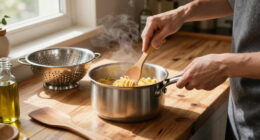

To care for your cast-iron skillet, clean it with hot water and a brush, avoiding soap, and dry thoroughly to prevent rust. Apply a thin layer of oil after cleaning and periodically re-season it by baking in the oven. For recipes like skillet cornbread or fajitas, use it hot and seasoned to enhance flavor and non-stick properties. Keep practicing proper maintenance to guarantee your skillet lasts a lifetime—more tips await if you continue exploring.
Key Takeaways
- Properly season and clean your cast iron skillet to enhance non-stick properties for recipes like cornbread and fajitas.
- Avoid soaking or dishwasher cleaning; rinse with hot water and scrub with coarse salt for stubborn bits.
- Preheat skillet before cooking fajitas or cornbread to ensure even heat and easy release.
- Use a thin layer of oil after cleaning and re-season periodically to maintain a durable, non-stick surface.
- Develop flavor and patina over time with regular use, improving taste and ease of cleaning for classic cast-iron recipes.
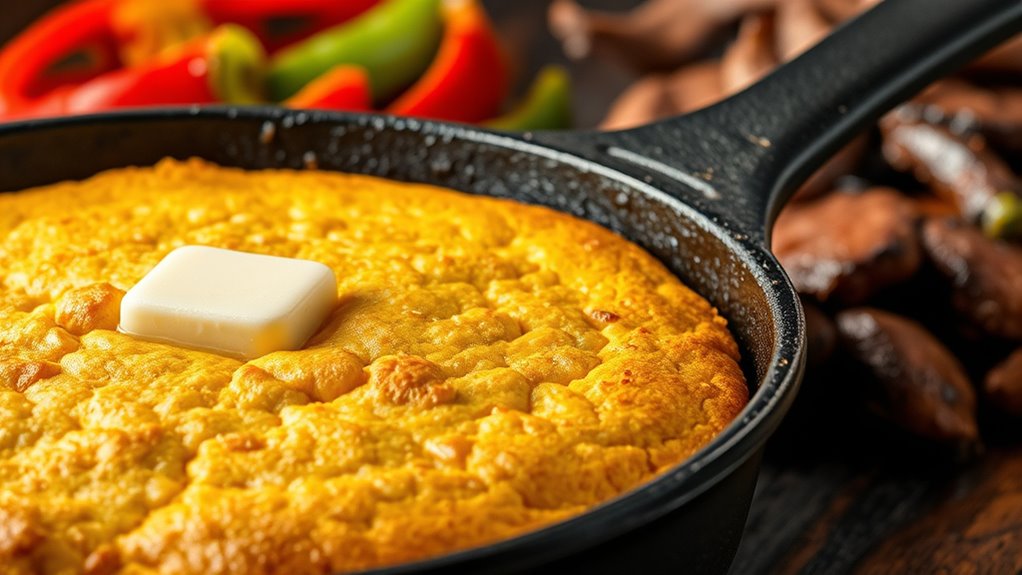
Have you ever wondered why cast-iron cookware has remained a kitchen staple for centuries? It’s because of its durability, versatility, and ability to develop a natural non-stick surface. To keep your cast iron in top shape, mastering seasoning techniques and cleaning methods is essential. Seasoning involves applying a thin layer of oil to the cookware and heating it to create a durable, non-stick coating. You should start by washing your skillet with warm water and a brush to remove any rust or debris—no soap needed, as soap can strip away seasoned layers. After drying it thoroughly, apply a light coat of vegetable oil or flaxseed oil all over the surface, including the handle and the bottom. Then, bake it upside down in the oven at around 450°F for an hour, placing a sheet of foil underneath to catch any drips. This process helps the oil polymerize, forming a slick, protective layer that improves with each use. Regularly maintaining this seasoning creates a surface that’s naturally non-stick, making cooking and cleaning easier over time. Additionally, using a proper cleaning method helps preserve your skillet’s seasoning and longevity.
When it comes to cleaning your cast iron, avoid the dishwasher at all costs. Instead, rinse your skillet with hot water immediately after cooking—using a brush or a non-abrasive scrub pad to remove stuck-on bits. If food stubbornly sticks, you can add a bit of coarse salt and scrub gently, which acts as an abrasive cleaner without damaging the seasoning. After rinsing, dry the skillet thoroughly with a towel or by heating it on the stovetop to evaporate any remaining moisture. To prevent rust, lightly oil the surface once it’s dry. Never soak your cast iron or leave it wet, as moisture leads to rust formation. For deep cleaning or rust removal, scrubbing with steel wool is acceptable, but always re-season your skillet afterward to restore its non-stick surface. Proper cleaning and seasoning techniques ensure your skillet stays in excellent condition and enhances its natural non-stick properties.
With these basics in mind, you’re ready to cook classic dishes like skillet cornbread or sizzling fajitas. The more you care for your cast iron using proper seasoning techniques and cleaning methods, the better your cookware performs. Over time, your skillet develops a seasoned patina that improves with each use, making your cooking more flavorful and your cleanup faster. Remember, caring for cast iron isn’t complicated; it’s about consistent maintenance and understanding how to treat your skillet right. By doing so, you’ll enjoy a lifetime of delicious meals and reliable performance from this timeless kitchen tool.
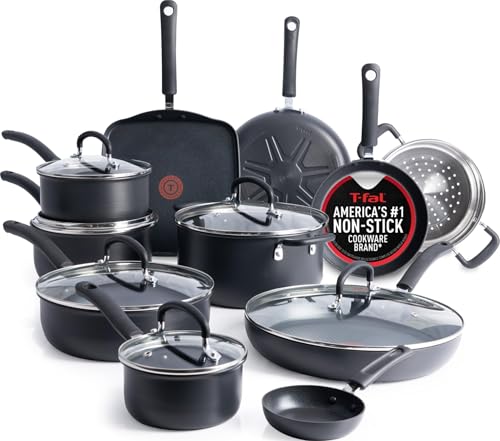
T-Fal Ultimate Hard Anodized Nonstick Pots and Pans Set 17 Piece, Nonstick Cookware Set with Fry Pan, Saucepans, Saute-Pan, Griddle, Dishwasher Safe, Onyx
- Durable Construction: Hard anodized exterior with titanium non-stick coating
- Complete Cookware Set: Includes saucepans, frypans, griddle, sauté pan, Dutch oven, steamer, and egg frypan
- Thermo-Spot Technology: Heat indicator for perfect preheating
As an affiliate, we earn on qualifying purchases.
Frequently Asked Questions
How Do I Prevent Rust on My Cast Iron Cookware?
To prevent rust on your cast iron cookware, regularly apply seasoning techniques to create a natural non-stick coating. After each use, clean with minimal soap and dry thoroughly to eliminate moisture. If rust appears, use rust removal methods like scrubbing with coarse salt or a steel wool pad, then reseason your skillet. Store it in a dry place, and avoid leaving it wet to keep rust at bay.
Can I Use Soap to Clean My Cast Iron Skillet?
Yes, you can use soap to clean your cast iron skillet, but only occasionally. Many believe soap damages the seasoning, but gentle soap cleaning won’t strip it if you maintain your seasoning afterward. Just use a small amount, scrub gently, and dry thoroughly. Regular seasoning maintenance helps protect your skillet and keeps it non-stick, so don’t worry about using soap now and then—it’s safe when done correctly.
How Do I Re-Season a Rusty or Dull Skillet?
To re-season a rusty or dull skillet, start with rust removal methods like scrubbing with steel wool or a vinegar soak. Once clean and dry, apply a thin layer of vegetable oil or shortening all over the skillet. Use re-seasoning techniques by baking it in the oven at 450°F for an hour. Let it cool, then wipe away excess oil. Repeat if needed for a smooth, non-stick surface.
Are There Specific Foods to Avoid Cooking in Cast Iron?
You should avoid cooking highly acidic ingredients like tomatoes or citrus in your cast iron because they can strip the seasoning and cause rust. Also, be cautious with non-stick foods like eggs or pancakes if your skillet isn’t well-seasoned, as they might stick more. Instead, stick to hearty, less reactive foods like meats and vegetables, which help maintain your skillet’s seasoned surface and prevent damage.
What Is the Best Way to Store Cast Iron Cookware?
Think of your cast iron as a treasure that needs safeguarding. To keep it in prime condition, always dry it thoroughly after cleaning and apply a thin layer of seasoning oil. Store your cookware in a dry, well-ventilated space—preferably in a storage container that allows airflow—to prevent rust. Proper seasoning techniques and careful storage ensure your cast iron remains seasoned, durable, and ready for delicious meals.
Conclusion
Remember, a well-cared-for cast iron pan becomes your kitchen’s best friend. With proper care and a few simple recipes like skillet cornbread and fajitas, you’ll enjoy delicious meals for years to come. Keep in mind the saying, “A stitch in time saves nine”—taking care of your cookware now prevents bigger problems later. Embrace the process, and you’ll find that great cooking starts with a little love and attention.