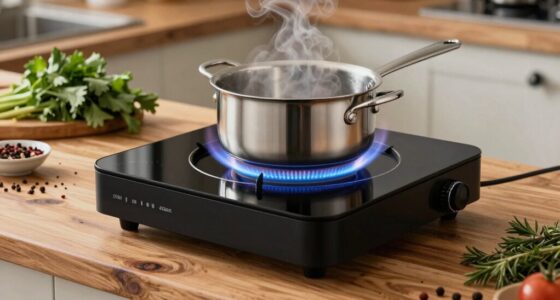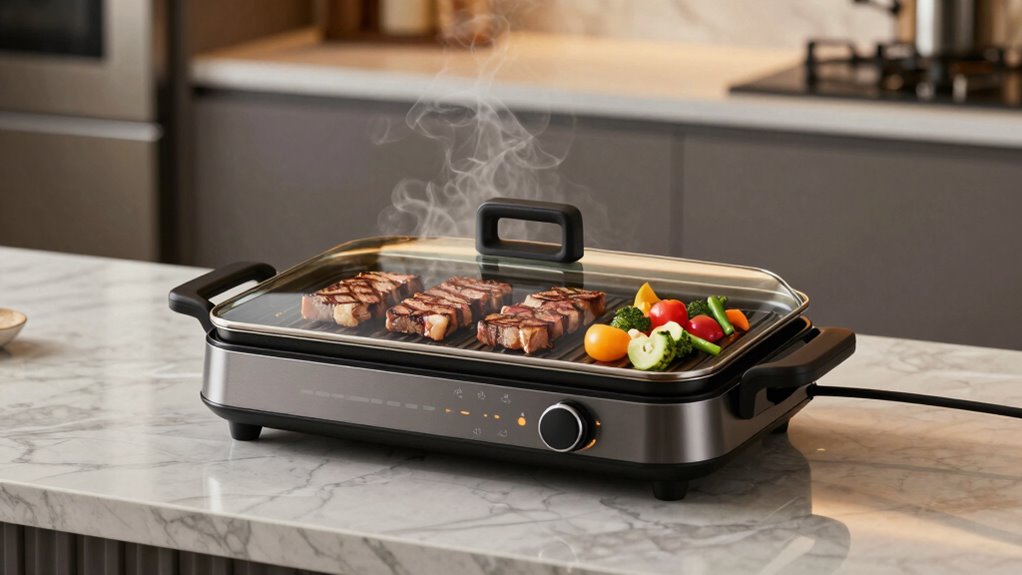

Smokeless indoor grills help reduce smoke and odors using advanced heating and ventilation systems, but they don’t eliminate fumes completely. They feature filters, absorption materials, and fans that capture smoke particles, making indoor cooking cleaner. However, their effectiveness varies by model and how well you ventilate your space. These grills are great for quick, convenient meals, but if you want to understand what they really do, there’s more to uncover below.

Get kitchen staples and gadgets delivered free with Prime
- Fast, free delivery on millions of items
- Prime Video, Amazon Music and more included
- Member-only deals all year
Key Takeaways
- Smokeless indoor grills significantly reduce smoke and odors but rarely eliminate them completely.
- They use advanced heating and ventilation systems to capture and filter smoke particles during cooking.
- Effectiveness varies based on model quality, proper ventilation, and cooking techniques.
- Small cooking surfaces and uneven heat distribution can limit their performance and meal capacity.
- They are designed to improve indoor air quality, but users should combine them with proper ventilation for best results.
smokeless indoor grill with air filtration
As an affiliate, we earn on qualifying purchases.
As an affiliate, we earn on qualifying purchases.
How Do Smokeless Indoor Grills Work?
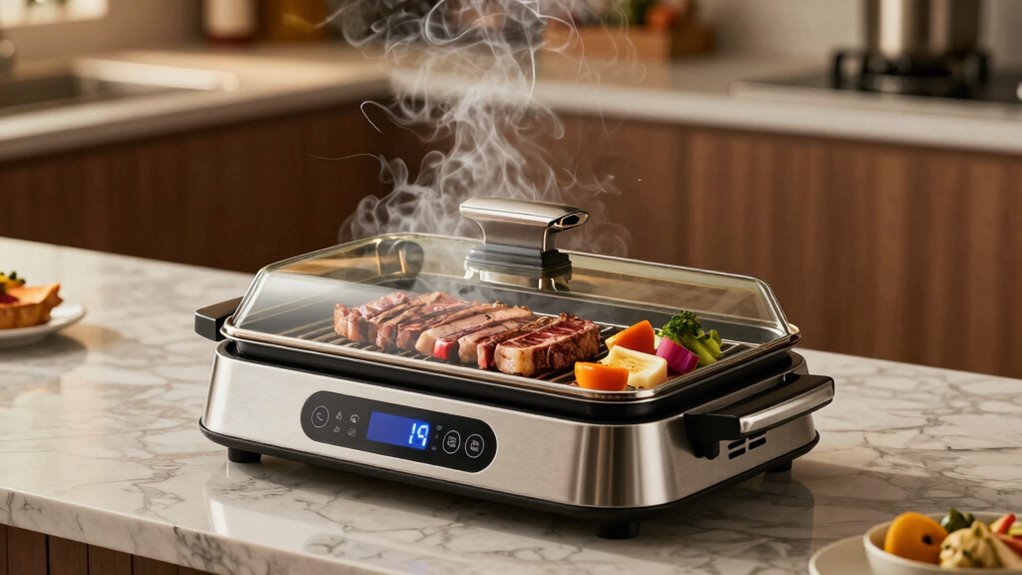
Smokeless indoor grills work by using advanced technology to minimize smoke production while you cook. They often incorporate specialized heating elements and ventilation systems that capture and filter smoke and odors before they spread. This process is similar to how indoor air quality systems help maintain a healthier environment by reducing airborne pollutants. Additionally, some models feature smoke absorption materials that further decrease smoke emissions, enhancing the indoor cooking experience. This allows you to enjoy grilling indoors without worrying about lingering smells. Your cooking techniques also matter; for instance, using lower temperatures or marinating foods can further reduce smoke. Many grills come with useful accessories, like drip trays and adjustable grates, helping you manage grease and heat more effectively. These grill accessories enhance your overall experience by making cleanup easier and allowing you to adapt the grill to different recipes. Furthermore, the environmental impact of these grills is generally lower than traditional outdoor grills, making them a more sustainable choice for eco-conscious consumers. Understanding the battery capacity and watt-hours of your grill can also help optimize its performance for indoor use, ensuring consistent results. As the technology behind these grills continues to evolve, manufacturers are developing new features to improve smoke filtration and energy efficiency. Overall, these features work together to give you a cleaner, more controlled grilling experience indoors.
Do Smokeless Indoor Grills Really Reduce Smoke and Odor?

While smokeless indoor grills are designed to reduce smoke and odors, their effectiveness can vary depending on the model and how you use them. Many models incorporate basic air purification features or fans to help with smoke reduction, but they don’t eliminate all fumes entirely. If you’re cooking greasy or smoky foods, you might still notice lingering smells. Proper ventilation, such as opening windows or using exhaust fans, markedly improves results. Some grills offer built-in filters or extraction systems to capture smoke particles, but these aren’t foolproof. Overall, smokeless grills can lower smoke and odor levels compared to traditional grilling, but they don’t completely eliminate them. To achieve better air quality, combine your grill with good ventilation and air purification strategies. Considering the benefits of herbal wellness strategies, incorporating natural air purification methods like herbal infusions or aromatic spices can further improve indoor air quality. Additionally, understanding air purification techniques can help you maximize the effectiveness of your efforts to reduce indoor odors. Regularly cleaning your grill and replacing filters as recommended can significantly enhance its smoke-reducing capabilities, especially since technology used in projectors, such as filters and fans, plays a crucial role in maintaining performance over time.
What Are the Main Limitations of Smokeless Indoor Grills?
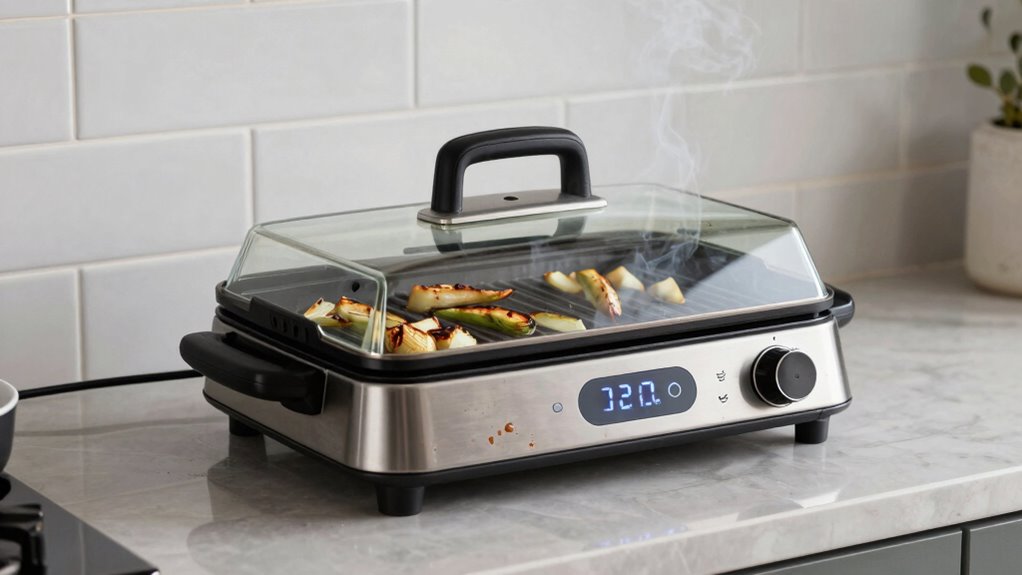
Smokeless indoor grills often have limited cooking space, which can make preparing large meals challenging. You might also notice uneven heat distribution, causing some areas to cook faster than others. These limitations can affect convenience and consistency when you’re trying to get dinner on the table. Additionally, the effectiveness of these grills depends on proper targeted messaging, as irrelevant content can lead to high unsubscribe rates and damage brand reputation. Poor heat distribution can also result in some foods not being cooked thoroughly, impacting overall performance. To improve results, understanding credit card processing and its role in online purchasing can help you choose the right appliances or accessories for your cooking needs. Recognizing the importance of effective heat management can further enhance your grilling experience at home. Being aware of product limitations can help set realistic expectations and improve your overall satisfaction with smokeless indoor grills.
Limited Cooking Space
Although smokeless indoor grills are designed to fit into smaller spaces, they often come with limited cooking surface areas that can restrict what and how much you prepare at once. Space constraints mean you might need to cook in multiple batches, slowing down meal prep. This can be frustrating if you’re trying to serve several people quickly. Additionally, their compact size creates storage challenges, especially if you have limited kitchen space. You might find yourself unable to store larger or multiple units easily. Overall, while these grills save space, their small cooking surfaces can limit your meal options and increase prep time. If you often cook for larger groups or enjoy preparing multiple dishes at once, these space limitations could be a significant drawback.
Inconsistent Heat Distribution
Inconsistent heat distribution is a common issue with smokeless indoor grills, which can impact your cooking results. You might notice unevenly cooked food or fluctuating temperatures, making it hard to achieve perfect results. These grills often struggle with maintaining temperature consistency because their heat regulation systems aren’t as advanced as outdoor grills. Hot spots can develop, leaving some parts overcooked while others remain underdone. This inconsistency can be frustrating, especially when you’re aiming for evenly grilled meat or vegetables. While some models try to address this with better heating elements, many still fall short. Ultimately, the challenge lies in controlling heat distribution evenly across the cooking surface, limiting the grill’s ability to provide reliable and uniform cooking. Improving heat regulation systems is essential for achieving more consistent results.
How Do Indoor Grills Compare to Outdoor Barbecues?

Have you ever wondered how indoor grills stack up against traditional outdoor barbecues? While outdoor grills offer an authentic outdoor ambiance and the chance to enjoy fresh air, indoor grills provide convenience and year-round use. Outdoor barbecues often allow for larger quantities and a smoky flavor that many crave, but they require more time for setup and cleanup. Indoor grills, on the other hand, are compact, easy to clean, and don’t need to be moved or stored after each use. When comparing, consider grill accessories like temperature controls and surface area, which can vary greatly. Indoor grills excel in quick, mess-free cooking, whereas outdoor barbecues shine in flavor and social atmosphere. Both have their strengths, depending on what you prioritize most. Additionally, cooking techniques like using different heat levels can enhance your grilling results regardless of the setting. Interestingly, understanding electric heat sources can help you optimize your indoor grilling experience for better flavor and efficiency. Moreover, knowing how water-cooled systems work can assist in maintaining optimal grilling conditions and safety. A better grasp of grill technology can also help you select equipment that fits your specific needs and improves your overall grilling experience.
What Types of Foods Can You Cook on an Indoor Grill?
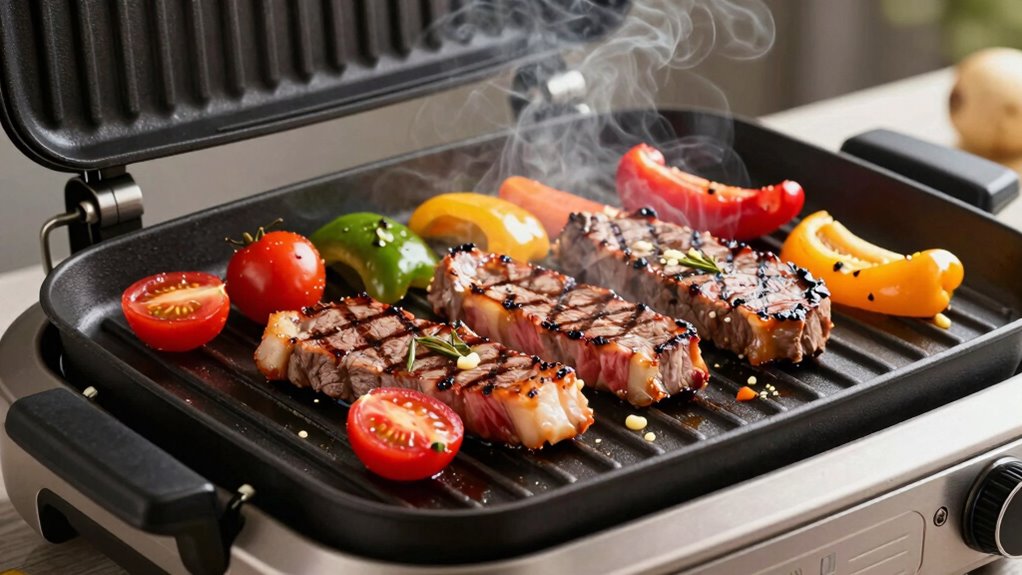
With an indoor grill, you can cook a wide variety of foods, from versatile proteins like chicken, steak, and fish to flavorful vegetables and side dishes. You can also prepare fruits and even desserts, making your meals more diverse and enjoyable. This flexibility allows you to experiment with different recipes and create complete, delicious meals all in one appliance. Additionally, understanding the chemical reactions involved in grilling can help you achieve better flavor and texture in your dishes. For better results, paying attention to food safety practices ensures your meals are both tasty and safe to eat. Monitoring market trends can also inspire you to try new ingredients and techniques, elevating your indoor grilling experience. Being aware of appliance features can help you select the best grill for your cooking needs and optimize its performance. Exploring personality traits can also assist in customizing your cooking style to better suit your preferences and improve your culinary skills.
Versatile Protein Options
Indoor grills are incredibly versatile when it comes to cooking a variety of proteins, making them a convenient choice for quick and flavorful meals. You can prepare a wide range of options that benefit from flavor enhancement and retain health benefits.
- Chicken breasts – Perfect for juicy, tender results, they cook quickly and absorb marinades for added flavor.
- Fish fillets – Ideal for delicate textures, they cook evenly, preserving omega-3s and healthy fats.
- Steaks – Achieve that smoky flavor and beautiful sear without excess oil, making them a healthier protein choice.
These proteins adapt well to indoor grilling, offering you delicious meals that maximize flavor while supporting your health goals.
Vegetables and Sides
Besides proteins, indoor grills excel at cooking a variety of vegetables and side dishes that add vibrant flavors and textures to your meals. Vegetable preparation is straightforward: slice zucchini, peppers, or asparagus for quick, even cooking. You can also skewer cherry tomatoes or portobello mushrooms for easy grilling. The high heat caramelizes sugars and enhances natural flavors, making vegetables taste smoky and delicious. For side dish ideas, try grilled corn on the cob, roasted sweet potatoes, or even toasted bread slices. These foods benefit from the direct heat of the grill, giving them a satisfying char and smoky aroma. With a little prep, you can turn simple vegetables and sides into flavorful, satisfying additions that round out any meal.
Fruits and Desserts
Fruits and desserts come alive on a smokeless indoor grill, offering a quick way to add sweet, smoky flavors to your favorite treats. With a little prep, you can turn simple ingredients into delicious fruity desserts. Here are three ideas to get you started:
- Grilled fruit like pineapple or peaches, which develop caramelized edges and intensified flavors.
- Fruit skewers with marshmallows or chocolate chips for a fun, interactive treat.
- Fruit-filled pastries or turnovers that benefit from a light grill to add a smoky touch.
Grilled fruit enhances natural sweetness, making it perfect for fruity desserts. This method is quick, clean, and adds a unique flavor profile that’s hard to beat.
How Easy Is It to Use and Maintain a Smokeless Indoor Grill?

Using a smokeless indoor grill is generally straightforward, even for beginners. Most models are designed for easy operation, with simple controls and minimal setup. Maintenance is also manageable—regular cleaning keeps it in top shape. To make it easier, follow cleaning tips like wiping down surfaces after each use and removing drip trays. Storage solutions include compact designs or stackable parts that don’t take up much space.
| Task | Tip |
|---|---|
| Cleaning | Use non-abrasive cleaners and wipe thoroughly after each use |
| Storage solutions | Store parts in a dry, cool place for longevity |
| Daily maintenance | Check for grease buildup and clean accordingly |
| Long-term storage | Disassemble and store in a protective container |
Are Smokeless Indoor Grills Worth the Investment?
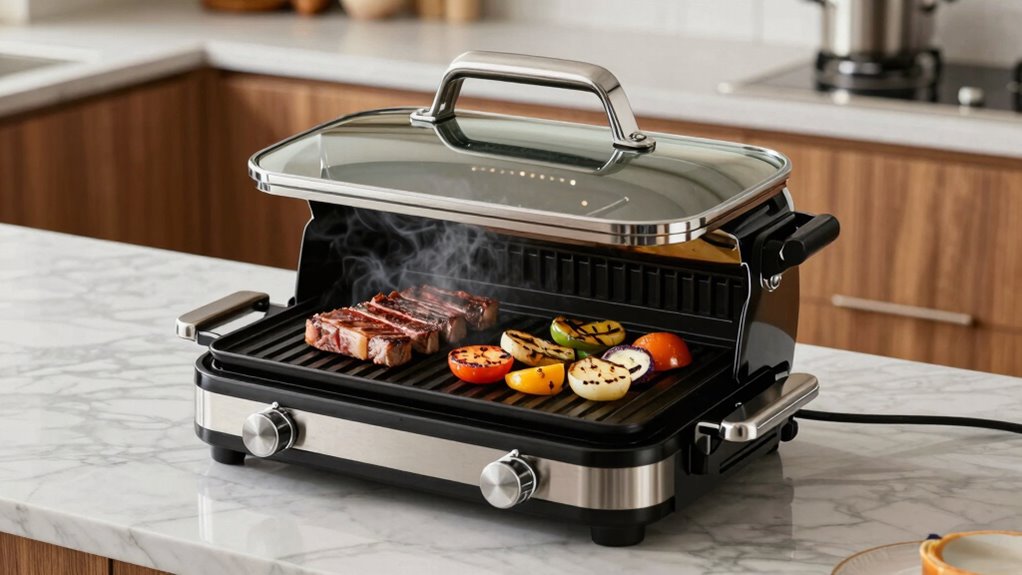
Investing in a smokeless indoor grill can be a smart choice for those looking to enjoy grilled foods without the hassle of outdoor cooking or lingering smoke. It offers convenient indoor grilling with minimal mess. To decide if it’s worth it, consider:
A smokeless indoor grill offers easy, mess-free grilling anytime, perfect for quick, clean meals indoors.
- Indoor grilling flexibility: You can enjoy grilled meals anytime, regardless of weather or outdoor space.
- Effective smoke filtration: Many models reduce smoke, making indoor air quality better and less disruptive.
- Cost and maintenance: While the upfront cost might be higher, the ease of use and cleaning can save you time and effort.
If you value quick, clean, and smoke-free grilling, a smokeless indoor grill could be a worthwhile investment in your kitchen routine.
What Should You Consider Before Buying a Smokeless Indoor Grill?
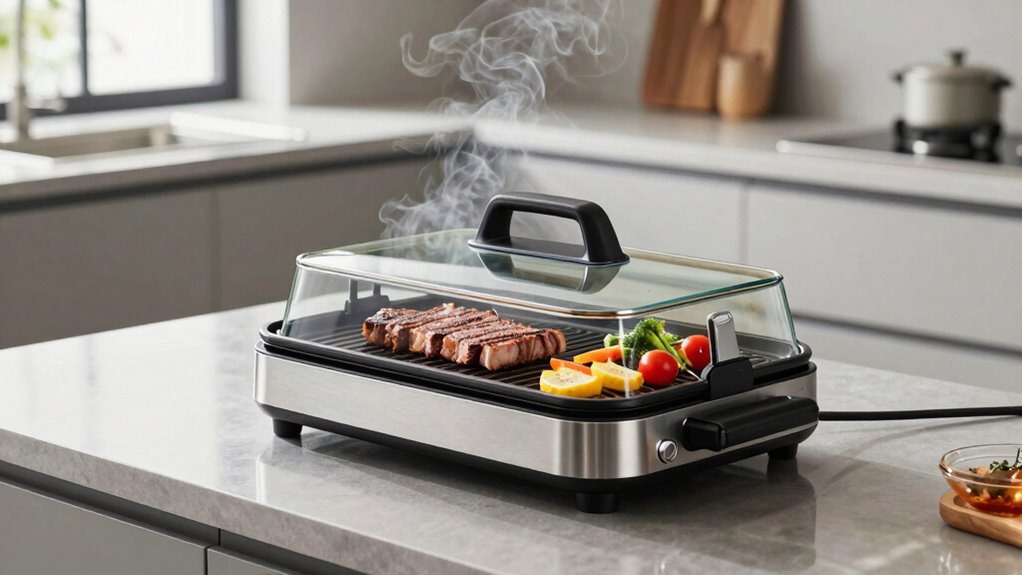
Before purchasing a smokeless indoor grill, it’s important to evaluate your specific needs and kitchen setup. Consider the size of the grill to guarantee it fits comfortably on your countertop or storage space. Think about the types of cooking accessories you’ll need, like different grill plates or accessories for versatility. Also, check if the grill’s cleaning routines are manageable; some models have removable parts for easier cleanup. Pay attention to ventilation features, as they impact how effectively the grill reduces smoke and odors. If you plan to cook frequently, investing in a model with durable construction and simple maintenance will save you time. Ultimately, balancing your cooking preferences with practicality will help you choose a smokeless grill that genuinely fits your lifestyle.
Frequently Asked Questions
How Long Do Smokeless Indoor Grills Typically Last?
Smokeless indoor grills typically last around 3 to 5 years, depending on usage and maintenance. Your grill’s longevity depends on durability factors like build quality, material, and how well you clean and care for it. Regularly cleaning the non-stick surface and avoiding rough handling can extend its lifespan. Choosing a reputable brand with good reviews also helps guarantee your grill remains durable and functional over time.
Are Smokeless Indoor Grills Safe for All Homes?
You’ll be glad to know that smokeless indoor grills are generally safe for most homes. An interesting fact is that indoor pollution from traditional grills can be 3 to 5 times higher than outdoor cooking. These grills substantially reduce smoke emission, making them safer for indoor use. However, guarantee proper ventilation and follow manufacturer guidelines, especially if you have respiratory issues, to minimize any potential risks associated with indoor pollution.
Do These Grills Require Special Cleaning Supplies?
No, these grills typically don’t require special cleaning supplies, but you do need to follow proper maintenance routines. Use mild cleaning chemicals and non-abrasive tools to avoid damage. Regularly wipe down the grill surface, drip tray, and any removable parts after each use. This keeps your appliance in top shape and guarantees safe, efficient cooking, without needing specialized or harsh cleaning products.
Can Smokeless Indoor Grills Cook All Types of Meat Evenly?
Did you know that smokeless indoor grills can cook different meat cuts with just about even flavor enhancement? They excel in cooking versatility, but some thicker or bone-in meats might not cook as evenly as thinner cuts. Your grill’s design and temperature control play vital roles. To get the best results, use proper techniques and monitor cooking times, ensuring all types of meat come out flavorful and tender.
Are Replacement Parts Readily Available for These Grills?
Replacement parts for smokeless indoor grills are generally available, but availability concerns vary by brand and model. You can often find common replacement parts like drip trays, heating elements, or grill plates through the manufacturer’s website or authorized retailers. However, for older or less popular models, sourcing specific parts might take longer or be more challenging. It’s wise to check the manufacturer’s support options before purchasing.
Conclusion
While a smokeless indoor grill won’t turn your kitchen into a backyard barbecue, it can bring sizzling steaks and crispy vegetables right to your countertop. Imagine the aroma of grilled goodness filling your space without the smoke cloud, your favorite foods searing to perfection. With proper maintenance and realistic expectations, this appliance becomes a handy tool to enjoy flavorful meals — all without the outdoor fuss or lingering odors.
NFL season / tailgating Picks
team gear
As an affiliate, we earn on qualifying purchases.