To prep meals for the freezer, focus on soups, stews, and casseroles that freeze well and reheat easily. Use airtight containers or freezer bags, leaving space for expansion, and label everything with dates. Let hot foods cool slightly before packing to prevent spoilage. Portion meals individually to avoid thawing more than needed. Proper packaging keeps flavors fresh and prevents freezer burn. Keep exploring for detailed tips to maximize your meal prep success.

Get kitchen staples and gadgets delivered free — and shop member deals
- Fast, free delivery on millions of items
- Access to Prime Big Deal Days deals on October 6–7
- Prime Video, Amazon Music and more included
Key Takeaways
- Use airtight containers or freezer bags, leaving space for expansion, and label with date and contents.
- Cool hot dishes slightly before sealing and freezing to prevent bacteria growth and condensation.
- Portion meals into individual servings to avoid thawing excess food and facilitate quick reheating.
- Wrap containers with foil or plastic wrap for extra protection against freezer burn and preserve flavor.
- Store meals in a organized manner, tracking dates to maintain freshness and ensure quality over time.
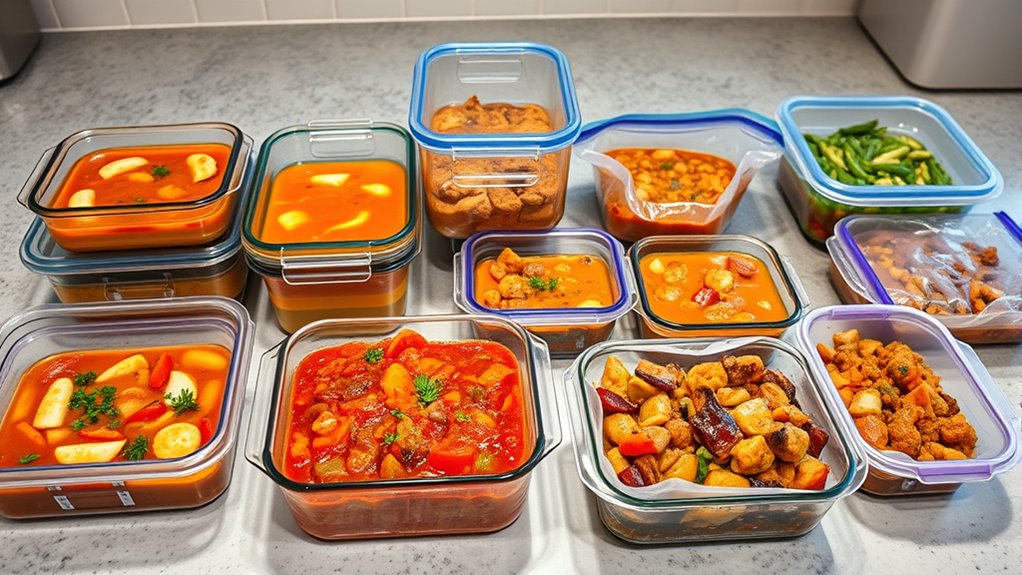
Freezing meals is a smart way to save time and reduce stress during busy weekdays. When you take the time to batch cook your favorite soups, stews, and casseroles, you create a stash of ready-to-eat meals that can be quickly heated and enjoyed. Batch cooking allows you to prepare large quantities at once, which means fewer trips to the grocery store and less time spent cooking during hectic evenings. To make the most of your meal prep efforts, it’s essential to follow proper storage tips. Using the right containers guarantees your dishes stay fresh and flavorful while preventing freezer burn.
Start by choosing high-quality, airtight containers or heavy-duty freezer bags designed for long-term storage. When you fill these containers, leave some space at the top for expansion as the food freezes. Label each container with the date and contents, so you can easily track what needs to be eaten first. For soups, stews, and casseroles, portioning them into individual servings saves you from thawing more food than you need. This approach also makes reheating more convenient, as you can microwave or heat only what you plan to eat.
Use airtight containers and label with date to keep frozen meals fresh and organized.
When it comes to batch cooking, consider preparing a variety of meals that freeze well. Soups like lentil, chicken noodle, or minestrone hold up beautifully in the freezer. Stews such as beef bourguignon or vegetable stew maintain their flavor and texture after freezing. Casseroles like lasagna or baked ziti can be assembled ahead of time and frozen before baking. This way, you just need to reheat and serve, saving you even more time.
To maximize freshness, allow hot food to cool slightly before sealing it into containers. Rapid cooling helps prevent bacteria growth and condensation inside the packaging, which can lead to freezer burn or spoilage. Once cooled, transfer the dishes into your chosen containers, seal tightly, and label with the date. For added protection, consider wrapping containers with aluminum foil or plastic wrap before placing them in the freezer. This extra layer can help prevent freezer burn and preserve flavor.
airtight freezer storage containers
As an affiliate, we earn on qualifying purchases.
As an affiliate, we earn on qualifying purchases.
Frequently Asked Questions
How Long Can I Store Prepared Meals in the Freezer?
You can typically store prepared meals in the freezer for up to 3 to 6 months, depending on the type of dish and storage guidelines. For ideal freezer lifespan, label each item with the date you froze it. Always use airtight containers or freezer bags to prevent freezer burn. After this period, the quality may decline, but the food can still be safe if kept frozen continuously.
What Is the Best Way to Reheat Frozen Soups and Stews?
You should reheat frozen soups and stews by using either microwave or stove. For microwave reheating, thaw slightly or heat on medium in short intervals, stirring often. For stove reheating, transfer to a pot and warm over medium heat, stirring occasionally until steaming hot. Always guarantee your soup or stew reaches an internal temperature of 165°F to ensure it’s safe to eat.
Can I Freeze Casseroles With Dairy Ingredients?
Yes, you can freeze casseroles with dairy ingredients, but you should be cautious. Dairy can sometimes change texture, so dairy preservation isn’t always perfect. To keep your casserole tasty, follow casserole tips like using full-fat dairy and avoiding excess cheese or sour cream. Wrap it tightly and label clearly. When reheating, do so gently to prevent curdling or separation, ensuring your dish remains delicious even after freezing.
How Do I Prevent Freezer Burn on Prepared Meals?
To prevent freezer burn on your prepared meals, always use airtight containers or freezer wrap to seal them tightly. Removing as much air as possible slows moisture loss and prevents ice crystals from forming. For casseroles or soups, double-wrap with freezer wrap or store in vacuum-sealed bags. Label everything with dates, so you use the oldest first. Proper sealing keeps your meals fresh and preserves flavor.
Are There Ingredients That Don’T Freeze Well?
Think of your freezer as a delicate dance floor—some ingredients, like fresh herbs, wilt and lose flavor, and cooked pasta turns mushy when frozen. These don’t freeze well and can ruin your meal’s texture. Avoid freezing fresh herbs directly; instead, chop and freeze them in ice cubes. Similarly, cook pasta al dente and add it later to prevent sogginess, ensuring your meals stay fresh and flavorful.
Conclusion
Freezing soups, stews, and casseroles is a game-changer for busy days — no need to sacrifice homemade meals. If you worry about flavor or texture, just remember: proper storage and reheating preserve taste and freshness. Plus, prepping ahead saves you time and stress, so you can enjoy home-cooked goodness anytime. Give it a try; your future self will thank you for the convenience and delicious meals you’ve created!
NFL season / tailgating Picks
team gear
As an affiliate, we earn on qualifying purchases.