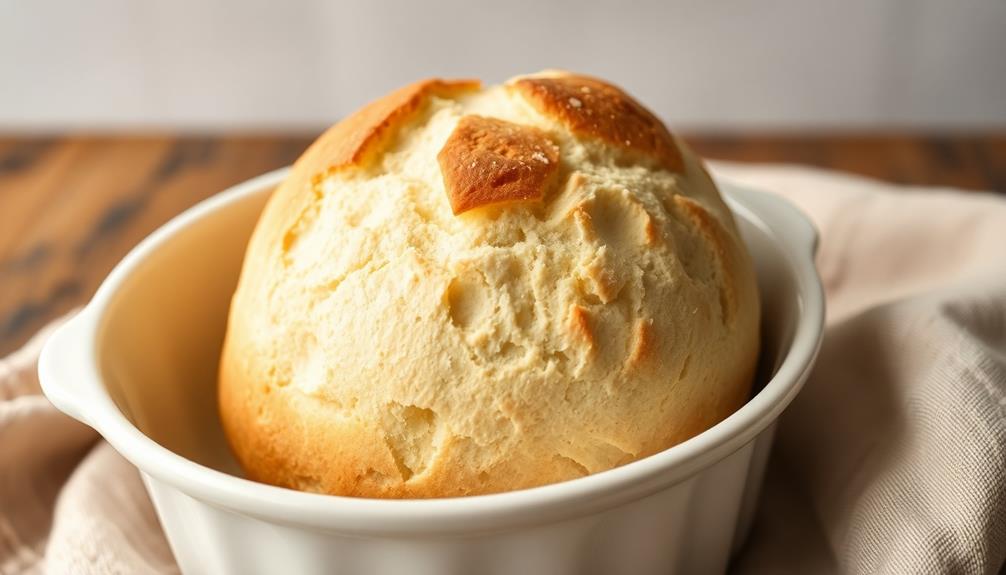

Baking bread on snowy days can be a soothing, mindful ritual that transforms stress into comfort. As you knead and shape the dough, you connect with tradition and focus on the present moment. The quiet outside and warm oven create a cozy atmosphere, turning baking into a calming act of self-care. The satisfaction of a crusty loaf and the inviting aroma bring joy and warmth—keep exploring to discover how this simple act can nurture your well-being.
Key Takeaways
- Baking on snowy days creates a calming, meditative environment that promotes mindfulness and stress relief.
- Cultivating a sourdough starter fosters patience and a personal connection through caring for a living culture.
- Shaping and scoring bread allows for tactile focus, grounding the baker in the present moment.
- The cozy atmosphere enhances relaxation, making baking a therapeutic act during winter’s stillness.
- Sharing freshly baked bread provides emotional satisfaction, warmth, and a sense of accomplishment.
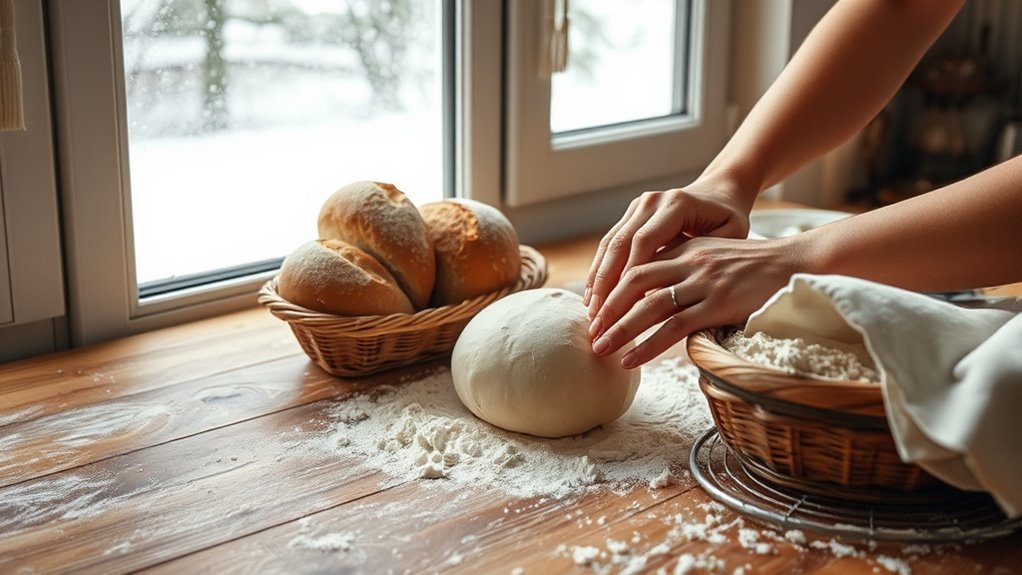
Have you ever noticed how baking can turn a stressful day into a calming experience? There’s something almost meditative about mixing ingredients, watching dough rise, and shaping bread with your hands. On snowy days, when the world feels quiet and still, baking becomes even more special. It gives you a chance to slow down, connect with tradition, and create something warm and nourishing. If you’re into bread baking, exploring sourdough starters can elevate this experience. A sourdough starter is more than just a leavening agent; it’s a living culture that embodies patience and care. When you feed your starter regularly, you form a bond with it. That connection makes each loaf feel personal, almost like a small act of self-care. Plus, working with sourdough brings a tangy complexity to your bread, making each slice a reward for your effort.
Once your sourdough starter is active and bubbly, it’s time to craft your loaf. Bread shaping techniques are vital here—they turn a rough dough into a beautiful, professional-looking loaf. As you knead and shape, you focus on the details: forming a tight boule, creating elegant slashes with a sharp razor, or shaping a baguette with elongated precision. These steps require concentration, and that focus helps clear your mind of worries. The tactile nature of shaping bread grounds you in the present moment, transforming baking from a task into a mindful ritual. The way the dough responds to your touch adds a sense of satisfaction that’s hard to match. When you score the top with a sharp blade, you’re not just venting steam; you’re also expressing creativity.
Baking on a snowy day offers a perfect backdrop for practicing these techniques. The quiet, the cold air outside, and the warm oven inside create a cozy atmosphere that encourages patience and reflection. As your bread bakes, your entire space fills with comforting aromas that seem to melt away stress. When it finally comes out of the oven, the crispy crust and soft interior are more than just delicious—they’re a proof of your skill and care. Sharing that freshly baked bread with loved ones makes the moment even sweeter. Baking becomes more than just a chore; it’s an act of therapy, an art form, and a way to nurture yourself during the quiet beauty of winter’s snow.
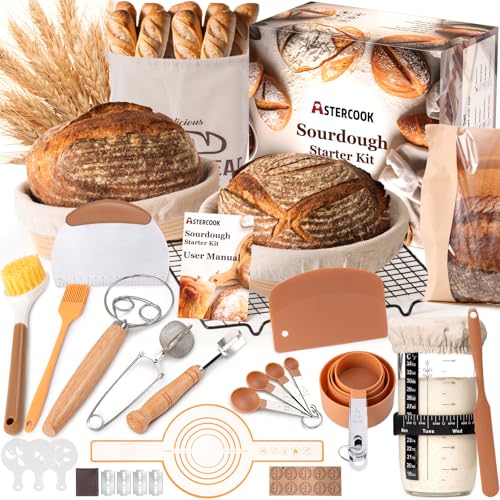
Astercook Sourdough Starter Kit with Round & Oval Banneton Bread Proofing Basket, Starter Jar, Dough Whisk, Scrapers, Stencils, Complete Sourdough Bread Baking Supplies, Fathers Day Gift for Men
- Complete Sourdough Kit: Includes baskets, tools, and accessories
- Professional Banneton Baskets: Breathable rattan with washable liners
- Versatile Baking Tools: Whisk, scrapers, lame, and more
As an affiliate, we earn on qualifying purchases.
As an affiliate, we earn on qualifying purchases.
Frequently Asked Questions
What Are the Best Types of Bread to Bake on Snowy Days?
On snowy days, you’ll love baking hearty sourdough bread and rustic artisan loaves. Use bread flour for a strong gluten network, giving your bread excellent texture and rise. Sourdough is perfect because it develops flavor and keeps well in cold weather. These types of bread create warmth and comfort, making your snowy day extra special. Plus, they’re satisfying to make and even better to enjoy with a cozy beverage.
How Does Cold Weather Affect Bread Rising Times?
Cold weather slows yeast activity, causing longer rising times. When it’s chilly, your dough’s temperature drops, so yeast becomes less active, making it take more time to rise. To combat this, keep your dough warm by placing it in a cozy spot or using a proofing box. Ensuring the right dough temperature helps yeast work efficiently, giving you a perfect rise even on the coldest days.
Can Baking Bread Improve Mental Health During Winter?
Baking bread during winter can boost your mental health by creating a warm, comforting ritual. As you knead dough, you engage in mindfulness meditation, focusing on each movement and sensation. This process strengthens emotional resilience, helping you manage seasonal mood shifts. The aroma of freshly baked bread fills your space, offering a sense of achievement and calm, making winter days feel less isolating and more nourishing for your mind.
What Safety Precautions Are Needed When Baking Outdoors in Snow?
When baking outdoors in snow, you should wear winter footwear to keep your feet dry and warm, preventing slips. Use proper outdoor baking gear like insulated gloves, a sturdy baking surface, and wind shields to protect your equipment. Always check weather conditions beforehand, keep a fire extinguisher nearby, and work on stable surfaces. These precautions guarantee safety while enjoying your snowy day baking adventure.
How Can I Store Leftover Bread to Keep It Fresh?
To keep your leftover bread fresh, start by using airtight storage containers or resealable bags to prevent moisture loss and preserve flavor. For bread preservation, avoid refrigerating it for too long, as it can dry out. Instead, store it at room temperature for up to two days, or freeze it for longer-term storage. When you’re ready to enjoy it, simply warm it up and savor the fresh taste.
Conclusion
As you knead dough on a snowy day, remember that baking isn’t just about bread—it’s a proven stress reliever. Studies show that engaging in baking can reduce cortisol levels by up to 30%, helping you feel calmer and more centered. So, next time snow blankets your world, embrace the warmth of the oven and the joy of baking. It’s a simple act that transforms chilly days into cozy, comforting moments you’ll cherish.