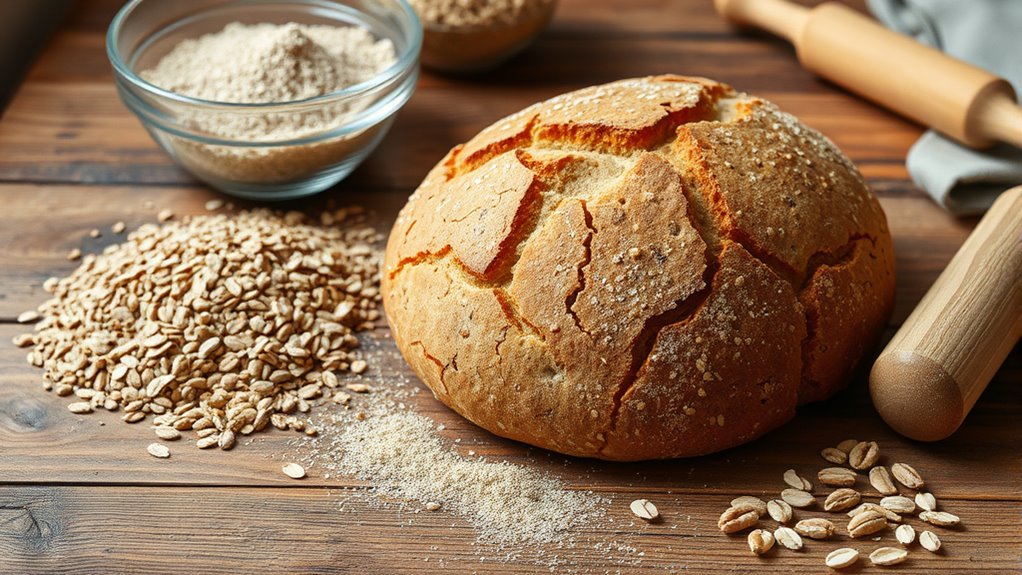

To bake hearty whole grain breads, focus on developing gluten by kneading longer or using autolyse techniques to strengthen dough, as whole grains can slow gluten formation. Incorporate fermentation methods like sourdough or longer proofing to enhance flavor, digestibility, and dough structure. Keeping the environment warm and consistent helps fermentation progress smoothly. You’ll discover more tips on balancing fermentation and gluten development to achieve delicious, wholesome breads if you continue exploring.

Get kitchen staples and gadgets delivered free with Prime
- Fast, free delivery on millions of items
- Prime Video, Amazon Music and more included
- Member-only deals all year
Key Takeaways
- Incorporate longer fermentation or preferment techniques like sourdough to improve gluten structure and flavor.
- Use autolyse methods to enhance gluten development before kneading whole grain dough.
- Add vital wheat gluten to boost elasticity and density in dense whole grain flours.
- Maintain warm, consistent fermentation temperatures to encourage steady gluten formation and flavor development.
- Be patient with longer kneading and fermentation times to achieve a hearty, well-textured whole grain bread.
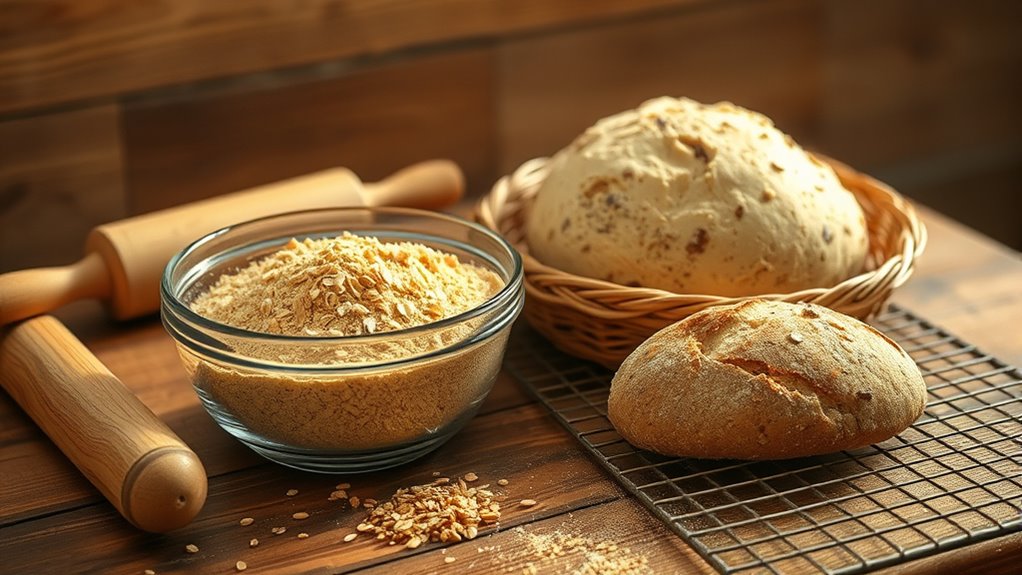
Baking with whole grains is an excellent way to boost your diet’s nutritional value while still enjoying delicious baked goods. Whole grains contain more fiber, vitamins, and minerals than refined flours, but they can also make your bread denser and more challenging to work with. To get the best results, understanding how gluten development and fermentation techniques play a role in your baking process is essential. When working with whole grain flours, gluten development tends to be slower and less elastic, which can affect the bread’s structure. To compensate, you might need to knead longer or incorporate autolyse methods—mixing the flour and water and letting it rest before adding other ingredients. This process allows gluten strands to form more fully, giving your dough better strength and extensibility.
Fermentation is another indispensable factor in baking with whole grains. It not only helps develop flavor but also improves dough texture and digestibility. When fermenting, the yeast produces carbon dioxide that leavens your bread and enhances gluten network formation. With whole grains, fermentation can be a bit more variable because the bran and germ can interfere with gluten development. Using longer fermentation times or preferment techniques, like a poolish or sourdough starter, can help develop more complex flavors and improve dough elasticity. Sourdough, in particular, is excellent for whole grain baking because the natural acids and wild yeasts strengthen gluten and break down tough bran particles, making the bread lighter and more digestible.
Temperature control during fermentation is equally important. Keep your dough in a warm, consistent environment to encourage steady fermentation activity. If the dough ferments too quickly or too slowly, it can impact gluten development and the final texture of your bread. When incorporating whole grains, don’t rush the process; patience allows the gluten network to strengthen and the flavors to fully develop. Additionally, adding essential wheat gluten can help boost gluten formation, especially if you’re working with particularly dense or coarse whole grain flours.
As an affiliate, we earn on qualifying purchases.
Frequently Asked Questions
Can I Substitute Whole Grains for All-Purpose Flour in Any Bread Recipe?
You can substitute whole grains for all-purpose flour in bread recipes, but keep in mind grain substitution affects the texture and flavor. Whole grains add heartiness and richer taste, creating flavor variations you’ll enjoy. Start by replacing half the flour with whole grains, then gradually increase as you get comfortable. Be sure to adjust liquids since whole grains absorb more moisture, ensuring your bread turns out exactly how you want it.
How Do Whole Grains Affect Bread Shelf Life and Freshness?
Whole grains can slightly reduce bread’s shelf stability because they contain natural oils that may go rancid faster, affecting grain freshness. You might notice your bread becoming stale quicker, but storing it in an airtight container in a cool, dark place helps preserve its quality. To maximize freshness, consider freezing slices and thawing only what you need, ensuring your hearty bread stays delicious longer.
Are There Specific Storage Tips for Homemade Whole Grain Breads?
You should store your homemade whole grain bread in airtight containers to keep it fresh longer. For added longevity, consider refrigeration, but wrap it tightly to prevent it from drying out. If you plan to eat it within a few days, keep it at room temperature in a sealed bag. For longer storage, freezing is best—wrap it well and use airtight containers or freezer bags to prevent freezer burn.
What Are Common Pitfalls When Baking With Multiple Whole Grains?
Imagine walking a tightrope—mixing multiple whole grains can be tricky. You might face common pitfalls like uneven grain moisture absorption, leading to dry spots, or texture variability that throws off your bread’s consistency. To avoid this, guarantee each grain is properly hydrated and balance their proportions. Keep a close eye on moisture levels and don’t rush the process—patience helps your hearty bread turn out perfectly balanced and delicious.
How Can I Improve the Rise and Texture of Dense Whole Grain Breads?
To improve the rise and texture of dense whole grain breads, focus on gluten development by kneading thoroughly and allowing enough fermentation time. Use proper hydration techniques, like soaking grains or adding essential wheat gluten, to enhance dough elasticity. These steps help create a stronger gluten network, trapping gases better during baking, resulting in a lighter, airier loaf with improved texture.
Conclusion
Baking with whole grains might seem challenging at first, but it’s incredibly rewarding. Imagine trying a slice of your own hearty, nutritious bread—like Sarah did, switching to whole wheat after her family’s health scare. She discovered that with a few simple tips, she could enjoy delicious, wholesome bread daily. So, give it a try! Your taste buds and body will thank you for choosing richer, more satisfying baked goods made with whole grains.
Halloween Picks
halloween
As an affiliate, we earn on qualifying purchases.