During Chinese New Year, dishes like fish, noodles, and dumplings bring good luck, prosperity, and longevity. Serving a whole fish symbolizes abundance, with fresh ingredients like ginger and scallions for extra fortune. Long noodles stand for resilience and a long life, prepared without breaking. Dumplings, shaped like ingots, represent wealth, especially if made with lucky fillings. To discover more about these festive symbols and their traditional preparations, keep exploring these meaningful customs.

Get kitchen staples and gadgets delivered free with Prime
- Fast, free delivery on millions of items
- Prime Video, Amazon Music and more included
- Member-only deals all year
Key Takeaways
- Fish symbolizes abundance and completeness; served whole with head and tail intact to invite prosperity.
- Long noodles represent longevity; prepared by stretching and pulling dough to emphasize unbroken, long strands.
- Dumplings symbolize wealth; shaped like a crescent, often with a hidden coin to attract fortune.
- Using lucky ingredients like shrimp, pork, and regional vegetables enhances the dishes’ auspicious significance.
- Following traditional preparation methods and presentation amplifies the dishes’ symbolic power for good luck.
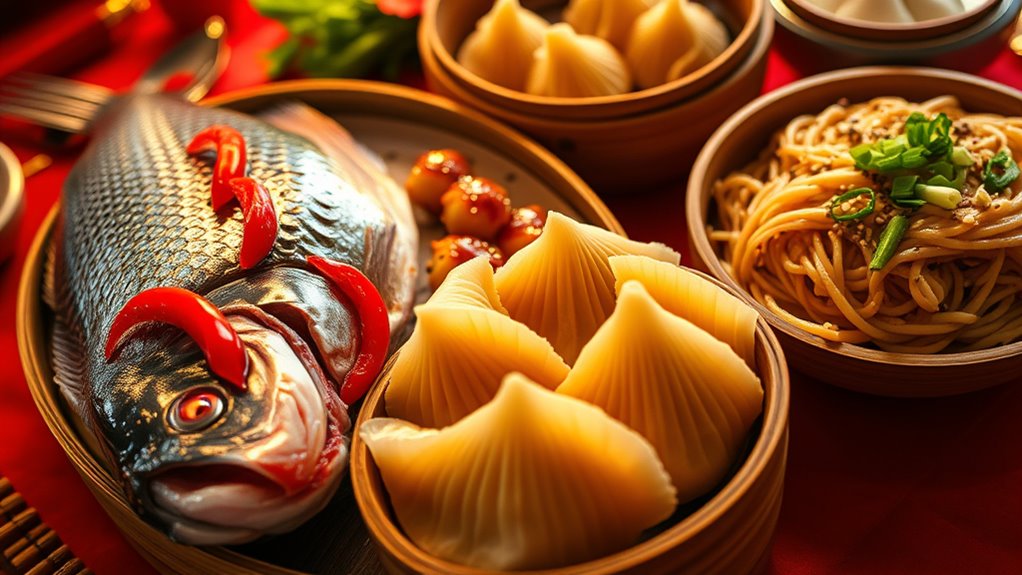
Chinese New Year is a time when families gather to enjoy traditional dishes that symbolize good luck and prosperity. Among these, fish, noodles, and dumplings stand out as essential dishes that carry deep symbolic meanings. These dishes are prepared with specific lucky ingredients and follow traditional preparation methods to maximize their auspicious significance. As you prepare these dishes, you participate in age-old customs that are believed to invite good fortune for the year ahead.
Celebrating Chinese New Year with symbolic dishes invites luck, prosperity, and longevity for the year ahead.
Starting with fish, it’s customary to serve a whole fish, often steamed, to symbolize abundance and completeness. The key to making this dish auspicious is in selecting the right lucky ingredients, such as fresh fish like carp or sea bass, which are believed to attract wealth. During traditional preparation, the fish is cleaned thoroughly, then seasoned simply with ginger, scallions, and soy sauce to highlight its natural flavor. It’s important to leave the head and tail intact, symbolizing a good start and ending for the new year. When serving, the fish is typically placed at the center of the table, with the belief that its presence will bring surplus and prosperity.
Noodles are another essential dish and are eaten to symbolize longevity. When preparing noodles, you focus on using lucky ingredients, such as wheat flour or rice flour, which are associated with stability and resilience. The traditional preparation involves stretching and pulling the dough to make long, unbroken strands. You should cook the noodles just until they are tender, avoiding breaking or cutting them, as this represents a wish for a long and unbroken life. During the celebration, you might serve the noodles simply with soy sauce or stir-fried with vegetables and meat, but the emphasis remains on the length of the noodles, which you’re encouraged to eat without breaking them.
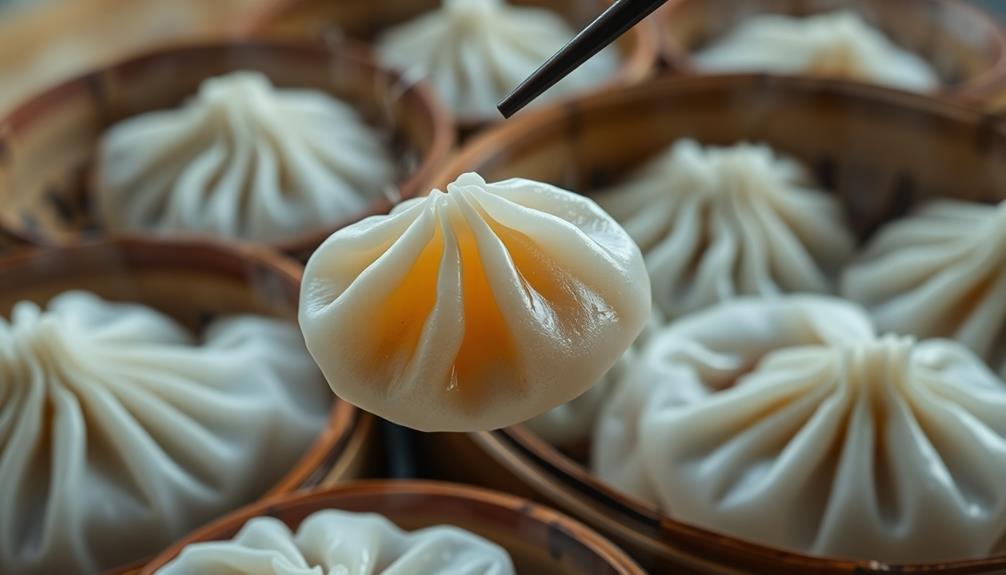
Dumplings are a staple too, symbolizing wealth and prosperity. When making dumplings, you incorporate lucky ingredients like pork, shrimp, or vegetables, depending on regional customs. The traditional preparation involves wrapping a mixture of these ingredients in thin dough skins, often with a coin or other small object hidden inside to bring extra luck to the person who finds it. You can shape the dumplings in various ways, but the plump, crescent shape is most common, representing wealth and fullness. As you cook dumplings, boiling or steaming them, you’re participating in a ritual believed to attract good fortune and happiness for the coming year.
These dishes, prepared with specific lucky ingredients and traditional methods, connect you to a rich heritage of customs. By respecting these practices, you’re not just enjoying a meal—you’re inviting luck, prosperity, and longevity into your new year.
Chinese New Year fish serving platter
As an affiliate, we earn on qualifying purchases.
As an affiliate, we earn on qualifying purchases.
Frequently Asked Questions
What Are the Origins of Chinese New Year’s Symbolic Dishes?
You might not know, but the origins of Chinese New Year’s symbolic dishes come from deep family customs and culinary symbolism. These foods, like fish, noodles, and dumplings, represent prosperity, longevity, and unity, passed down through generations. You can see how families celebrate together, maintaining traditions that highlight the importance of harmony and good luck. These dishes connect history, culture, and family values, making your New Year’s feast meaningful and full of good wishes.
How Do Regional Variations Affect Traditional Dishes?
You’ll find that regional flavors and culinary influences turn traditional Chinese New Year dishes into delightful chaos. In the north, hearty wheat noodles rule, while southern regions prefer rice-based dishes. Coastal areas serve up fresh seafood, and inland spots add bold spices. These variations reflect local ingredients and cultural influences, making each celebration unique. So, no matter where you are, expect your symbolic dishes to wear a regional flavor suit—sometimes fancy, sometimes just deliciously different.
Are There Specific Color Meanings Behind the Dishes?
Yes, dish colors carry deep symbolism during Chinese New Year. Red signifies good luck and happiness, so you’ll see many red dishes or ingredients. Gold or yellow represents wealth and prosperity, often seen in egg or egg yolk dishes. Green symbolizes growth and vigor, common in vegetable-based dishes. These color symbolism and vibrant dish colors aim to attract positive energy and good fortune for the coming year.
Can Non-Chinese People Incorporate These Dishes for Good Luck?
Sure, you can absolutely incorporate these iconic dishes into your own celebrations. By embracing cultural adaptation, you bring international traditions into your festivities with meaning and respect. Sharing symbolic foods like fish, noodles, and dumplings promotes prosperity and happiness, regardless of your background. So, go ahead—add these auspicious dishes to your menu, and invite good luck and cultural connection into your life and celebrations.
What Are Some Modern Twists on Traditional New Year Dishes?
You can enjoy modern twists on traditional New Year dishes by exploring fusion cuisine and contemporary presentation. For example, serve sushi-style dumplings or noodle salads with unexpected ingredients like quinoa or avocado. You might also incorporate trendy plating techniques to make these dishes look more vibrant and appealing. These updates keep the cultural significance intact while adding a fresh, innovative touch perfect for celebrating the occasion in a contemporary way.
Conclusion
As you enjoy these traditional dishes, remember they aren’t just tasty—they’re believed to bring good luck and prosperity. Many say the symbolism behind fish, noodles, and dumplings is rooted in ancient customs, but some theories suggest these meanings have evolved over time. Regardless of their origins, incorporating these foods into your celebration can deepen your connection to tradition and invite positive energy for the year ahead. Embrace the symbolism and make your New Year truly meaningful.
Columbus Day / Indigenous Peoples' Day Picks
long weekend sales
As an affiliate, we earn on qualifying purchases.