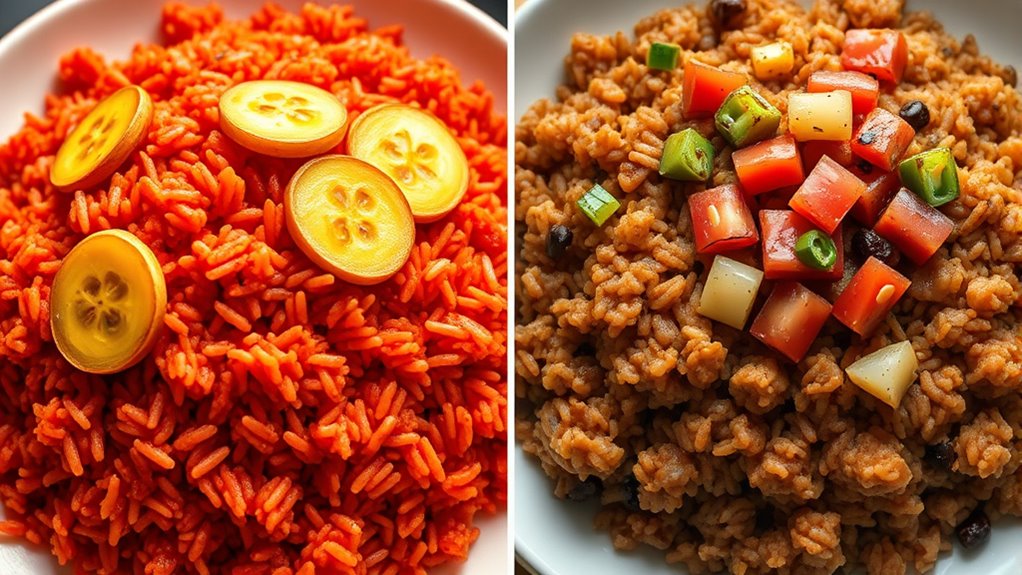

Ghanaian and Nigerian Jollof rice share roots but differ in taste and techniques. Ghanaian Jollof is slow-cooked to develop a smoky, caramelized flavor, using ingredients like ginger, garlic, and palm oil. Nigerian Jollof is quicker, with bold, spicy tomato flavors often enhanced with thyme and curry. Nigerian rice tends to be saucier and zestier, while Ghanaian serves a deeper, smoky profile. If you want to uncover more about these tasty differences, keep exploring.
Key Takeaways
- Ghanaian Jollof emphasizes slow cooking for smoky, caramelized flavors, while Nigerian Jollof is quicker with bold, spicy tastes.
- Ghanaian version uses palm oil and a deep, smoky tomato base; Nigerian Jollof highlights fresh tomatoes and vibrant spices.
- Ghanaian Jollof has a caramelized, slightly charred flavor; Nigerian Jollof features a spicy, tangy, saucier profile.
- Cooking techniques differ: Ghanaian involves slow, deliberate simmering; Nigerian favors high-heat, rapid cooking.
- Both countries take pride in their versions, reflecting distinct cultural influences and regional culinary traditions.

Have you ever wondered which country serves the best Jollof Rice—Ghana or Nigeria? The answer isn’t straightforward, as both nations take immense pride in their versions of this beloved dish. To truly appreciate the differences, you need to understand how cultural influences shape each recipe and how unique cooking techniques bring out distinct flavors. Ghanaian Jollof is known for its rich, smoky taste, often achieved through specific cooking methods that emphasize a deep, caramelized base. Nigerians, on the other hand, tend to favor a more tomato-forward, slightly spicy profile that highlights a different set of culinary traditions. These distinctions are deeply rooted in their cultural influences, which have evolved over centuries, blending indigenous ingredients with external culinary practices.
In Ghana, the cultural influences come from a mix of local ingredients and historical trade routes that introduced spices and cooking styles. The Ghanaian approach typically involves frying a blend of tomatoes, peppers, and onions until they form a thick, flavorful base. This method requires careful attention to cooking techniques, as the goal is to develop a smoky, almost charred flavor, often achieved by allowing the rice to cook slowly in the flavorful mixture. Ghanaians also incorporate ingredients like ginger and garlic, which add depth and warmth to the dish. The use of palm oil in Ghanaian Jollof is common, giving it a distinctive red hue and a slightly earthy aroma. The cooking process emphasizes patience, allowing flavors to meld and the rice to absorb the vibrant sauces fully.
Nigerian Jollof, by contrast, reflects a different set of cultural influences rooted in diverse ethnic groups and their culinary traditions. Nigerians often use a more tomato-centric sauce, sometimes combining fresh and canned tomatoes for a balanced, tangy flavor. Their cooking techniques focus on quick, high-heat methods that produce a lively, spicy, and slightly saucier dish. The spices used are more pronounced, with additions like thyme, curry powder, and bay leaves, which contribute to the dish’s bold flavor profile. Nigerian cooks often add vegetables like peas and carrots or even proteins like chicken and fish directly into the rice, making it a complete, hearty meal. The emphasis on vibrant, spicy flavors reflects Nigeria’s rich culinary diversity and the influence of external trade and colonial history.
Both countries take pride in their Jollof Rice, and their distinct cultural influences and cooking techniques give each version its unique character. Whether you prefer the smoky, slow-cooked Ghanaian style or the spicy, lively Nigerian version, one thing is clear: Jollof Rice is a celebration of West African culinary diversity, shaped by history, culture, and tradition.
Top picks for "west african jollof"
Open Amazon search results for this keyword.
As an affiliate, we earn on qualifying purchases.
Frequently Asked Questions
Which Country’s Jollof Rice Is More Popular Internationally?
You’ll find Nigeria’s jollof rice more popular internationally because of its strong culinary influence and widespread recognition. Its vibrant, smoky flavor appeals to global audiences, making it a favorite at international food festivals and restaurants. Nigeria’s larger diaspora and successful marketing also boost its international recognition. So, if you’re looking for the most globally recognized version, Nigerian jollof rice stands out, showcasing West African cuisine’s rich flavors to the world.
Are There Any Health Benefits Specific to Ghanaian or Nigerian Jollof Rice?
You’ll find that Nigerian jollof rice often contains more tomatoes and peppers, providing higher vitamin C levels, while Ghanaian versions may include ingredients like vegetables and lean meats, boosting fiber and protein intake. These nutritional differences can offer specific health benefits—like improved immunity or better digestion. So, choosing which to enjoy depends on your health goals, but both offer wholesome, flavorful options that support your well-being.
How Do Traditional Cooking Methods Differ Between the Two Countries?
You’ll notice that Ghanaian and Nigerian cooking techniques differ in their traditional methods. Ghanaians often use a smoky flavor achieved by cooking over open flames and incorporating local ingredients like ginger and tomatoes. Nigerians, however, favor sautéing ingredients first, creating a rich base with varied spice blends. These ingredient variations and distinct cooking techniques give each dish its unique taste and texture, making both versions delicious in their own right.
What Are Common Side Dishes Served With Jollof Rice in Each Country?
Imagine a vibrant tapestry, each thread representing a side dish that enhances Jollof Rice. In Ghana, you might find fried plantains or spicy kebabs adding sweetness and heat, embodying their regional flavor profile. Nigeria’s side variations often include Moi Moi or fried yams, offering hearty complements. These sides, like colors in a painting, bring out the rich, diverse regional flavors, making each plate a unique culinary masterpiece.
Is There a Historical Origin Story Behind Jollof Rice in West Africa?
You might find that the origins of Jollof rice trace back to colonial influences, blending West African ingredients with culinary evolution over centuries. This dish likely evolved from the Wolof Empire’s rice-based meals, adapting through trade and colonial contact with Europeans, Arabs, and Asians. These interactions shaped its vibrant flavors, making Jollof rice a symbol of cultural fusion and shared history across West Africa.
Conclusion
Now, as you savor each bite of West African Jollof, remember that this dish is like a story told differently across borders—each version a chapter of culture and pride. Whether Ghanaian or Nigerian, your taste buds are partaking in a delicious rivalry that’s as vibrant as the continent itself. So, next time you indulge, think of it as a culinary journey through history—proof that even in differences, there’s unity and flavor worth celebrating.