To achieve perfect char on West African suya without burning the spices, start by mixing a balanced spice blend with ground peanuts, paprika, cayenne, and seasonings, and apply it just before grilling. Preheat your grill to medium-high and keep the temperature steady, turning the meat frequently to prevent hotspots. Use oil to help spices adhere and control flare-ups by avoiding overcrowding and managing flames. With proper technique, you’ll get a smoky crust without sacrificing flavor—keep going to master this craft.

Get kitchen staples and gadgets delivered free with Prime
- Fast, free delivery on millions of items
- Prime Video, Amazon Music and more included
- Member-only deals all year
Key Takeaways
- Preheat the grill to medium-high and manage heat carefully to develop a smoky crust without burning spices.
- Lightly coat meat with oil before applying spice mixture to prevent spices from burning during grilling.
- Apply spices just before grilling or in the last few minutes to minimize charring and preserve flavor.
- Turn meat frequently and avoid overcrowding to promote even cooking and prevent flare-ups.
- Monitor flames closely and move meat to cooler grill sections if flare-ups occur, ensuring a perfect char without burning spices.
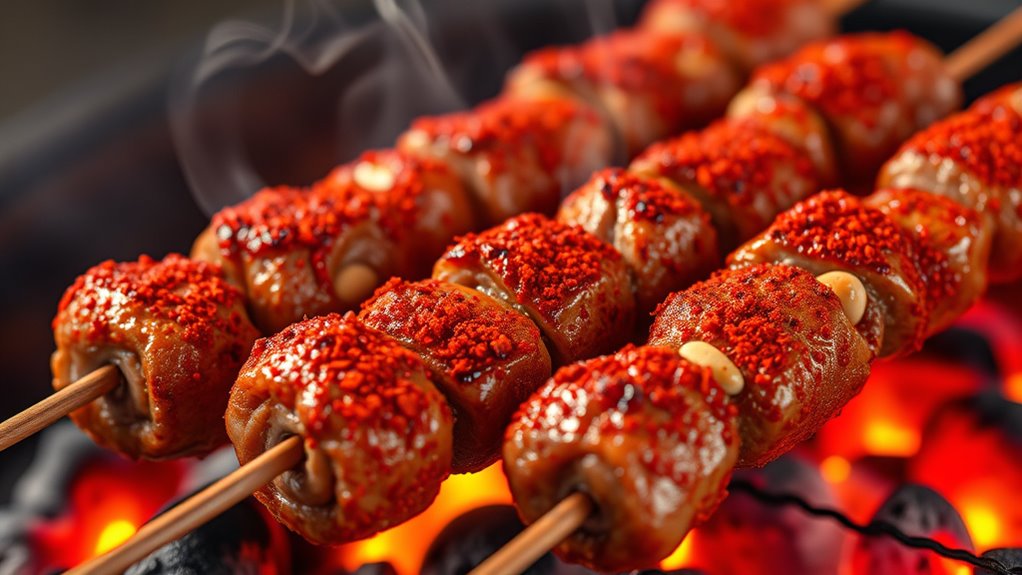
Have you ever wondered what makes suya irresistibly smoky and perfectly charred? The secret lies in mastering the spice balance and grill techniques that bring out its signature flavor. When preparing suya, the right combination of spices is essential. You want a blend that’s rich and bold but doesn’t overpower the meat or burn easily on the grill. Typically, a mixture of ground peanuts, paprika, cayenne, ginger, garlic powder, and other seasonings creates that distinctive, spicy aroma. Ensuring the spice mixture isn’t too oily or thick allows it to stick evenly to the meat without clumping or falling off during grilling. Striking the perfect spice balance means you get a vibrant flavor that’s both savory and slightly spicy, without overwhelming the natural taste of the meat.
Once you’ve prepared your spice mix, focus on the grill techniques that will give you the perfect char without burning the spices. Start by preheating your grill to a medium-high heat. This temperature allows the meat to sear quickly, locking in juices and creating a desirable crust. When placing the meat on the grill, avoid overcrowding—this keeps the heat consistent and prevents steaming, which can compromise the char. Use tongs to turn the meat instead of piercing it with a fork, as this helps retain the juices and prevents flare-ups that can char the spices prematurely. Keep an eye on the heat and adjust as needed—if the flames flare up, move the meat to a cooler part of the grill. You should aim for a steady, controlled heat that allows the meat to cook evenly while developing that smoky crust. Additionally, understanding grill temperature control is crucial for achieving consistent results. Proper spice application at the right time also plays a vital role in preventing burning and ensuring flavor retention.
Another key tip is to apply the spice mixture just before grilling or during the last few minutes of cooking. Adding spices too early can lead to burning, which imparts a bitter flavor and ruins the spice balance. Using a brush to lightly coat the meat with oil before applying the spice mixture can also help prevent burning and promote even charring. Proper heat management during grilling is essential to avoid flare-ups that can burn the spices and ruin the flavor. As the meat cooks, turn it frequently to achieve uniform grill marks and to prevent any part from burning. Patience is essential—rushing the process often results in burnt spices and uneven cooking. With careful attention to both the spice balance and grill techniques, you’ll achieve a suya with a perfect smoky aroma, a beautifully charred exterior, and a tender, flavorful interior.
As an affiliate, we earn on qualifying purchases.
Frequently Asked Questions
What Types of Meat Are Best for Making Suya?
When making suya, you should choose meats that hold up well during grilling, like beef, chicken, or mutton. For meat preparation, slice it thinly for even cooking and better marinade absorption. Use marinade techniques that include spices and oil to enhance flavor and tenderness. These choices guarantee your suya develops a perfect char without burning, giving you flavorful, juicy, and tender results every time.
How Long Should Suya Be Marinated Before Grilling?
Imagine a gentle dance of flavors settling into your meat, creating a symphony of taste. For the best flavor infusion, marinate your suya for at least 30 minutes, but ideally up to 2 hours. This marination duration allows the spices to deeply penetrate, enhancing each bite. Don’t rush the process, as patience guarantees your grilled suya bursts with rich, well-rounded flavors that delight every palate.
Can Suya Spices Be Made Vegetarian?
You can definitely make suya spices vegetarian by exploring vegetarian alternatives and spice customization. Instead of traditional meats, try tofu, mushrooms, eggplant, or seitan, which absorb flavors well. Adjust the spice blend to suit your taste, adding extra paprika, chili, or ginger for boldness. This way, you enjoy flavorful, spicy suya with a plant-based twist, tailoring the seasoning to your preferences for a delicious vegetarian meal.
What Side Dishes Complement Suya Best?
You might find that simple side dishes like sliced onions, fresh cucumbers, and spicy pepper sauce perfectly complement suya. When considering spice pairing and serving suggestions, think about balancing the smoky, spicy flavors with cooling elements. Roasted yams, jollof rice, or fried plantains also work well, creating a delightful contrast. These options enhance your suya experience, making every bite more enjoyable and memorable.
Are There Regional Variations of Suya Within West Africa?
You’ll find regional variations of suya across West Africa, each with unique spice blends and suya cooking techniques. For instance, Nigeria’s suya often features peanuts and chili, while Ghana’s version may include ginger and garlic. These differences reflect local tastes and ingredients. Exploring these variations allows you to appreciate diverse flavors and cooking styles, making each suya experience uniquely delicious and authentic.
Conclusion
Now that you know how to achieve that perfect char without burning your spices, are you ready to impress your friends with authentic West African suya? With attention to temperature and timing, you can enjoy juicy, flavorful skewers every time. Remember, the key isn’t just in the spices but in your technique. So, are you prepared to master the art of suya and bring a taste of West Africa to your grill?
NFL season / tailgating Picks
team gear
As an affiliate, we earn on qualifying purchases.