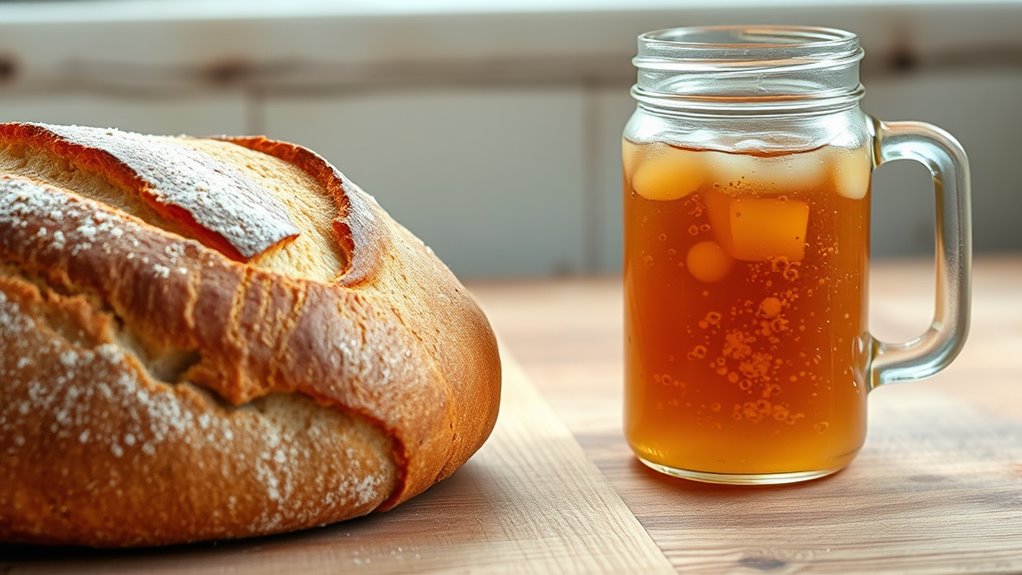

In 2026, focus on mastering bread baking and fermenting to enhance your culinary skills sustainably. Experiment with different types of bread, from sourdough to artisan loaves, while learning proper fermentation techniques for flavor and health benefits. Incorporate local ingredients and eco-friendly practices to support responsible sourcing. Improving these skills will transform your kitchen into a creative space that champions both taste and sustainability. Keep exploring, and you’ll discover even more ways to elevate your culinary journey.
Key Takeaways
- Master artisanal bread baking techniques, focusing on sourdough, whole grain, and gluten-free options.
- Explore fermentation skills like making yogurt, kimchi, and kombucha to enhance flavor and preservation.
- Incorporate sustainable ingredients and practices into baking and fermenting projects for eco-conscious cooking.
- Develop visually appealing plating and presentation methods for fermented foods and baked goods.
- Experiment with creative flavor combinations and textures to elevate traditional bread and fermentation recipes.
Culinary Resolutions
Have you ever considered how your culinary habits can transform your year? Making conscious choices in the kitchen can not only elevate your skills but also positively impact the environment. One way to do this is by embracing sustainable sourcing. When you select ingredients, prioritize local, organic, and seasonal products. This reduces your carbon footprint, supports local farmers, and ensures fresher, more flavorful meals. As you develop your cooking repertoire, pay attention to where your ingredients come from and how they’re produced. This awareness encourages more responsible consumption and helps you build a more eco-friendly kitchen. Alongside sustainable sourcing, refining your plating techniques can turn simple dishes into stunning creations. Good plating enhances the visual appeal of your food, making every meal feel special and more satisfying. Start by learning basic principles like balance, color contrast, and focal points. Use contrasting colors to make your dishes pop or arrange components thoughtfully to guide the diner’s eye. Proper plating also involves understanding portion sizes and symmetry, preventing your presentation from feeling cluttered or sparse. As you progress, explore different plating styles, from minimalist to elaborate, to match your culinary personality. Developing these skills will boost your confidence and make mealtime more enjoyable for everyone. Additionally, understanding food sustainability practices can deepen your appreciation for responsible sourcing and inspire more innovative and eco-conscious dishes.
Incorporating sustainable sourcing and advanced plating techniques into your cooking routine encourages a more mindful approach to food. You begin to see your kitchen as a place of creativity, responsibility, and artistry. Every ingredient becomes an opportunity to support ethical practices, while your presentation skills help communicate your culinary story visually. These skills also push you to be more intentional with your choices, whether that’s selecting sustainable seafood or experimenting with vibrant garnishes that elevate your dishes’ aesthetic. As you master these techniques, you’ll notice a ripple effect—your meals become more flavorful, nutritious, and appealing, inspiring you to keep exploring new recipes and methods. Plus, with each effort, you contribute to a more sustainable food system, making your culinary journey not just about personal growth but also about making a difference. Whether you’re plating a simple salad or a complex main course, applying these principles makes the process more meaningful. In the end, your dedication to sustainable sourcing and refined plating will turn everyday cooking into a purposeful craft, enriching your year with both skill and intention.
Top picks for "culinary resolution skill"
Open Amazon search results for this keyword.
As an affiliate, we earn on qualifying purchases.
Frequently Asked Questions
What Are the Key Ingredients for Perfect Bread Baking?
To make perfect bread, you need the right ingredient ratios—flour, water, yeast, and salt—balanced precisely. Use high-quality ingredients and consider flavor enhancements like honey or herbs to add depth. Proper kneading and fermentation also play essential roles. Keep your dough moist but not sticky, and give it enough time to rise. With attention to these key ingredients and techniques, you’ll bake bread that’s flavorful, airy, and consistently delicious.
How Do I Troubleshoot Common Fermentation Issues?
Imagine your sourdough isn’t rising; it’s frustrating. First, check your starter troubleshooting—ensure it’s active and bubbly. If fermentation timing is off, your dough may need more or less time to rise. Keep it in a warm spot, but avoid over-proofing. If issues persist, refresh your starter or adjust fermentation times. With patience, you’ll master the perfect rise every time and troubleshoot common fermentation issues effectively.
What Tools Are Essential for Beginner Fermenters?
To start fermenting safely and develop great flavors, you need essential tools like glass jars with airlocks, a pH meter for safety, and a fermentation weight to keep ingredients submerged. These tools help maintain proper fermentation safety and allow you to practice flavor development techniques. You’ll also want a clean towel and a funnel for easy handling. With these, you’re set to create delicious, safe ferments at home.
How Long Does It Take to Master Bread Baking?
Mastering bread baking varies, but with dedication, you can see progress in a few months. It takes about 6 months to become confident with bread shaping and perfect your oven techniques, especially with consistent practice. To truly master it, expect a year or more of experimenting with dough consistency, scoring, and baking temperatures. Keep practicing, stay patient, and you’ll develop a bread-baking skill set that elevates your baking every time.
Are There Health Benefits to Fermenting Foods at Home?
Imagine a garden of health, where fermenting foods at home blooms with benefits. Yes, you gain nutritional benefits like probiotics that boost your gut health, and fermentation safety is manageable with proper techniques. These natural processes enhance flavors and preserve foods, making meals more vibrant. By mastering fermentation, you turn simple ingredients into powerful, healthful treasures, transforming your kitchen into a wellness sanctuary.
Conclusion
By embracing new skills like bread baking and fermenting, you’ll not only elevate your culinary game but also boost your well-being. Did you know that over 70% of home cooks find baking bread reduces stress and enhances happiness? So, make 2026 your year of delicious growth. Immerse yourself in these skills, enjoy the process, and watch your confidence rise. Your kitchen adventures await—trust me, the rewards are worth it.