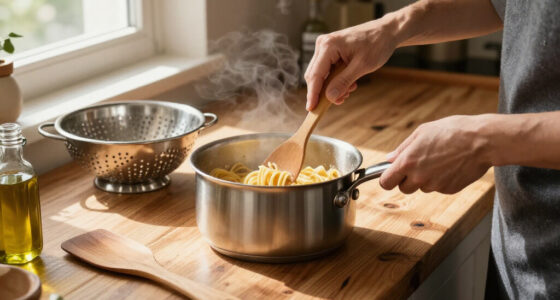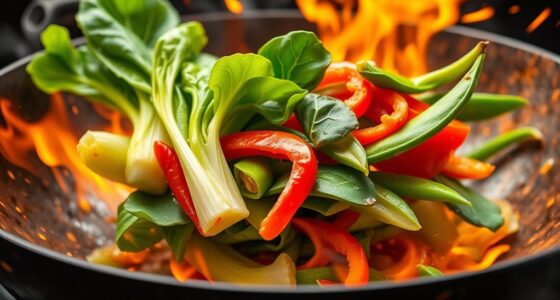
To season properly, salt your ingredients at the right moments—early during marinating to deepen flavor and develop complexity, or just before cooking for a quick lift that enhances freshness. Start with a small amount, taste often, and adjust gradually to avoid over-seasoning. Remember, too much salt can’t be removed, so think about other flavors too. Keep exploring these tips to master seasoning techniques that truly elevate your dishes.

Get kitchen staples and gadgets delivered free with Prime
- Fast, free delivery on millions of items
- Prime Video, Amazon Music and more included
- Member-only deals all year
Key Takeaways
- Salt ingredients during marinating to infuse deeper, more complex flavors.
- Add salt gradually, tasting frequently to avoid over-seasoning.
- Salt early for robust ingredients to develop richer flavors; salt delicate foods just before cooking.
- Use fresh herbs early in cooking for infusion, and add near the end for brightness.
- Adjust seasoning throughout cooking to balance flavors and prevent overpowering the main ingredients.
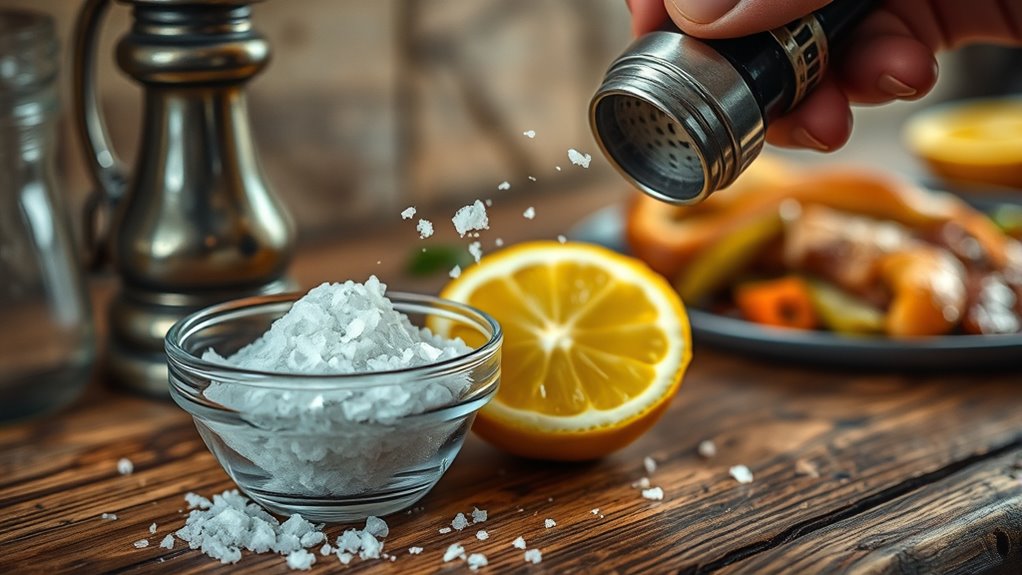
Unleash the full potential of your dishes by mastering seasoning secrets that elevate flavor and bring your cooking to life. One of the most pivotal aspects of seasoning is understanding when to salt and how much to use. Proper salting enhances the natural flavors of ingredients, but timing and technique make all the difference. When you salt at the right moment, you allow flavors to meld seamlessly, creating a more balanced and satisfying dish. For meats and hearty vegetables, consider salting during marinating techniques. Marinating isn’t just for tenderness—it’s also an opportunity to infuse layers of flavor. Use this time to incorporate salt thoughtfully, ensuring it penetrates deeply and enhances the overall taste. For delicate foods like fish or eggs, you might salt just before cooking to preserve their texture, but for robust ingredients, salting early helps develop complexity. Recognizing the importance of proper seasoning techniques can significantly improve your cooking results.
Salting during marinating infuses deeper flavor and enhances dish complexity.
Knowing how much to salt can be tricky, but a good rule of thumb is to start with a small amount and taste as you go. Remember, you can always add more, but you can’t take it out once it’s in. When seasoning, think about the other flavors present—herb pairings play a key role here. Fresh herbs like thyme, rosemary, or oregano can complement certain proteins and vegetables, but their strength varies. If you’re working with herbs, consider adding them at different stages: some early to allow their flavors to infuse during cooking, others near the end to keep their brightness intact. Combining herbs with salt can create a harmonious flavor profile, but be mindful not to overshadow the main ingredients.
Incorporate herbs thoughtfully into your seasoning process, especially when you’re marinating. For example, pairing rosemary with lamb or thyme with chicken can greatly elevate the dish. When you marinate with herb pairings, you’re not just seasoning; you’re building a complex flavor foundation that enhances each bite. Be sure to balance the salt and herbs—too much salt can mask delicate herb flavors, while too little may leave your dish underwhelming. Taste regularly during cooking to adjust seasoning as needed, and don’t be afraid to experiment with different herb combinations. This will help you develop your palate and discover what works best for your dishes.
Mastering when to salt and how much, along with strategic herb pairings and marinating techniques, empowers you to create flavorful, well-seasoned meals. With practice, you’ll recognize the nuances that make seasoning truly effective, transforming simple ingredients into memorable dishes.
Products Worth Considering

Breville Smart Grinder Pro Conical Burr Coffee Grinder, Brushed Stainless Steel

Le Creuset Enamemed Cast Iron Oval Dutch Oven, 5 qt., White/Crucible
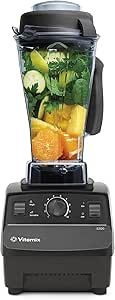
Vitamix 5200 Professional-Grade Blender, 64 oz. Container, Black
As an affiliate, we earn on qualifying purchases.
Frequently Asked Questions
Can I Season Food Beforehand or Just When Cooking?
You can definitely season food beforehand to boost flavor and enhance the dish. During marinade preparation, add salt and spices early to allow the flavors to meld and penetrate the ingredients. This method improves overall taste and guarantees even seasoning. Just be careful not to oversalt if you’re marinating for a long time, as it can lead to overly salty results. Seasoning ahead is a simple way to maximize flavor enhancement.
What’s the Best Type of Salt for Seasoning?
Think of salt as the artist’s brush; the right type adds vibrant flavor enhancement. For seasoning, choose coarse sea salt or kosher salt—they’re great for control and texture. Fine table salt dissolves quickly and works well during cooking. Each salt type offers unique benefits, so select based on your dish’s needs. Experimentation helps you find the perfect match to elevate your flavors seamlessly.
How Do I Tell if I’ve Added Too Much Salt?
If your dish tastes overly salty or has a salty taste that lingers, you’ve added too much salt. You might notice it’s hard to fix once it’s too salty, so taste as you go. Excess salt can raise health concerns, especially for those with hypertension. To fix it, add more ingredients like vegetables or starches, or dilute with water or broth. Always start small and adjust gradually.
Should I Rinse Food After Salting?
Rinsing food after salting is like rinsing away the seasoning’s soul; it can wash off too much of that salty flavor you’ve worked to develop. If you’ve added salt too early or too much, a quick rinse can help, but it might also dilute other flavors. Generally, it’s better to adjust seasoning during cooking or after tasting, rather than rinsing, to keep the seasoning timing just right.
Does Salt Affect the Cooking Time or Temperature?
Salt can influence cooking time and temperature by affecting how quickly food cooks. When you add salt, it promotes salt absorption, which enhances flavor, but it might also cause food to cook slightly faster by breaking down cell walls or altering moisture levels. Keep in mind, adding salt early can help with flavor enhancement, but adjust cooking times if you notice ingredients cooking faster than expected.
Conclusion
Remember, seasoning is your culinary superpower—when you salt at the right moment and in the right amount, you’ll transform ordinary dishes into unforgettable masterpieces. Don’t be afraid to taste as you go; your palate is the best guide. A pinch of salt can make all the difference, turning bland into breathtaking. Master this skill, and you’ll wield flavor like a wizard, creating meals so delicious they’ll leave everyone wondering if you’ve *discovered* the secrets of the universe!