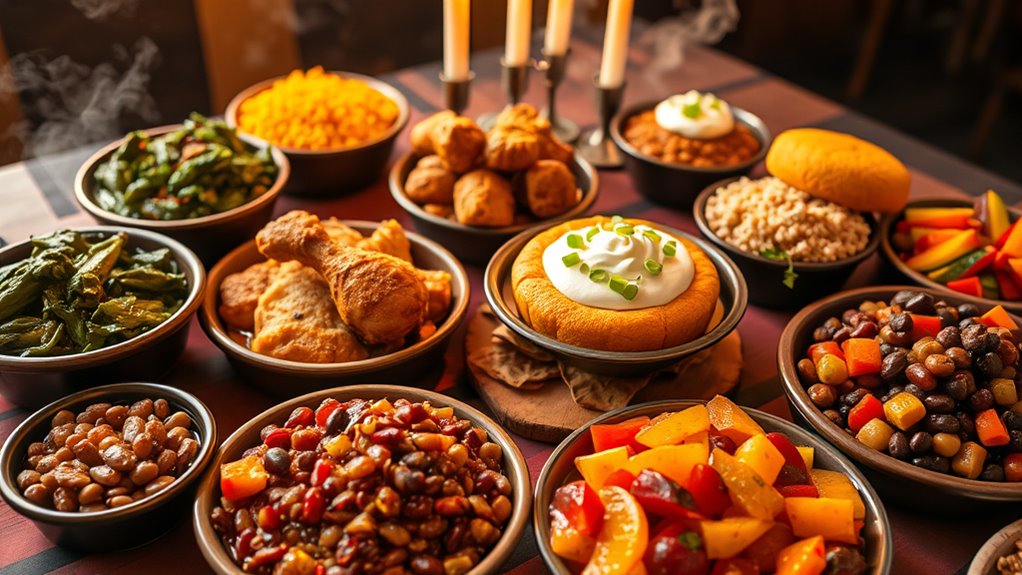

Celebrate Kwanzaa by preparing soulful dishes that honor African heritage and community bonds. Classic foods like jollof rice, collard greens, sweet potatoes, cornbread, fried chicken, macaroni and cheese, and black-eyed peas reflect resilience and cultural pride. These recipes connect you to ancestors and reinforce the holiday’s principles, making your celebration meaningful. Keep exploring to discover how these dishes tell stories of tradition and bring people together during Kwanzaa.
Key Takeaways
- Traditional Kwanzaa dishes like Jollof rice and collard greens symbolize prosperity, community, and cultural pride.
- Soul food staples such as fried chicken and black-eyed peas reflect resilience and culinary heritage.
- Incorporating these recipes during Kwanzaa enhances cultural connection and celebrates African roots.
- Sharing these dishes fosters unity and reinforces the principles of Kwanzaa within the community.
- Personalizing recipes adds meaningful touches that honor ancestral traditions and deeper cultural significance.
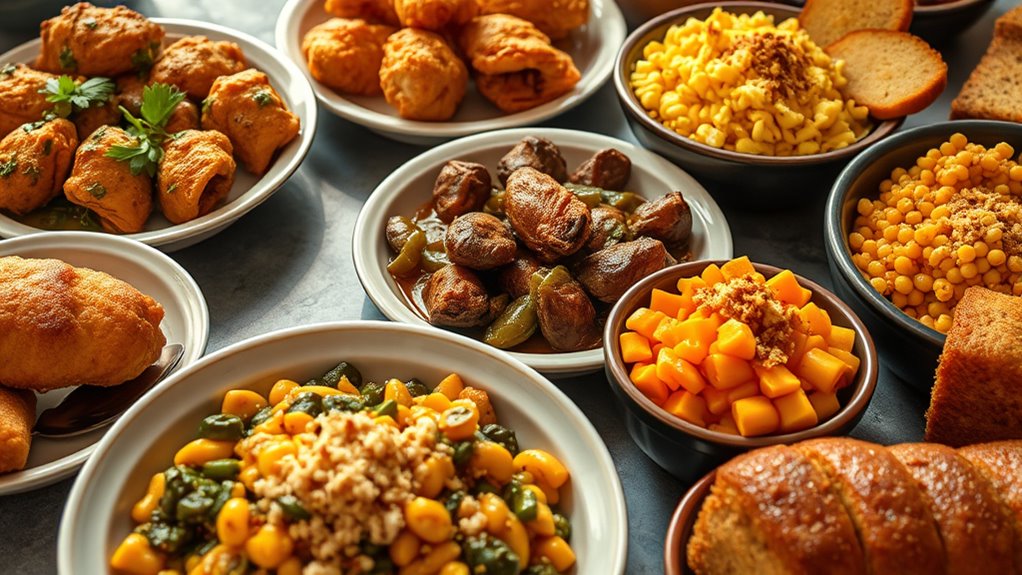
Are you looking to celebrate Kwanzaa with delicious, meaningful meals? If so, understanding the history of Kwanzaa can deepen your appreciation for the holiday’s rich cultural significance. Kwanzaa was established in 1966 by Dr. Maulana Karenga as a way to honor African heritage and foster unity within the Black community. Each of the seven days of Kwanzaa highlights a different principle, such as unity, self-determination, and collective work. This history of Kwanzaa emphasizes reconnecting with African roots, which is reflected in the traditional kwanzaa foods you might prepare for the celebration.
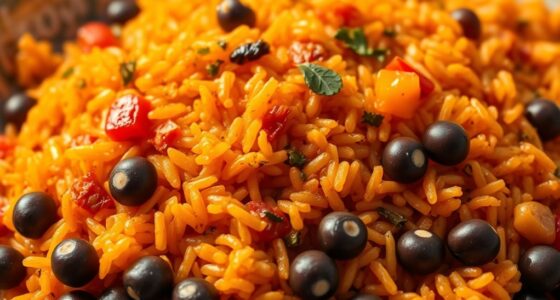
When it comes to traditional kwanzaa foods, they often symbolize abundance, community, and cultural pride. These dishes are more than just sustenance; they serve as a way to honor ancestors and reinforce cultural identity. Many of these foods have roots in African cuisine or have been adapted over generations. For example, dishes like jollof rice, made with fragrant spices and tomatoes, are popular in West Africa and often appear during Kwanzaa celebrations. Collard greens, seasoned with smoked meats, symbolize prosperity and are a staple in Southern African-American cooking. Sweet potatoes, often prepared as candied yams or baked, represent nourishment and togetherness. Cornbread or maize dishes are also common, paying homage to the importance of maize in African agriculture and spiritual practices.
Traditional Kwanzaa foods symbolize abundance, community, and pride, honoring ancestors and African heritage through meaningful dishes.
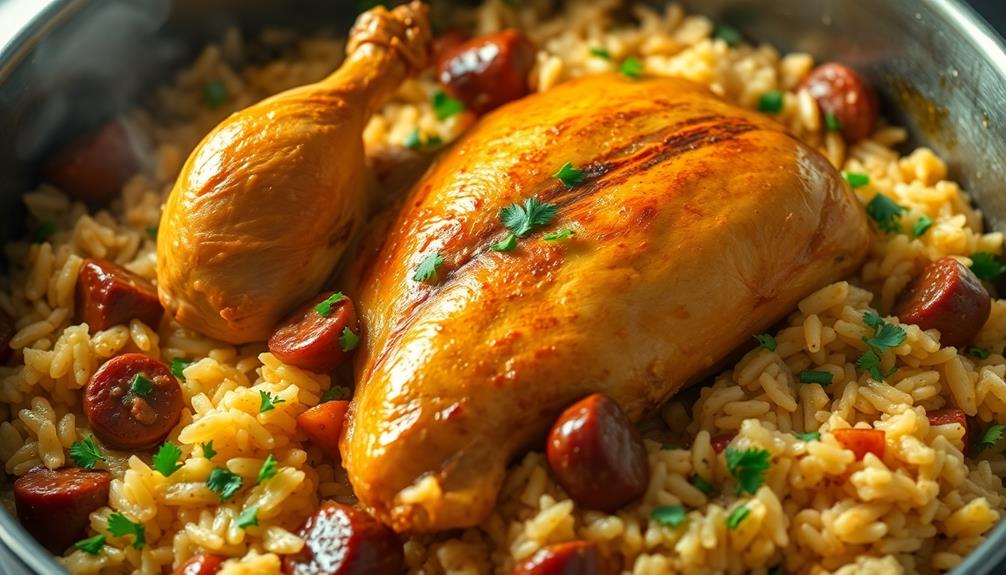
Preparing these traditional kwanzaa foods allows you to connect with your cultural heritage and create a sense of community around the table. You might also incorporate other soul food dishes like fried chicken, macaroni and cheese, or black-eyed peas, which have become integral parts of African-American holiday tables. These foods not only celebrate flavor and tradition but also serve as a reminder of resilience and cultural survival. Additionally, learning about the principles of Kwanzaa can deepen your understanding of its significance and inspire meaningful celebrations. As you gather with loved ones, sharing these dishes helps reinforce the principles of Kwanzaa, especially unity and collective effort.
In essence, the traditional kwanzaa foods you choose to prepare are a way to honor history, celebrate culture, and build bonds within your community. They carry stories of resilience, survival, and pride that have been passed down through generations. By cooking and sharing these soulful dishes, you deepen your connection to the holiday’s roots and its ongoing significance. Whether you stick to classic recipes or add your personal touch, celebrating with these meaningful foods makes your Kwanzaa observance more authentic and memorable.
Frequently Asked Questions
Can Kwanzaa Recipes Be Adapted for Dietary Restrictions?
Yes, you can adapt Kwanzaa recipes for dietary restrictions. You might explore vegetarian adaptations by substituting plant-based proteins and using vegetables or legumes. For gluten-free options, replace traditional grains like wheat or corn with gluten-free alternatives such as rice or millet. These adjustments allow you to enjoy festive dishes while honoring your dietary needs, ensuring everyone can celebrate together comfortably and healthily.
What Are Traditional Drinks Served During Kwanzaa Celebrations?
Imagine a cup overflowing with tradition—traditional beverages like palm wine or spiced fruit punch often steal the show during Kwanzaa. You might also enjoy festive drink ideas like ginger brew or hibiscus tea, which add vibrant color and flavor. These drinks celebrate community and history, turning your gathering into a flavorful, memorable experience. So, pour yourself a glass, and toast to the rich cultural heritage of Kwanzaa!
How Do I Incorporate Symbolism Into Kwanzaa Dishes?
To incorporate symbolism into Kwanzaa dishes, you can use ingredients that reflect cultural symbolism and culinary traditions. For example, include red, black, and green foods to represent the Pan-African flag, or serve dishes like collard greens and sweet potatoes to honor heritage. You might also prepare foods that symbolize unity and community, emphasizing the principles of Kwanzaa through thoughtful, meaningful ingredients that celebrate your cultural roots.
Are There Specific Cooking Methods Unique to Kwanzaa Recipes?
You’ll find that some Kwanzaa recipes use specific cooking techniques to honor tradition, like slow braising or steaming, which help develop rich flavor profiles. These methods preserve the essence of soul food while highlighting cultural significance. For example, slow cooking greens or beans allows flavors to deepen, creating meaningful dishes. Emphasizing these techniques connects you to the tradition and celebrates the symbolism behind each ingredient.
How Can I Make Kwanzaa Meals More Visually Festive?
To make your Kwanzaa meals more visually festive, focus on festive plating and colorful garnishes. Use vibrant fruits, vegetables, and herbs to add pops of color, arranging them thoughtfully on each plate. Incorporate symbolic elements like maize or kinara-inspired accents. By balancing bright hues and meaningful symbols, you create a feast for the eyes that celebrates the spirit of Kwanzaa with every dish you serve.
Conclusion
As you embrace these Kwanzaa recipes, you celebrate tradition, nourish community, and honor heritage. You cook with purpose, serve with love, and share with joy. You create memories, build bonds, and keep culture alive. You savor each bite, appreciate each moment, and reflect on the principles that unite. So, let these dishes inspire you to connect, to honor, and to celebrate—today, tomorrow, and always.