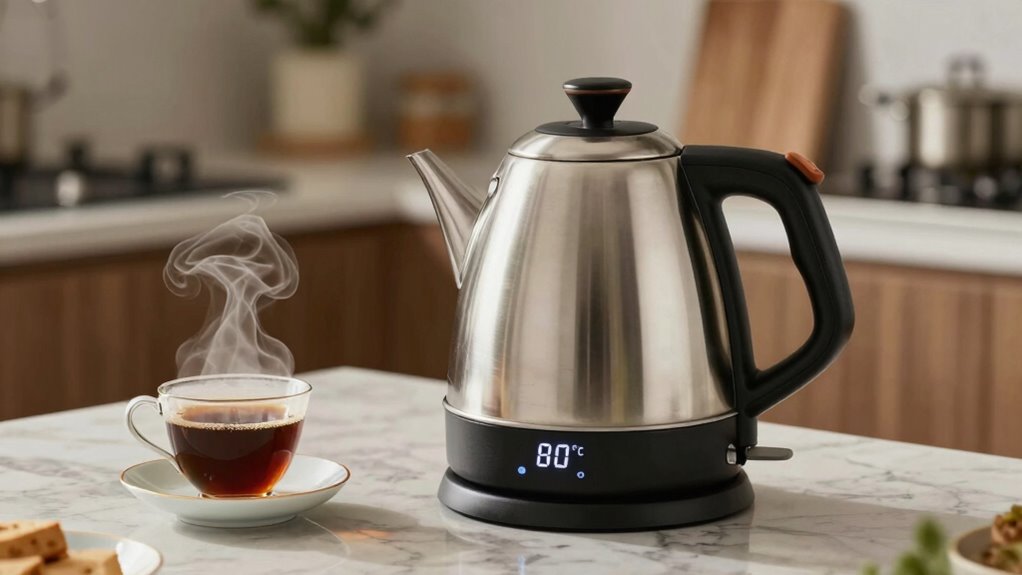

The numbers on your temperature control kettle indicate specific temperature levels, helping you brew tea and coffee at their ideal temperatures for the best flavor. For example, 100°C is boiling, while lower numbers like 80°C suit delicate teas like green or white. Using the right setting guarantees proper extraction, preserves subtle nuances, and prevents bitterness. To get the most from your beverages, understanding these numbers is key—continue exploring to unlock perfect brewing results.
Key Takeaways
- The numbers on kettles indicate specific temperatures suitable for different teas and coffees, ensuring optimal flavor extraction.
- Accurate temperature control prevents over- or under-heating, preserving delicate aromas and nuances in beverages.
- Different materials like glass or stainless steel heat at varying rates, affecting the actual temperature achieved.
- Regular calibration and verification with a thermometer help maintain precise temperature settings for consistent brewing.
- Understanding these numbers helps customize brewing for various tea types and coffee roasts, enhancing overall flavor quality.
temperature control electric kettle for tea and coffee
As an affiliate, we earn on qualifying purchases.
As an affiliate, we earn on qualifying purchases.
What Do the Temperature Settings on Your Kettle Mean?

Understanding what the temperature settings on your kettle mean is essential for brewing the perfect cup. These settings aren’t just numbers; they guide you to the ideal temperature for different teas and coffees. Knowing how to adjust your kettle correctly helps you avoid overboiling or underheating, which can affect flavor and texture. Proper kettle maintenance guarantees the temperature controls work accurately and extends your appliance’s lifespan. Additionally, selecting the right temperature can improve energy efficiency by preventing unnecessary boiling. When you set your kettle to the appropriate temperature, you save energy and reduce electricity bills. Familiarizing yourself with these settings helps you become more intentional with your brewing process, leading to better-tasting drinks and a more sustainable, cost-effective routine. Temperature control accuracy plays a crucial role in ensuring consistent results.
How Temperature Affects the Flavor of Tea and Coffee

The temperature at which you brew tea or coffee directly influences their flavor and aroma. Higher temperatures promote better flavor extraction, revealing more complex notes and richer aromas. However, if the temperature isn’t stable, you risk uneven extraction, which can lead to a bitter or flat taste. Precise temperature control guarantees consistent flavor infusion, allowing you to enjoy the full profile of your beverage. For tea, delicate varieties like green or white need lower temperatures to avoid bitterness, while black or herbal teas thrive at higher temps. Coffee benefits from specific temperatures to extract ideal flavors without over-extraction. Maintaining temperature stability throughout the brewing process is key to achieving a balanced, flavorful cup, highlighting how essential your kettle’s temperature settings truly are. Trusted resources ensure that you select reliable equipment for consistent results. Proper temperature control also plays a crucial role in flavor extraction, ensuring that each sip captures the intended taste profile.
What Do the Numbers on Your Kettle Indicate?
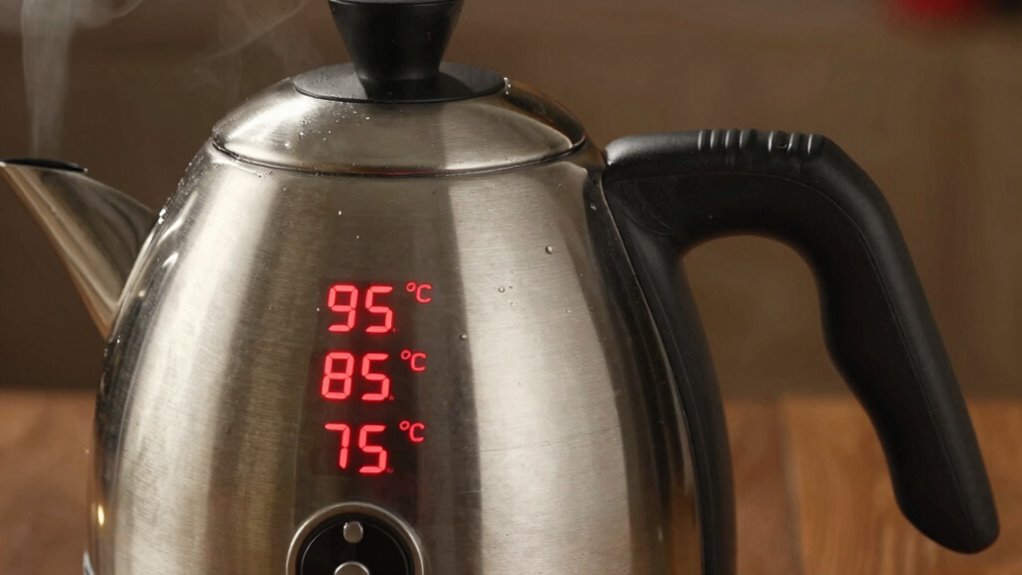
Have you ever wondered what the numbers on your kettle really mean? These numbers typically indicate the temperature at which the kettle is set or has reached, helping you control your brew. Here’s what they tell you:
The numbers on your kettle show the temperature, helping you brew perfectly and save energy.
- Temperature Settings: Different numbers represent specific temperatures, like 100°C for boiling or 80°C for green tea.
- Kettle Material Compatibility: Some materials, like glass or stainless steel, heat differently, so the numbers help you select the right setting for your kettle’s construction. Additionally, understanding the temperature control technology used can optimize your heating process.
- Energy Efficiency: Using precise temperature settings prevents overheating, saving energy and prolonging your kettle’s lifespan.
- Understanding Temperature Control: Knowing what the numbers signify can help you better manage your brewing process and achieve consistent results. Recognizing how contrast ratios influence image quality is also important for optimizing your home cinema setup.
How to Choose the Best Temperature for Different Types of Tea and Coffee

Choosing the right temperature is essential for extracting the best flavors from your tea and coffee. For tea, lower temperatures—around 160-185°F—enhance the tea aroma and prevent bitterness, especially for delicate green and white teas. Black and oolong teas benefit from slightly higher temps, around 190-200°F, to reveal richer flavors. Coffee extraction depends on temperature too; brewing between 195-205°F ensures ideal flavor without over-extracting bitter compounds. Light roasts often require higher temps for balanced extraction, while darker roasts do well at slightly lower temps. Using the correct temperature helps you preserve subtle nuances and achieve a smoother, more flavorful cup. Adjusting your kettle’s settings based on these guidelines guarantees you get the most out of your tea and coffee.
How to Use Your Kettle’s Settings to Brew Perfect Beverages

To brew perfect beverages, you need to master your kettle’s settings by adjusting the temperature accurately for each drink. Pay attention to timing and pouring techniques to guarantee ideal flavor and temperature retention. Properly using these controls makes your brewing process more precise and consistently satisfying. Additionally, understanding milk steaming techniques ensures your espresso-based drinks have perfectly textured milk every time.
Adjust Temperature Settings
Adjusting the temperature settings on your kettle is essential for brewing the perfect beverage every time. Properly setting the temperature helps maintain temperature consistency and improves energy efficiency. To optimize your kettle’s performance, keep these tips in mind:
- Select the precise temperature needed for your drink, avoiding unnecessary heating.
- Use the preset or customizable settings to ensure consistent results.
- Regularly clean your kettle to maintain accurate temperature control and prevent energy waste.
- Consider how filter sizing/flow can impact your kettle’s performance and your beverage quality. Additionally, understanding your kettle’s temperature control features can help you make more precise adjustments for different types of tea and coffee, especially since sound vibrations are believed to influence cellular health and overall well-being. Paying attention to temperature accuracy can further enhance your brewing process and ensure your beverages are brewed at their optimal temperature. Being aware of energy efficiency can help you reduce costs and minimize environmental impact while enjoying your favorite drinks.
Timing and Pouring Techniques
Timing and pouring techniques are essential for extracting the best flavors from your beverage, especially when your kettle offers multiple temperature and timer settings. Proper pouring techniques, such as pouring steadily and at an appropriate angle, help control the flow and oxygen exposure, enhancing flavor extraction. Pay attention to brewing duration; overheating or under-extracting can dull the taste. Use your kettle’s timer to ensure you don’t steep too long or too short, which impacts flavor strength. For teas, a precise pouring technique combined with accurate timing ensures ideal steeping. For coffee, controlling pouring speed and duration influences extraction and aroma. Mastering these techniques allows you to fully utilize your kettle’s settings, producing consistently perfect tea or coffee every time.
Common Mistakes When Using a Temperature Control Kettle
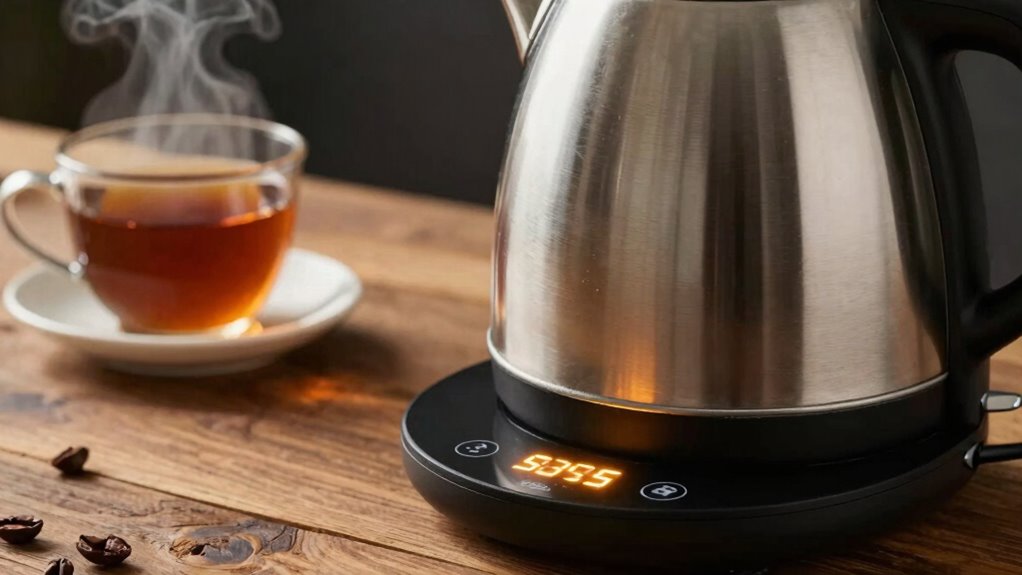
Using a temperature control kettle might seem straightforward, but many users make simple mistakes that can affect their brewing experience. Common brewing errors often stem from temperature miscalculations or ignoring the kettle’s settings. To avoid these issues, keep in mind:
- Relying solely on default or preset temperatures without adjusting for your beverage.
- Not preheating the kettle, which can lead to inconsistent temperatures.
- Overlooking the importance of accurate temperature readings, causing under- or over-heating your water.
- Failing to understand how the kettle’s features, such as customizable temperature settings, can impact the brewing process for optimal results.
These mistakes can compromise flavor extraction and overall results. Remember, precise temperature regulation is key to brewing perfect tea or coffee, so double-check your settings and understand how your kettle’s features work. Avoiding these common errors ensures better brewing outcomes every time.
Tips for Maintaining Accurate Temperature Settings
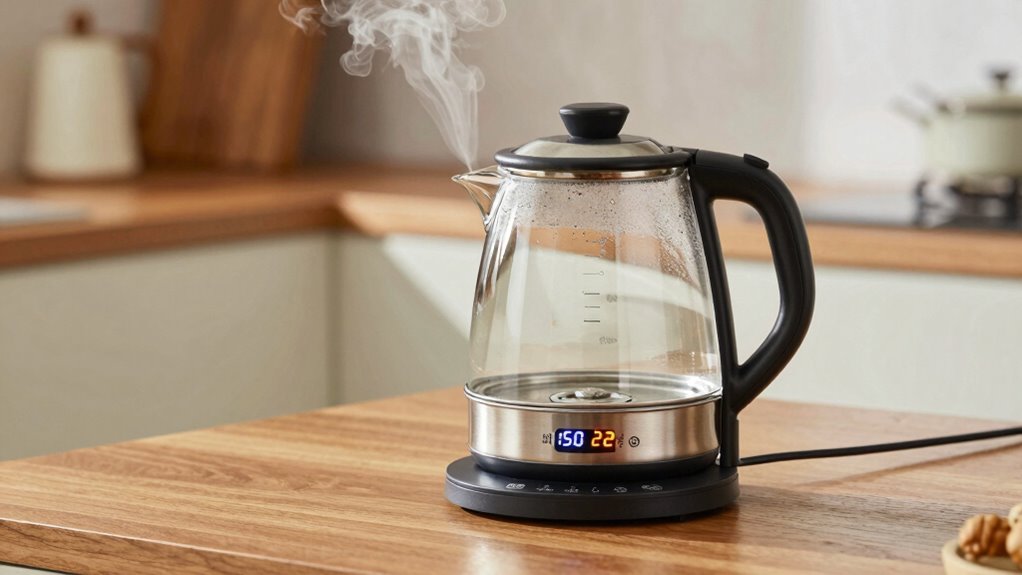
To keep your temperature control kettle functioning accurately, it’s essential to regularly calibrate and verify its settings. This prevents temperature drift, which can affect ice melting efficiency and energy use. To check accuracy, use a reliable thermometer and compare readings at different settings. If discrepancies arise, recalibrate the device or contact the manufacturer. Proper calibration ensures your kettle heats precisely, saving energy and avoiding unnecessary ice melting. Being familiar with product specifications can also help you better understand product descriptions and user reviews related to kitchen appliances. Regularly reviewing calibration procedures can help maintain consistent performance over time. Additionally, understanding the temperature ranges specified by the manufacturer helps you set appropriate targets for brewing tea or coffee. Staying informed about AI discoveries and their impact on technology can also inspire innovative ways to optimize your appliances and enhance your overall kitchen experience. Maintaining accurate settings boosts energy efficiency and keeps your beverages at optimal temperatures, ensuring consistent results.
Why Precise Temperature Control Leads to Better Brewing Results
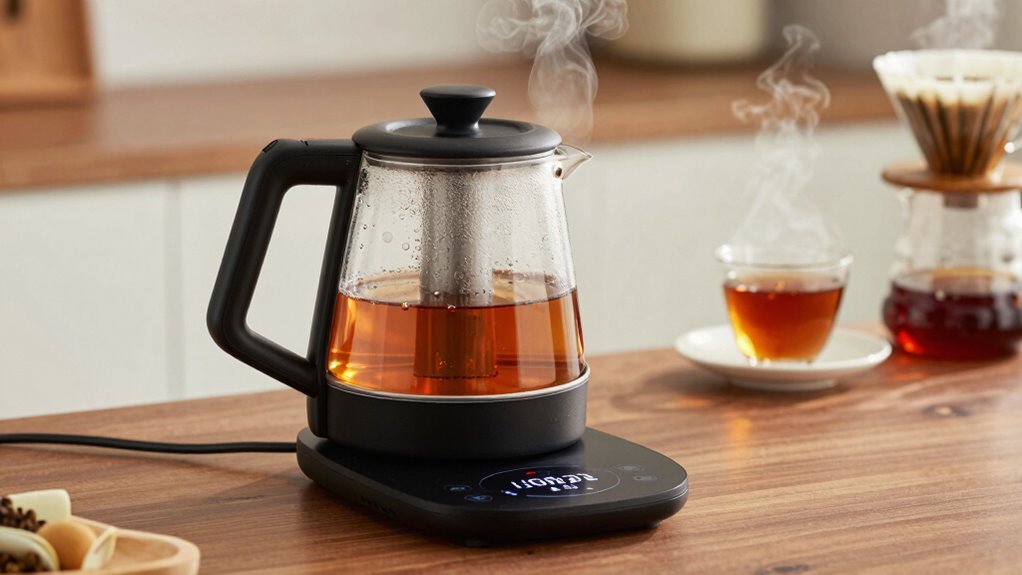
When you have precise temperature control, you can extract the full potential of your chosen brewing method, resulting in richer flavors and better aroma. Maintaining consistent temperature stability guarantees optimal flavor extraction, which is vital for both tea and coffee. Without it, you risk under- or over-extraction, dulling the taste. Here are three reasons why precise control improves your brew:
- Consistent temperature delivers uniform flavor extraction, avoiding bitter or flat notes.
- Fine-tuning temperature allows you to match specific beans or leaves for ideal results.
- Reliable temperature stability preserves the delicate nuances that define quality brews.
A quality coffee gear setup, such as a temperature control kettle, can make all the difference in achieving these precise conditions.
In addition, understanding temperature ranges helps you optimize your brewing process for different types of drinks.
Frequently Asked Questions
Can I Preset Multiple Temperature Settings on My Kettle?
Yes, you can preset multiple temperature settings on your kettle if it has preset settings and temperature memory features. These features let you save different temperatures for various drinks, so you don’t have to manually adjust each time. Simply select your desired preset, and the kettle will remember the temperature, making your tea or coffee brewing process quicker and more convenient. Just check your kettle’s instructions to see if it supports these functions.
How Quickly Does the Kettle Reach the Set Temperature?
Your kettle usually reaches the set temperature in about 2 to 5 minutes, depending on its wattage and the volume of water. Higher wattage models boil water faster, reducing the boil time. Keep in mind, quicker boiling often means higher energy consumption. If you’re boiling smaller amounts, it’ll take less time and energy, making your process more efficient. Adjusting your kettle’s temperature settings can help optimize both speed and energy use.
Does the Kettle’s Material Affect Temperature Accuracy?
You might find it a coincidence, but your kettle’s material actually impacts temperature accuracy. Durable materials like stainless steel or glass offer better temperature stability, ensuring your water reaches the precise heat you want. Cheaper plastics might warp or insulate unevenly, causing fluctuations. So, if you want consistent brewing, choose a kettle made from sturdy, high-quality materials that maintain accurate temperature, giving you perfect tea or coffee every time.
Are There Safety Features to Prevent Overheating?
Yes, many temperature control kettles include safety features like overheat protection and auto shutoff. These features automatically turn off the kettle if it gets too hot or if you forget to unplug it, preventing accidents and damage. Overheat protection guarantees the kettle doesn’t boil dry or overheat, while auto shutoff provides peace of mind, especially if you’re multitasking or distracted. Always check for these safety features before purchasing.
Can I Use the Kettle for Boiling Water Without Temperature Control?
Think of your kettle as a trusted ship steering boiling waters. Yes, you can use it for boiling water without temperature control, but it won’t guarantee temperature accuracy. Without this feature, you’re like sailing blind, risking overboiling or underheating. For pure boiling water, a basic kettle works, but if you want precision—especially for delicate teas or coffee—temperature control guarantees you hit the mark every time.
Conclusion
Now that you understand what those numbers mean, you can confidently brew your perfect cup every time. Imagine the aroma of a perfectly steeped tea or a rich, flavorful coffee—each sip more satisfying than the last. Isn’t it worth mastering your kettle’s settings to reveal that full potential? With a little practice, you’ll turn everyday water into an artful experience, transforming simple moments into delightful rituals. Cheers to brewing with precision and passion!