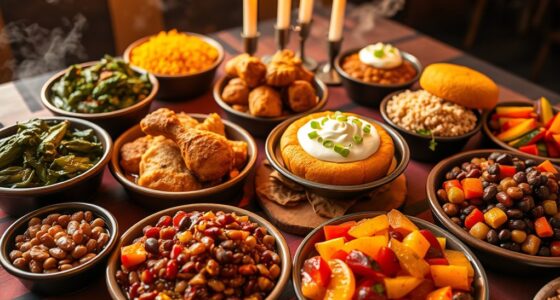
American cornbread has roots in Native American traditions, where maize was cultivated and transformed into simple breads using native techniques. European settlers then added ingredients like milk, eggs, and sugar, creating regional variations across the country. In the South, it’s rustic and crumbly; in the North, softer and lighter; and in the Southwest, savory with chiles and cheese. Each version reflects local ingredients and history. To discover more about its rich story and regional twists, keep exploring.
Key Takeaways
- Cornbread originated from Native American maize cultivation and traditional methods involving maize, water, and ash.
- European settlers introduced ingredients like milk, eggs, and sugar, diversifying cornbread recipes across regions.
- Regional variations include Southern rustic crumbly cornbread, Midwest dense cake-like versions, and Southwest spicy and savory styles.
- Native American, European, and immigrant influences blended to shape cornbread’s diverse flavors and ingredients.
- Today, cornbread reflects America’s cultural diversity, evolving into sweet, savory, crispy, and soft variations across regions.

Cornbread has long been a staple in American cuisine, with roots that trace back to Native American tribes who first cultivated maize. Over the centuries, this humble bread has undergone a fascinating cornbread evolution, shaped considerably by regional influences that reflect the diverse cultures across the United States. When you think about cornbread, you might picture a simple, buttery slice, but its history reveals a rich tapestry of flavors and techniques that vary from place to place.
Cornbread’s rich history reflects Native American roots and regional American culinary influences.
The cornbread evolution started with Native Americans, who mixed ground maize with water and ash to create a primitive form of bread. When European settlers arrived, they adapted these traditional methods, incorporating new ingredients like milk, eggs, and sugar, which led to a variety of textures and tastes. In the South, cornbread became a cornerstone of the diet, often baked in cast-iron skillets and served alongside hearty stews and beans. Here, cornbread retained a rustic, crumbly quality, sometimes sweetened with molasses or honey, reflecting regional preferences for bold, comforting flavors.
In the Midwest, cornbread took on a denser, more cake-like consistency, influenced by the availability of dairy products and sugar. This version was often baked as a sweet bread, enjoyed with butter or jam, making it a staple on family tables. Moving northward, the influence of European baking traditions led to lighter, more refined cornbreads, sometimes incorporating wheat flour to create a softer crumb. These regional adaptations showcase how local ingredients and cultural tastes shape the way cornbread is prepared and enjoyed.
In the Southwest, cornbread’s evolution was influenced by Native American and Hispanic cuisines. You might find versions that include chiles, corn kernels, or even cheese, giving it a savory, spicy kick. These regional variations highlight how cornbread serves as a canvas for local flavors, blending indigenous ingredients with immigrant influences. Meanwhile, in parts of the Appalachian Mountains, cornbread is often baked in a skillet until crispy on the outside, emphasizing a hearty, robust flavor that complements the mountainous landscape.
Throughout its history, cornbread has remained adaptable, a reflection of America’s diverse cultural fabric. Whether it’s a sweet, cake-like treat from the Midwest or a crispy, savory dish from the South, each regional influence adds a new layer to its story. As you explore different recipes and traditions, you’ll see how cornbread continues to evolve, embodying the unique flavors and histories of the communities that cherish it.

Lodge Cast Iron Wedge Pan
8 IMPRESSION WEDGE PAN: Whether you like sweet or savory, this pan will help you make treats to…
As an affiliate, we earn on qualifying purchases.
As an affiliate, we earn on qualifying purchases.
Frequently Asked Questions
How Did Native American Cuisine Influence Cornbread Recipes?
You’re curious about how Native American cuisine influenced cornbread recipes. Native American agriculture introduced maize as a staple crop, and Indigenous ingredients like corn shaped early cornbread. You’ll find traditional recipes often use ground corn or meal, reflecting Native techniques. Their methods and ingredients, such as using stone grinders, helped develop cornbread’s distinctive texture and flavor, showcasing how Indigenous contributions laid the foundation for this classic American dish.
What Role Did Cornbread Play in Southern Hospitality Traditions?
You see, cornbread plays a essential role in southern hospitality traditions by fostering community bonding and serving as a symbol of warmth and generosity. When you share cornbread, you’re not just offering food but also expressing hospitality and unity. Its presence in gatherings highlights its culinary symbolism, reminding everyone of the importance of coming together and celebrating shared culture and kindness around a simple, comforting dish.
Are There Vegetarian or Vegan Versions of Traditional Cornbread?
Imagine a warm, inviting piece of cornbread, now reborn as a symbol of compassion. Yes, you can enjoy plant-based variations or vegan ingredient swaps that keep traditional flavors alive without animal products. These versions often replace eggs with flaxseed or applesauce and use plant-based milk. So, you get that comforting, hearty bite while aligning with your vegan or vegetarian lifestyle. It’s a delicious way to honor both tradition and your values.
How Did Industrialization Impact Cornbread Production and Popularity?
Industrialization transformed cornbread’s production and popularity by enabling mass production techniques, making it more affordable and consistent. You can now find cornbread readily available in supermarkets nationwide, increasing its accessibility. This shift from homemade to store-bought options means you don’t need to bake it yourself; instead, you can enjoy convenient, high-quality cornbread anytime. Industrialization truly made cornbread a staple in many American households.
What Are Some Modern Twists on Classic Cornbread Recipes?
You can enjoy modern twists on classic cornbread by exploring gluten-free options using almond or rice flour, perfect for dietary needs. Try infusing flavors like jalapeño, honey, or cheese to add a new dimension. Baking with fresh herbs or even adding bacon bits transforms your cornbread into a savory treat. These creative variations keep the traditional favorite exciting and adaptable to contemporary tastes.

Southern Living Gourmet Cornbread Mix, Quick Homemade Taste, Perfect for Any Meal, Pair With Soups, Stews, Or Classic Pot Roast, Serves 8-10, 1 Box
HOMEMADE GOODNESS: Enjoy a light and delicate texture of cornbread that's packed with traditional Southern flavor, perfect for…
As an affiliate, we earn on qualifying purchases.
As an affiliate, we earn on qualifying purchases.
Conclusion
So, after all this history, you might think cornbread’s story is simple. But isn’t it ironic how something so humble can carry centuries of culture, survival, and regional pride? You’ve seen its evolution, yet today, it’s often just a side dish at your table. Maybe, in the end, cornbread reminds us that even the most unassuming foods can hold the deepest stories—hidden beneath a golden crust, waiting to be uncovered.

Zatarain's Cheddar Jalapeño Cornbread Mix, 12.5 oz
Cornbread mix for homemade cornbread with a great cheesy taste and a jalapeño kick
As an affiliate, we earn on qualifying purchases.
As an affiliate, we earn on qualifying purchases.

GoodCook MegaGrip Baking Pan with Silicone Grip Handles Square Non-Stick Heavy-Gauge Steel Cake Pan Baking Dish for Brownies Bread Cake Baked Goods & More, Dishwasher Safe, 8×8-Inch,
8 x 8-INCH SQUARE BAKING PAN: This 8×8 baking pan is made from heavy-gauge steel and ensures a…
As an affiliate, we earn on qualifying purchases.
As an affiliate, we earn on qualifying purchases.