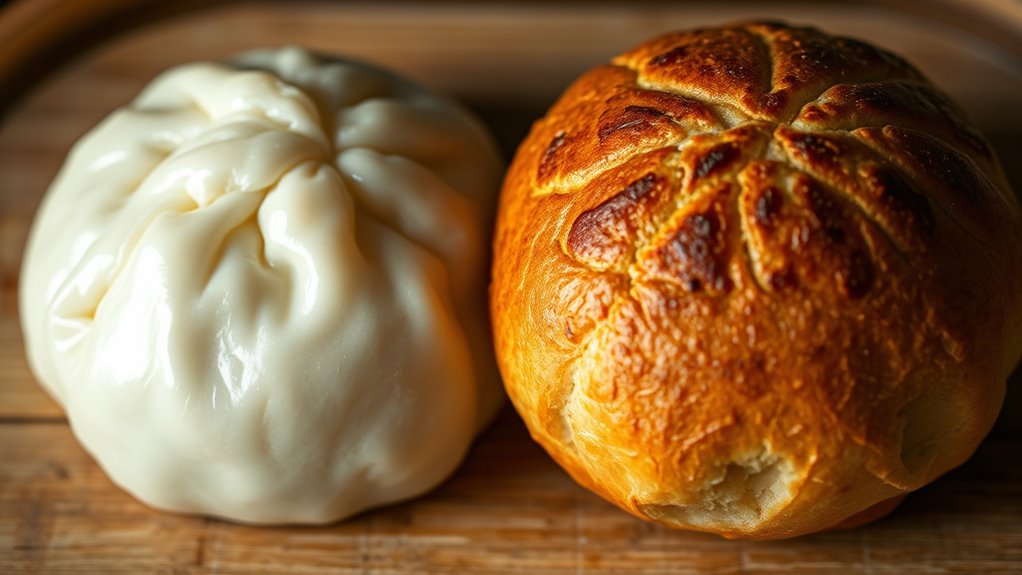

When you steam Chinese bao dough, it stays moist and becomes fluffy, thanks to retained moisture and high elasticity from proper fermentation. Baking, however, creates a firmer crust with a softer interior but tends to dry out the dough slightly, giving a different texture. Both methods rely on good gluten development and fermentation, which impact elasticity and final mouthfeel. Continuing your exploration will reveal how fermentation time and technique shape each unique texture.

Get kitchen staples and gadgets delivered free with Prime
- Fast, free delivery on millions of items
- Prime Video, Amazon Music and more included
- Member-only deals all year
Key Takeaways
- Steamed bao dough remains moist, fluffy, and tender, with a springy texture, while baked bao develops a firmer crust and denser interior.
- Proper fermentation enhances elasticity, ensuring steamed bao stretchiness and baked bao shape retention without collapsing.
- Overfermentation weakens gluten, risking tearing in both steam and bake methods, affecting final texture quality.
- Steamed bao preserves moisture, resulting in a smooth, chewy, and moist bite, whereas baked bao has a crisp crust with a softer core.
- Fermentation time influences flavor and elasticity, impacting the softness and chewiness of both steamed and baked bao.
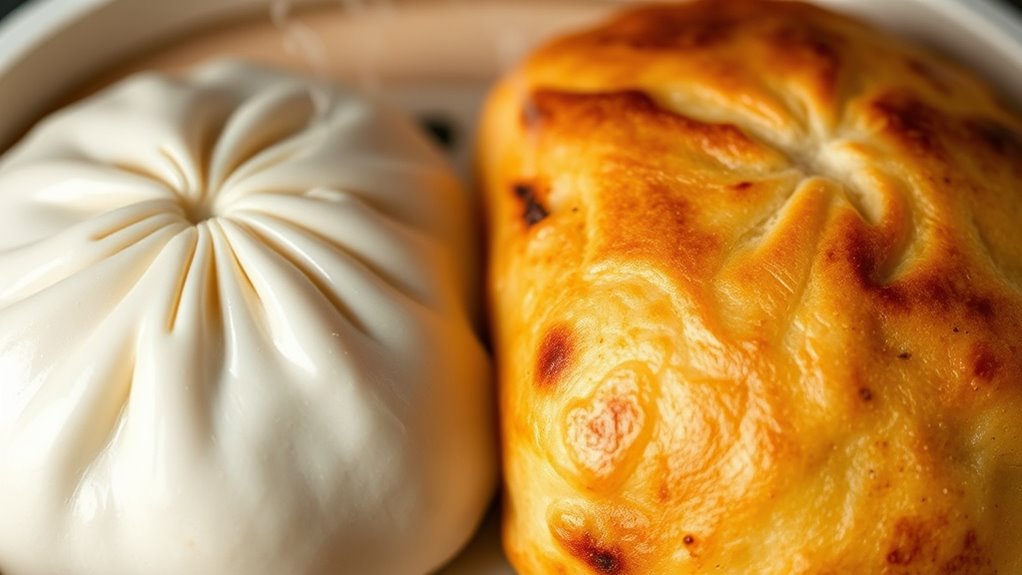
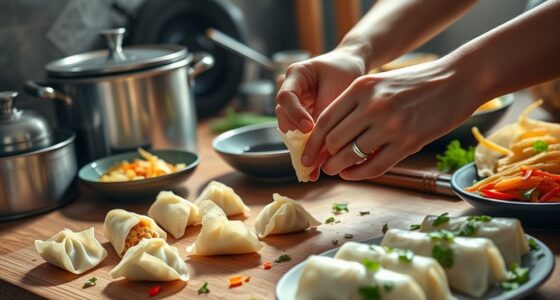
Chinese bao dough is the essential foundation for making soft, fluffy steamed buns and dumplings. When you work with this dough, understanding how fermentation effects influence its development is vital. Fermentation not only helps the dough rise but also enhances its flavor and texture. During fermentation, yeast consumes the sugars in the dough, producing carbon dioxide and alcohol. This process creates the bubbles that make your buns airy and light. It also breaks down gluten proteins, which increases dough elasticity, allowing it to stretch without tearing. The more you ferment the dough, the more elastic it becomes, making it easier to shape and mold into perfect buns or dumplings. Proper fermentation guarantees your dough is neither too dense nor too airy, giving you that ideal balance of softness and structure.
Furthermore, the fermentation process influences the texture development of the final product, as the degree of fermentation impacts how the dough responds to steaming or baking. When you decide to steam or bake your bao, the texture outcome will differ based on how you handle the dough. Steamed buns retain moisture better, resulting in a tender, moist interior with a slightly chewy crust. This method preserves the dough’s elasticity, making the buns pillowy and soft. The steaming process heats the dough evenly, allowing the gluten network to maintain its integrity and elasticity, which is essential for achieving that characteristic springy bite. Baking, on the other hand, introduces dry heat that causes the dough to develop a firmer crust while maintaining a softer core. The oven’s dry environment causes less moisture retention, leading to a slightly denser texture and a golden-brown exterior. The baked version’s crust is crispier, and the interior, while still soft, has a different mouthfeel compared to steamed buns. Additionally, the fermentation time can influence the flavor profile, adding a subtle tang that enhances the overall taste.
Your choice between steaming and baking ultimately affects the final texture, but both rely heavily on your initial dough preparation. If your dough has been properly fermented and developed good elasticity, it will respond well to either cooking method. For steaming, the dough’s elasticity ensures it stretches and rises uniformly, producing that signature fluffy texture. When baking, elasticity helps the dough hold its shape and develop a desirable crust without collapsing. Keep in mind that overfermentation can weaken the gluten structure, making the dough less elastic and more prone to tearing during shaping or cooking. Conversely, underfermented dough may be stiff and dense, resulting in a less desirable texture regardless of cooking method. Proper fermentation also influences the flavor profile of the final bao, adding depth and complexity to the taste.
As an affiliate, we earn on qualifying purchases.
Frequently Asked Questions
How Does Filling Type Affect Bao Dough Texture?
When you choose a filling, it directly impacts the bao dough’s texture. Moist fillings can make the dough softer and more delicate, reducing elasticity over time. Conversely, drier fillings help maintain the dough’s firmness and elasticity, giving a chewier bite. You should consider filling moisture because it influences how the dough responds during steaming or baking, affecting the overall texture and your eating experience.
Can I Freeze Bao Dough for Later Use?
Yes, you can freeze bao dough for later use. Just make sure you let the dough undergo proper dough fermentation before freezing. Wrap it tightly in plastic wrap or place it in an airtight container to prevent freezer burn. When ready to use, thaw it in the fridge overnight. Keep in mind, ingredient substitutions may affect fermentation time or texture, so adjust accordingly once thawed for the best results.
What Variations Exist in Traditional Chinese Bao Recipes?
You’ll find many variations in traditional Chinese bao recipes, often influenced by regional flavors and ingredient substitutions. Some recipes use different fillings like pork, chicken, or vegetables, while others alter the dough fermentation process to achieve unique textures. You might also experiment with ingredient substitutions, such as replacing sugar or oil, to customize flavor and softness. These variations allow you to adapt the classic bao to your tastes while maintaining authentic techniques.
How Does Altitude Influence Bao Dough Preparation?
You might wonder how altitude affects bao dough preparation. Higher altitudes require adjustments because thinner air decreases dough elasticity and alters rising times. To compensate, you can add a bit more flour or reduce liquid amounts. These altitude adjustments help maintain the dough’s elasticity, ensuring your bao turns out fluffy and tender. Experimenting with small changes lets you perfect your recipe, regardless of your elevation.
Are There Gluten-Free Options for Bao Dough?
You can definitely make gluten-free bao dough using gluten alternatives like tapioca starch or xanthan gum, which help mimic gluten’s elasticity. Rice flour is a popular choice because it’s light and neutral, giving you a soft, tender texture. Just keep in mind that gluten-free dough may be more delicate, so knead gently and adjust liquids as needed. With these options, you can enjoy delicious bao without gluten.
Conclusion
Just like the timeless tales of the Ming Dynasty, mastering bao dough brings tradition to life with every bite. Whether you choose steaming’s tender embrace or baking’s golden allure, each method tells its own story—one of patience, skill, and cultural heritage. As you craft your buns, remember that every texture reflects a piece of history. Embrace the journey, for in these small moments, you carry forward a rich culinary legacy that warms the heart and soul.
Columbus Day / Indigenous Peoples' Day Picks
long weekend sales
As an affiliate, we earn on qualifying purchases.