
On Christmas Eve, or Wigilia, you’ll experience meaningful rituals like fasting until the first star appears and sharing opłatek wafers to symbolize forgiveness and unity. Your family gathers around a decorated table with hay and a blank seat for missing loved ones, enjoying simple, traditional dishes like mushroom pierogi, beetroot soup, and fish. These customs celebrate faith, gratitude, and heritage—keep exploring to uncover more about Poland’s heartfelt holiday traditions.
Key Takeaways
- Wigilia emphasizes family, faith, and gratitude through customs like sharing opłatek and prayer.
- No meat is consumed until the first star appears, symbolizing the Star of Bethlehem.
- The meal features plant-based dishes such as mushroom pierogi, beetroot soup, and fish like carp.
- An extra, empty place setting symbolizes hospitality and remembrance of absent loved ones.
- Traditional recipes are passed down to preserve cultural heritage and symbolize humility and thankfulness.
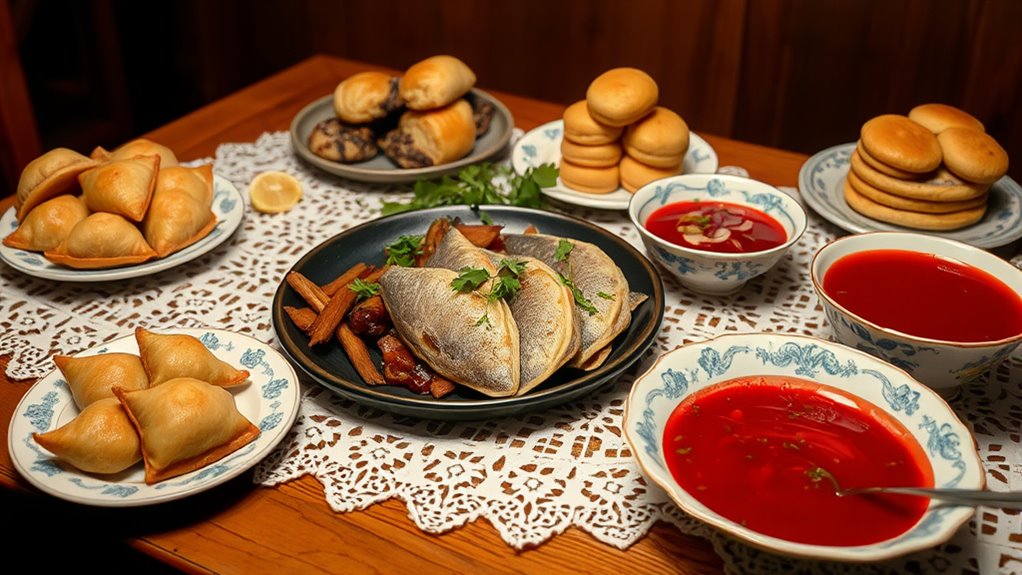
Polish Christmas Eve traditions are rich and deeply rooted in cultural and religious practices that bring families together in anticipation of the holiday. As you prepare for Wigilia, you’ll notice how these traditions create a warm, meaningful atmosphere that highlights the importance of family, faith, and generosity. One of the most distinctive aspects of Polish Christmas Eve is the adherence to specific customs that have been passed down through generations, shaping a unique holiday experience. These Polish Christmas Eve traditions often begin with a moment of reflection and gratitude, as families gather around the table, ready to observe the customs that define this special night.
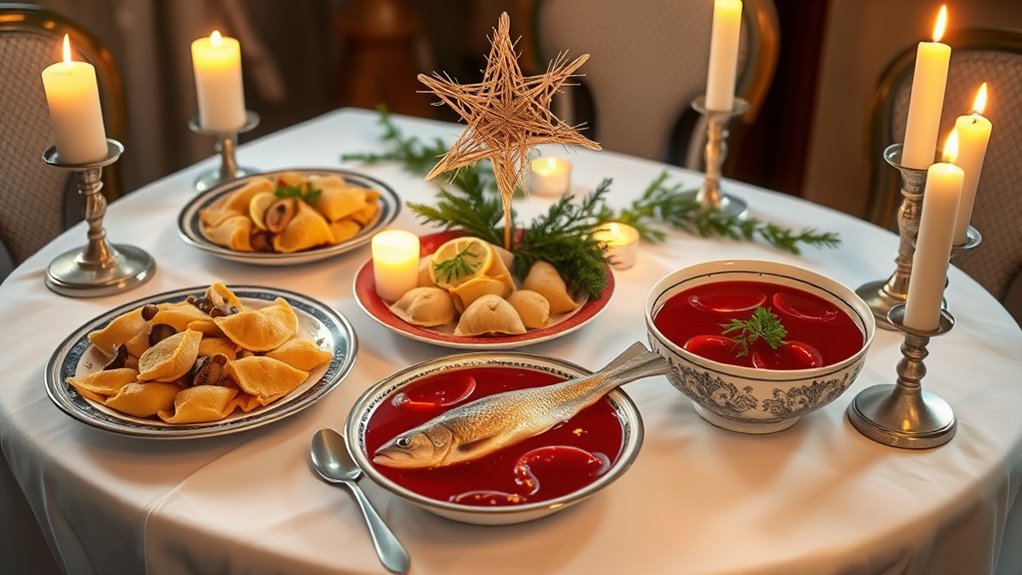
A key element of these traditions is the fasting that precedes the meal. Typically, no meat is consumed until the first star appears in the sky, symbolizing the Star of Bethlehem. Once the star is visible, families share a special meal called Wigilia, which is marked by a sense of reverence and togetherness. The table is usually covered with a white cloth and decorated with hay, symbolizing the manger where Jesus was born. An extra place setting is often left empty, signifying hospitality for an unexpected guest or the spirit of loved ones who have passed. Before the meal begins, a prayer is said, and the family shares a piece of opłatek, a thin wafer stamped with religious images, exchanging wishes of health, happiness, and peace.
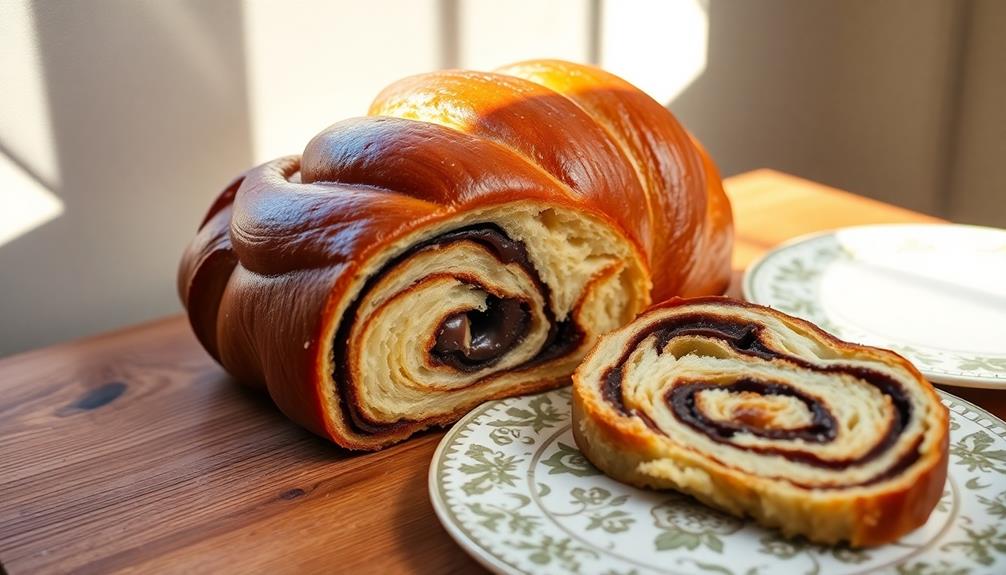
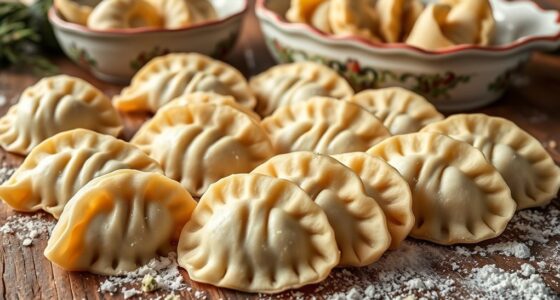
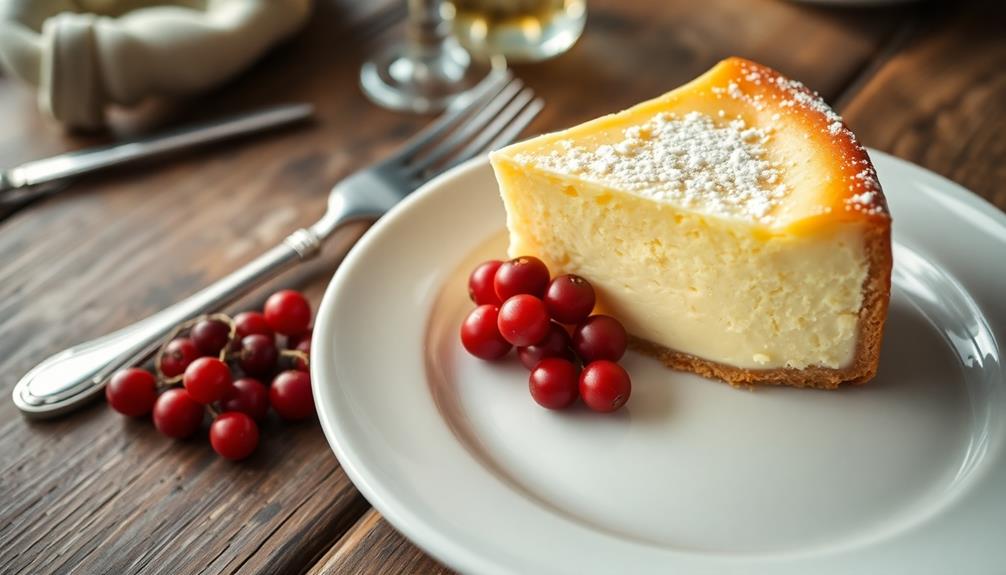
During this meal, you’ll find a variety of Polish Christmas Eve dishes that are both traditional and symbolic. The dishes are primarily plant-based, featuring ingredients like mushrooms, cabbage, and fish, especially carp, which is a staple on many tables. Pierogi filled with mushrooms and sauerkraut are common, along with barszcz czerwony — a beetroot soup served hot or cold. Other Polish Christmas Eve dishes include fish prepared in different ways, such as baked or fried, and various vegetable side dishes that emphasize simplicity and flavor. Sweets like poppy seed roll and kutia, a sweet grain pudding, also play an important role in the celebration. These dishes not only honor tradition but also serve as a reminder of humility and gratitude for the harvest and blessings of the year. Additionally, the authenticity of the dishes is often maintained by using traditional recipes passed down through generations, ensuring the preservation of cultural heritage.
Frequently Asked Questions
How Do Polish Families Prepare for Wigilia Throughout December?
As December approaches, you prepare for Wigilia by decorating your home and shopping at Christmas markets, gathering traditional ingredients. You follow Advent calendar customs, counting down each day with anticipation, and make sure your table is set with the special dishes. You also clean and tidy your space, reflecting the spirit of preparation and anticipation, so you’re ready to celebrate the special evening with family and friends.
Are There Regional Differences in Wigilia Traditions Across Poland?
You’ll notice regional variations in Wigilia traditions across Poland, with unique customs and practices shaping each area’s celebration. Culinary differences stand out, as some regions favor specific dishes like mushroom soup or fish, reflecting local ingredients and heritage. You might find that families in the south have distinct rituals compared to those in the north, making each celebration uniquely Polish while still embracing the shared spirit of Christmas Eve.
What Is the Significance of the Twelve Dishes Served During Wigilia?
The twelve dishes symbolize the months of the year, embodying hope, harmony, and gratitude. You’ll find that each dish holds deep symbolic meaning and culinary significance, representing prosperity, health, and family unity. By serving twelve, you honor tradition, inviting blessings and bountifulness into your home. This meaningful menu marks the miracle of the season, making your Wigilia truly special and spiritually significant with every savory, symbolic bite.
How Has Modern Life Influenced Traditional Polish Christmas Eve Practices?
Modern life has transformed your Polish Christmas Eve practices, as you incorporate modern technology like smartphones and social media to connect with loved ones near and far. Urbanization challenges mean you may celebrate Wigilia in smaller spaces or with busy schedules, but you still cherish traditional dishes and rituals. These adaptations help you keep the spirit alive, blending old customs with new ways to celebrate, ensuring the holiday remains meaningful.
Are There Specific Customs for Children During Wigilia Celebrations?
Did you know that nearly 80% of Polish families include children in Wigilia customs? During celebrations, children enthusiastically await their gifts, often placed under the Christmas tree, symbolizing generosity. They also participate in storytelling, sharing festive stories that pass down traditions and values. Children are encouraged to join in singing carols and helping set the table, making them active participants in the holiday’s warmth and joy.
Conclusion
Now that you know about Polish Christmas Eve traditions and dishes, you’ll appreciate the warmth and history behind Wigilia. Did you know that over 90% of Poles celebrate this special night with family and traditional foods? Embracing these customs lets you experience a truly meaningful holiday, rich in heritage and togetherness. So, whether you’re trying a new dish or sharing stories around the table, you’re part of a beautiful tradition that brings loved ones closer this festive season.