
To make a light and healthy Mediterranean winter salad, focus on seasonal ingredients like citrus, kale, roasted root vegetables, and fresh herbs. Toss these with olive oil, lemon juice, and a touch of vinegar for flavor. Add nuts and cheese sparingly for crunch and richness. This combination offers a nutritious, satisfying dish that’s perfect for colder months. If you keep exploring, you’ll discover simple ways to elevate your salad with authentic flavors and textures.
Key Takeaways
- Incorporate seasonal winter greens, citrus, and root vegetables for a nutritious, flavorful base.
- Roast root vegetables to enhance sweetness and earthy flavors while keeping the salad light.
- Use simple dressings with olive oil, lemon juice, and herbs to highlight fresh ingredients.
- Add nuts and cheese sparingly for crunch and richness without excess calories.
- Focus on vibrant, seasonal produce to create a colorful, nourishing Mediterranean winter salad.

When winter arrives, it can be tempting to settle for hearty stews and warm comfort foods, but a Mediterranean winter salad offers a fresh and vibrant way to enjoy seasonal ingredients. During this time of year, you can take advantage of the best seasonal produce, such as citrus fruits, hearty greens, root vegetables, and winter squash. These ingredients not only add color and texture but also pack a punch of flavor that brightens up your winter table. By focusing on these seasonal staples, you create a salad that’s both nourishing and satisfying, without feeling heavy or overly processed.
To craft a delicious winter Mediterranean salad, start by selecting a variety of seasonal produce. Think of juicy oranges or grapefruits to introduce bright, tangy notes. Add leafy greens like kale or Swiss chard, which are hardy enough to withstand the cooler temperatures and provide a sturdy base. Roasted root vegetables like beets, carrots, or parsnips add a sweet, earthy depth, balancing the acidity of citrus and the freshness of greens. Incorporating ingredients such as fennel or radicchio can also introduce a slight bitterness that complements the sweeter flavors while adding crunch and texture.
Select hearty greens and roasted root vegetables for a vibrant winter Mediterranean salad.
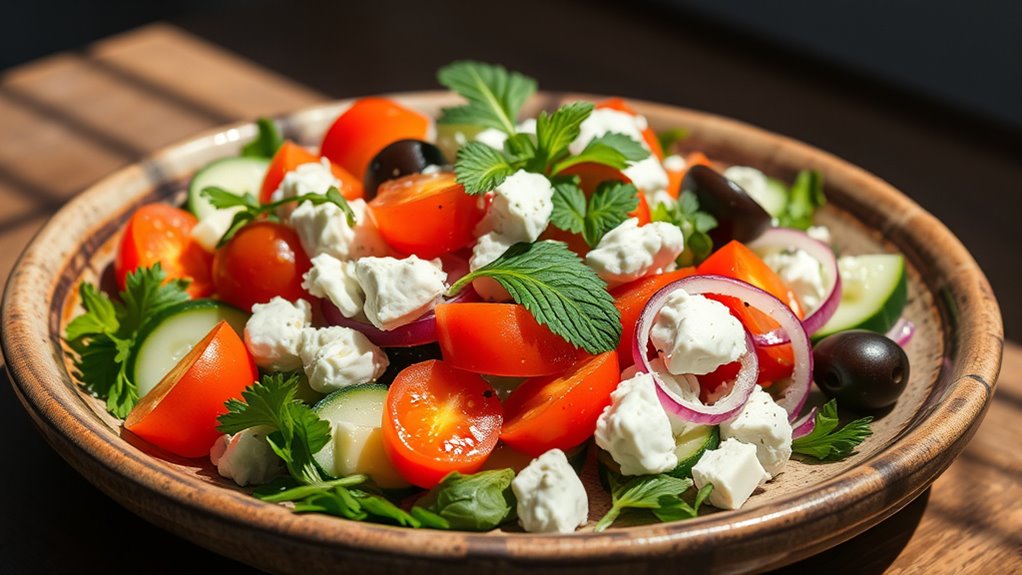
The magic of a Mediterranean winter salad lies in its flavor combinations. You want to pair ingredients that enhance each other’s qualities, creating a balanced dish. For example, the acidity of citrus pairs beautifully with the richness of olive oil and the salty tang of feta cheese or olives. You might also include toasted nuts like almonds or walnuts for crunch and a dose of healthy fats. Herbs such as parsley or mint add a burst of freshness, while a drizzle of balsamic or red wine vinegar can elevate the overall flavor profile.
Preparation is straightforward. Toss your greens with roasted vegetables, citrus segments, and herbs. Add nuts and cheese last to keep their texture intact. For dressing, keep it simple—combine extra virgin olive oil, lemon juice or vinegar, salt, and pepper. This approach emphasizes the natural flavors of your seasonal produce and highlights the vibrant flavor combinations typical of Mediterranean cuisine.
Top picks for "light healthy mediterranean"
Open Amazon search results for this keyword.
As an affiliate, we earn on qualifying purchases.
Frequently Asked Questions
Can These Salads Be Made Ahead for Meal Prep?
Yes, you can make these salads ahead for meal prep. Store the salad components separately in airtight containers to keep them fresh, especially the greens and delicate ingredients. When ready to eat, toss everything together and add dressings just before serving. Follow these salad storage and meal prep tips to maintain the salad’s texture and flavor, making your winter lunches quick, healthy, and delicious.
Are These Salads Suitable for Gluten-Free Diets?
Yes, these salads are suitable for gluten-free diets if you use gluten-free substitutions like gluten-free bread or grains. Just be cautious of cross-contamination risks, especially if ingredients or utensils are shared with gluten-containing foods. Always double-check labels and prepare ingredients carefully to guarantee everything remains safe for a gluten-free lifestyle. With these precautions, you can enjoy delicious, Mediterranean winter salads without worry.
How Long Do Winter Salads Stay Fresh?
Winter salads can last about 1 to 2 days if you’re serious about salad storage, but don’t get your hopes up for a lengthy romance. To preserve freshness, keep them chilled and tightly sealed. After that, they start to wilt faster than a snowman in summer. So, if you want crispness and flavor, plan on enjoying your winter salad soon after making it—before it turns into a sad, soggy mess.
Can I Substitute Ingredients Based on Availability?
Yes, you can definitely substitute ingredients based on availability. Ingredient swaps allow you to customize your winter salad and still enjoy great flavor. For example, if a specific vegetable isn’t available, try using a similar one to achieve the same texture or flavor profile. These swaps also create fun flavor variations, keeping your salads interesting and adaptable to what you have on hand. Don’t be afraid to get creative!
Are These Recipes Vegan-Friendly?
Think of these recipes as a canvas, ready for your personal touch. Yes, they can be made vegan-friendly with simple swaps like vegan cheese or chickpeas instead of feta. You can also explore dairy-free options to suit your dietary needs. By using vegan alternatives, you guarantee these salads remain fresh, flavorful, and inclusive, allowing everyone to enjoy a delicious, healthy Mediterranean winter salad that fits your lifestyle perfectly.
Conclusion
Now that you’ve discovered these vibrant Mediterranean winter salads, imagine how they could transform your mealtime. Will you choose the zesty citrus blend or the hearty roasted vegetables for your next cozy dinner? Each recipe promises not just freshness, but a delightful twist that keeps you craving more. Get ready to surprise your taste buds—your winter table is about to become irresistibly colorful and unexpectedly delicious. Are you ready to open these flavorful secrets?