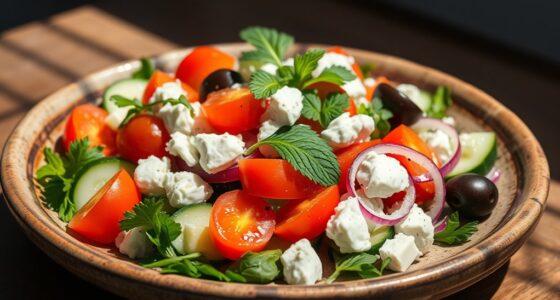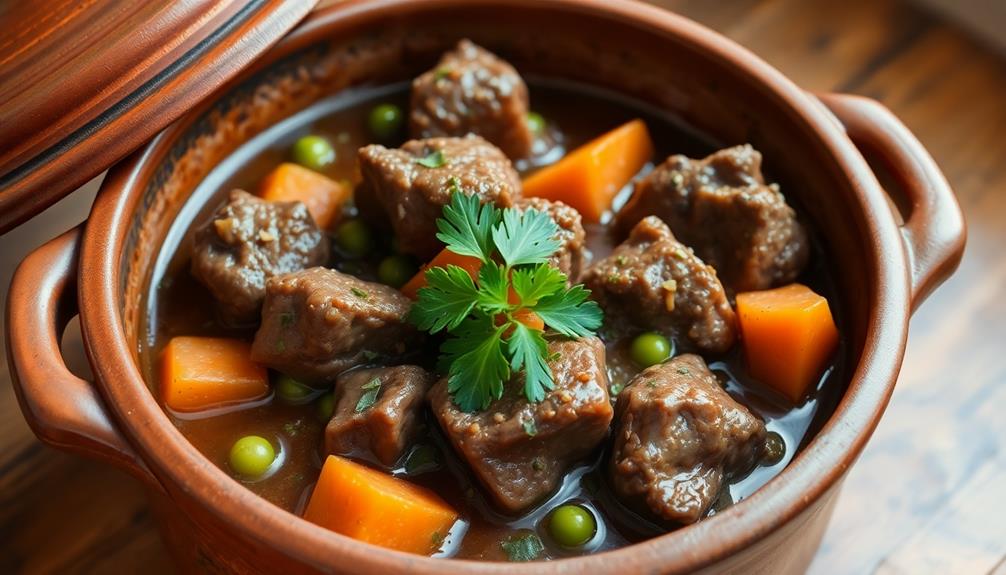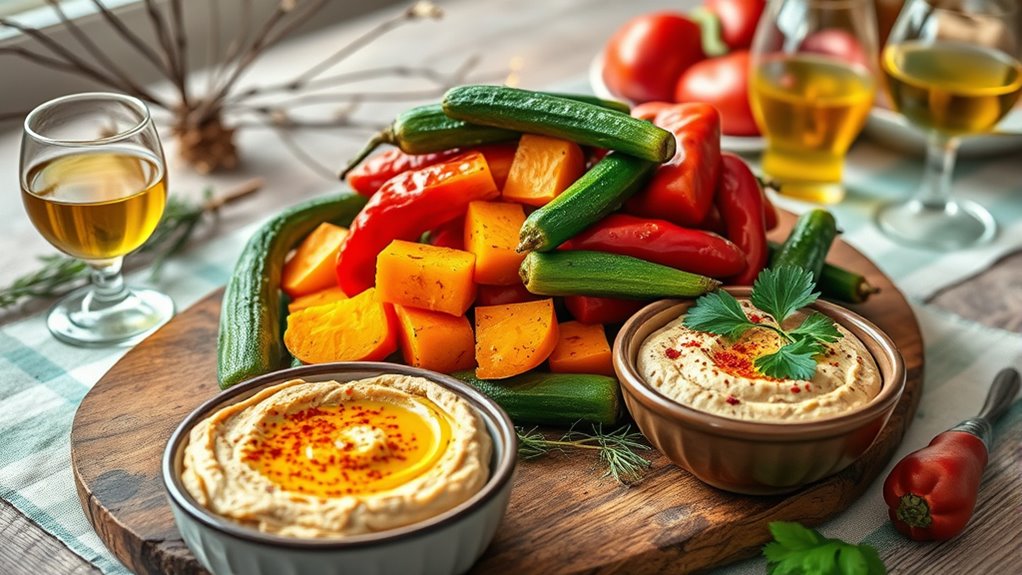

In winter, embrace the Mediterranean diet with hearty recipes that highlight seasonal produce like root vegetables, leafy greens, and citrus fruits. Use warming spices such as cinnamon, nutmeg, and paprika to add flavor and health benefits. Simple dishes like roasted vegetables, hearty stews, and fresh herb salads work beautifully, providing nourishing, flavorful meals. Continuing will reveal inspiring ideas to keep your winter diet vibrant, healthy, and satisfying.
Key Takeaways
- Incorporate root vegetables like sweet potatoes and parsnips roasted with olive oil and Mediterranean herbs for warmth and flavor.
- Use winter spices such as cinnamon and cumin to enhance hearty Mediterranean soups and stews.
- Prepare simple, fresh dishes like leafy greens sautéed with garlic and lemon for nutrient-rich warmth.
- Include citrus fruits like oranges and grapefruits to boost vitamin C and add zesty brightness to winter meals.
- Plan batch-cooked Mediterranean stews with beans, greens, and seasonal produce for nourishing, comforting winter eating.
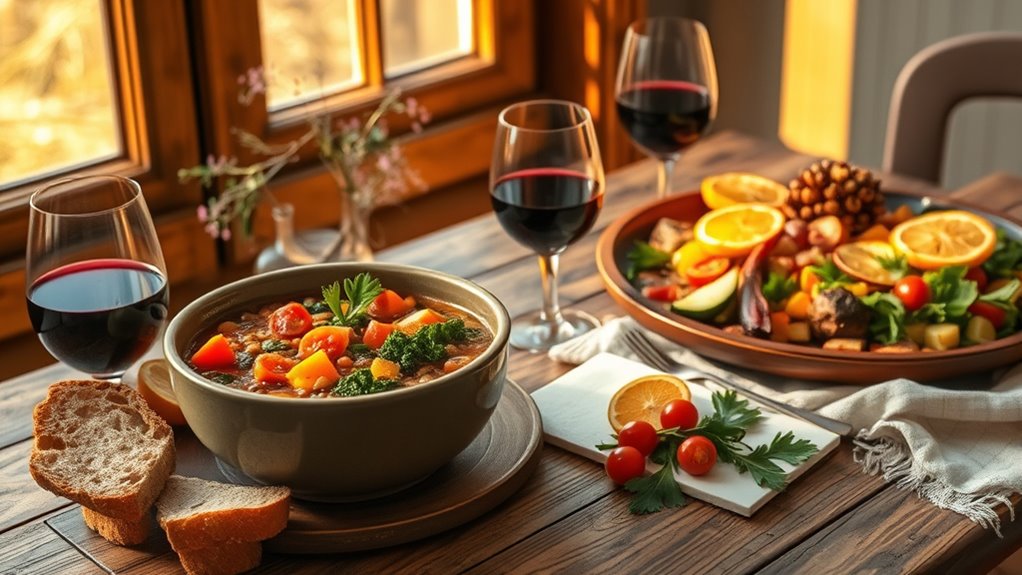
As winter settles in, maintaining a Mediterranean diet can be both delicious and nourishing. During this season, you have the perfect opportunity to incorporate seasonal produce into your meals, guaranteeing you get fresh, flavorful ingredients that boost your health. Root vegetables like sweet potatoes, parsnips, and beets are at their peak now, offering natural sweetness and hearty textures that warm you from the inside out. Leafy greens such as kale and Swiss chard are still abundant, providing essential vitamins and minerals. Citrus fruits like oranges, grapefruits, and mandarins brighten up your plates with their tangy flavor and vitamin C boost, helping you stay resilient against winter colds. Incorporating these seasonal items keeps your diet vibrant and ensures you’re getting the nutrients you need during colder months.
To add depth and warmth to your winter dishes, you can embrace the use of winter spices. Cinnamon, nutmeg, cloves, and allspice are staples that evoke cozy feelings and complement the natural flavors of winter produce. For example, a roasted root vegetable medley seasoned with cinnamon and a drizzle of olive oil can serve as a hearty side dish. Spiced tomato and lentil soups, flavored with cumin and paprika, become comforting bowls that nourish both body and soul. These spices not only enhance taste but also have anti-inflammatory properties, making your meals healthier. When combined with seasonal produce, winter spices transform simple ingredients into warming, soul-satisfying recipes.
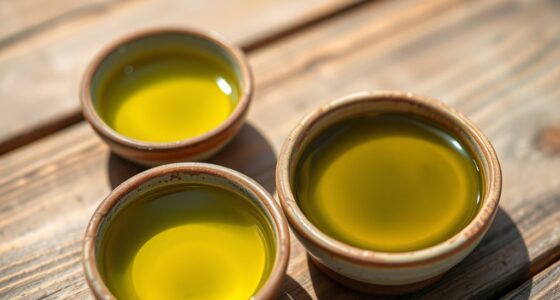
Additionally, understanding the impact of AI on food innovation and personalized nutrition could further enhance your meal planning and dietary choices, making your winter diet even smarter and more tailored to your health needs. Your approach to winter eating should focus on simple, fresh preparations that highlight the quality of seasonal produce and the warmth of spices. Think roasted vegetables drizzled with lemon and herbs, or hearty stews packed with beans, greens, and a dash of cinnamon or paprika. These dishes are easy to prepare and perfect for batch cooking, helping you stay on track with your healthy eating goals. Incorporate plenty of fresh herbs like parsley, oregano, and thyme to lift flavors without adding extra calories. Plus, using olive oil as your primary fat adds heart-healthy benefits and rich flavor to every dish.
Frequently Asked Questions
Can I Adapt Mediterranean Recipes for Winter Allergies?
Yes, you can adapt Mediterranean recipes for winter allergies by making seasonal ingredient swaps and allergy-friendly flavor adjustments. Use winter vegetables like squash, kale, or Brussels sprouts instead of summer favorites. Incorporate herbs and spices that don’t trigger allergies, and choose safe oils like olive oil. These tweaks keep your dishes authentic, flavorful, and safe, so you can enjoy healthy, warming Mediterranean meals all winter long.
Which Winter Vegetables Best Suit Mediterranean Cuisine?
Think of winter vegetables as the heartbeat of your Mediterranean winter dishes. Root vegetables like carrots, parsnips, and sweet potatoes bring warmth and sweetness, while hearty greens such as kale and chard add robust flavor and nutrients. These vegetables shine in stews, roasts, and soups, making your meals both comforting and healthy. Incorporate them to keep your diet vibrant and aligned with Mediterranean traditions during the colder months.
Are There Specific Mediterranean Spices Ideal for Winter Dishes?
You’ll find that spice blending with cinnamon, allspice, and cumin enhances winter Mediterranean dishes by adding warmth and depth. These spices are ideal for flavor enhancement, creating cozy, aromatic flavors perfect for hearty soups, stews, and roasted vegetables. Don’t forget to balance these spices carefully to avoid overpowering your dish. Incorporating these flavors will make your winter meals more comforting and authentically Mediterranean.
How Can I Preserve Fresh Herbs During Winter?
To preserve fresh herbs during winter, you should try herb drying techniques like hanging bunches upside down in a warm, dry spot or using a dehydrator. You can also explore herb preservation methods such as freezing herbs in ice cube trays with olive oil or water. These methods help retain flavor and aroma, ensuring you have fresh herbs year-round for your Mediterranean winter recipes.
Can Mediterranean Winter Meals Be Made Vegan or Vegetarian?
Yes, you can make Mediterranean winter meals vegan or vegetarian by using vegan substitutions like plant-based cheeses, tofu, or tempeh. Seasonal ingredient swaps, such as hearty vegetables like squash, kale, and root vegetables, add warmth and flavor. These changes keep your dishes nutritious and delicious while aligning with plant-based diets. Feel free to experiment with herbs and spices to enhance the flavors and create satisfying, warming winter meals.
Conclusion
Embracing the Mediterranean diet in winter is like wrapping yourself in a cozy, nourishing blanket. These five warm recipes not only fuel your body with wholesome ingredients but also brighten your days when the chill sets in. So, immerse yourself in these hearty dishes and let the flavors transport you to sunnier shores, even on the coldest days. With each bite, you’re planting seeds of health and happiness that will bloom all season long.