In French press brewing, you immerse coffee grounds in hot water, typically around 200°F, which allows for full extraction of rich oils and flavors, resulting in a bold, full-bodied cup. Drip coffee uses water between 195°F and 205°F to pass through grounds gradually, extracting a cleaner, lighter flavor. Both methods depend on controlling temperature and extraction chemistry, impacting flavor and texture. Keep exploring how these principles shape every brew you make.
Key Takeaways
- French press uses immersion brewing, requiring precise temperature control to optimize extraction and prevent over- or under-extraction.
- Drip coffee makers rely on automatic water temperature regulation within 195°F to 205°F for balanced extraction.
- French press steeping time and temperature directly influence flavor richness and bitterness, emphasizing the need for accurate heat management.
- Drip brewing benefits from consistent hot water flow, where temperature fluctuations can lead to under- or over-extraction.
- Understanding extraction chemistry and temperature control allows for tailored adjustments to improve flavor in both methods.
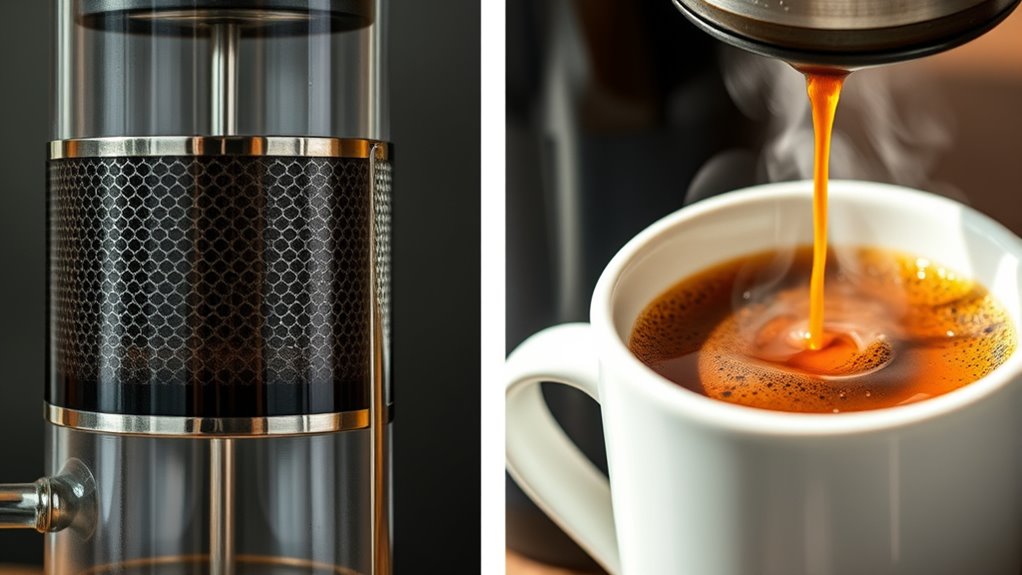
Brewing coffee is both an art and a science, where understanding the underlying principles can help you craft a perfect cup every time. One key aspect of this science involves extraction chemistry, which explains how soluble compounds from coffee grounds are released into your brew. You have to grasp how different variables—like grind size, brew time, and temperature—affect this process. For example, if you don’t control the temperature properly, you may extract undesirable bitter compounds or under-extract, resulting in a weak flavor. Temperature control is essential because it influences the rate and completeness of extraction, impacting the balance and richness of your coffee.
When you’re using a French press or a drip coffee maker, the extraction process unfolds differently, but both rely heavily on managing extraction chemistry through temperature. In a French press, the immersion method allows the grounds to steep directly in hot water, typically around 200°F (93°C). This allows for a more thorough extraction, but if the water is too hot or if you steep too long, you risk over-extraction, leading to bitterness. Conversely, too low a temperature can cause under-extraction, leaving your brew sour and lacking depth. You have control over temperature by pre-heating your water and timing your steeping process precisely, ensuring you extract the right balance of flavors.
Drip coffee makers operate differently. The water heats up and then slowly drips through the coffee grounds held in a filter. The temperature of the water at this stage is critical—ideally maintained between 195°F and 205°F (90-96°C)—so that extraction occurs ideally. If the water’s too hot, you risk over-extraction and bitterness; too cold, and you’ll under-extract, resulting in weak coffee. The design of drip machines typically manages temperature regulation automatically, but it’s still indispensable to use fresh, high-quality water and to ensure your machine heats the water correctly. Proper temperature control in this process ensures the soluble compounds are extracted efficiently, producing a balanced, flavorful cup.
Understanding extraction chemistry and maintaining precise temperature control allow you to fine-tune your brewing method—whether French press or drip—to match your taste preferences. By paying attention to how heat influences extraction, you can adjust steeping time, grind size, or water temperature to craft a cup that’s just right for you. Mastering these scientific principles transforms coffee brewing from guesswork into a deliberate, enjoyable process, bringing out the full potential of each coffee bean and elevating your daily ritual.
Frequently Asked Questions
How Does Water Temperature Affect Coffee Extraction?
Water temperature directly impacts coffee extraction by influencing water soluble compounds. If it’s too hot, you risk over-extraction, making your coffee bitter; too cold, and under-extraction results in a weak flavor. Maintaining temperature consistency guarantees you extract ideal flavors and aroma. Ideally, aim for around 195-205°F to balance extraction, allowing your brewing method to reveal the full potential of your coffee beans’ soluble compounds.
Can Grind Size Influence Brew Strength and Flavor?
Grind size greatly influences brew strength and flavor, so don’t underestimate its importance. When you choose a consistent grind, you promote proper flavor extraction, ensuring your coffee isn’t over- or under-extracted. Coarser grinds yield a milder, less bitter brew, ideal for French presses, while finer grinds boost brew strength, perfect for drip brewers. Adjusting grind size lets you tailor taste, transforming your coffee into a truly balanced, beautiful beverage.
Does Coffee Bean Origin Impact Brewing Method Choice?
Yes, coffee bean origin considerably impacts your brewing method choice because of coffee terroir and bean classification. If you’re using beans from a specific region known for bright, acidic flavors, like Ethiopia, a pour-over or drip method helps preserve those delicate notes. For beans with a fuller body, such as those from Sumatra, a French press can enhance the richness. Matching brewing methods to origin highlights each coffee’s unique profile.
How Long Should Each Method Steep for Optimal Flavor?
Think of steeping time as a delicate dance, guiding your coffee to reveal its true character. For ideal flavor extraction, steep your French press for about 4 minutes, allowing the rich oils to bloom, while drip coffee needs around 5 minutes to fully develop its nuanced flavors. Adjust these times slightly based on your taste preference, but remember, patience guarantees a harmonious brew that delights your senses.
What Are Common Mistakes to Avoid in Each Brewing Process?
To avoid mistakes, don’t stir the coffee too much, as it can disrupt extraction and cause bitterness. In a French press, make certain the filter stays clean to prevent grounds from slipping through, and avoid pressing too forcefully. For drip brewing, use fresh filters and don’t forget to regularly clean the machine. These steps help maintain ideal flavor and prevent common issues that compromise your coffee’s quality.
Conclusion
Now that you understand the science behind French press and drip brewing, you can choose the method that best suits your taste. Imagine trying both: you might find that the French press’s rich, full-bodied flavor enhances your morning ritual, while drip offers a cleaner, more consistent cup. For example, a coffee enthusiast switched from drip to French press and discovered a new appreciation for bold, aromatic brews. Experiment and enjoy discovering what makes your perfect cup!