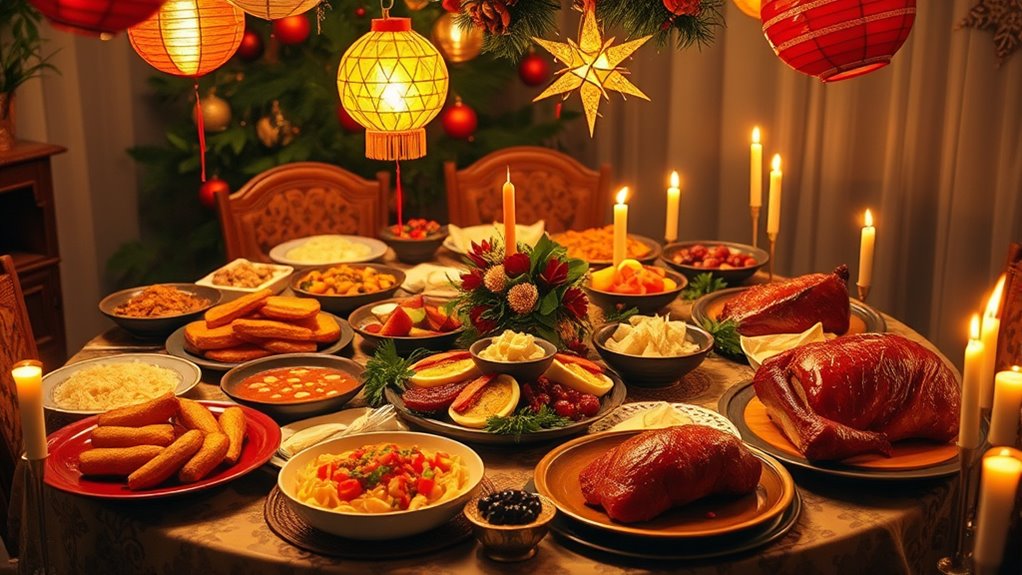
During Filipino Christmas Eve, Noche Buena features a festive spread of traditional foods, desserts, and drinks that bring families together in joyful sharing. You’ll see dishes like ham, pancit, and rice cakes, along with sweet treats such as bibingka and leche flan. Warm drinks like hot chocolate or ginger tea add comfort, creating a cozy atmosphere. These foods symbolize love and unity, and if you keep exploring, you’ll discover how each tradition adds to the warmth of Filipino celebrations.
Key Takeaways
- Noche Buena features a festive Filipino feast with traditional dishes like ham, queso de bola, and seafood, emphasizing family togetherness.
- Desserts such as bibingka, leche flan, and puto are central to the celebration, symbolizing sharing and Filipino hospitality.
- Warm beverages like tsokolate de batirol and ginger tea are enjoyed to keep everyone cozy and enhance the festive mood.
- Sharing special foods and drinks fosters family bonding, nostalgia, and community spirit during Christmas Eve.
- The celebration highlights love, unity, and gratitude, transforming the meal into a meaningful cultural tradition.
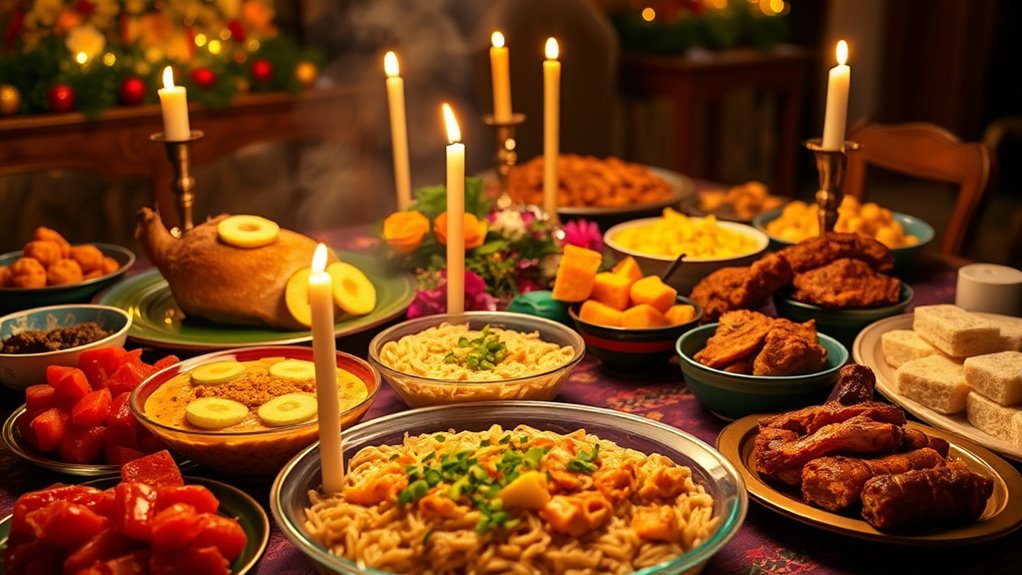
Noche Buena, the festive Christmas Eve celebration in many Filipino households, is centered around a joyful gathering and a hearty feast. As you prepare for this special night, you’ll find that the food plays a crucial role in bringing everyone together. One of the highlights is the array of traditional dishes, but no celebration is complete without sweet treats and festive drinks that add warmth and cheer to the evening. You’ll want to set aside space for a delicious Christmas dessert, which often includes bibingka, puto buto, or leche flan. These desserts not only satisfy your sweet tooth but also symbolize the Filipino love for sharing and celebration. The aroma of these treats, especially when served fresh and warm, creates a comforting atmosphere that invites everyone to indulge and enjoy.
Celebrate Christmas with traditional Filipino desserts like bibingka, puto buto, and leche flan that warm the heart and bring everyone together.
Alongside the desserts, holiday beverages are essential for setting the festive mood. You might find yourself pouring glasses of hot chocolate, tsokolate de batirol, or sweetened ginger tea to keep everyone cozy during the night. Some families also serve festive fruit punches, which are both invigorating and visually appealing with colorful fruits floating on top. These drinks serve as a perfect accompaniment to the rich, savory dishes on the table, helping to cleanse the palate and keep the spirits high. Whether you prefer traditional options or modern twists, the holiday beverages add a layer of warmth and conviviality that defines the Filipino Christmas experience.
As you gather around the table, you’ll notice that these desserts and beverages aren’t just about satisfying hunger—they’re about creating memories. Sharing a bite of bibingka or taking sips of warm cocoa becomes a moment of connection, reinforcing the importance of family and community during this special night. The act of preparing and enjoying these treats together turns the meal into a cherished tradition, passed down through generations. The sweet aroma of leche flan or the comforting warmth of ginger tea evoke feelings of nostalgia and gratitude, making the celebration even more meaningful. Incorporating a variety of traditional Filipino dishes allows for a diverse and memorable feast that reflects the rich culinary heritage of the Philippines.
In the end, your Noche Buena isn’t just about the food on your table; it’s about the joy of coming together, sharing stories, and creating new memories. The Christmas desserts and holiday beverages become symbols of Filipino warmth, generosity, and the spirit of giving that fills every home during this festive night. With each sip and each sweet bite, you celebrate not just Christmas, but the love and unity that make this tradition truly special.
Frequently Asked Questions
How Do Regional Filipino Communities Celebrate Noche Buena Differently?
You’ll find that regional variations and cultural influences shape how Filipino communities celebrate Noche Buena. In Cebu, you might enjoy lechon and spicy cuisine, while in Ilocos, traditional dishes like bagnet and empanada take center stage. In Mindanao, Muslim communities incorporate unique flavors and ingredients, blending local traditions with broader Filipino customs. These regional differences enrich the celebration, making each community’s Noche Buena a distinct and vibrant expression of their cultural identity.
What Are Some Unique Filipino Noche Buena Desserts?
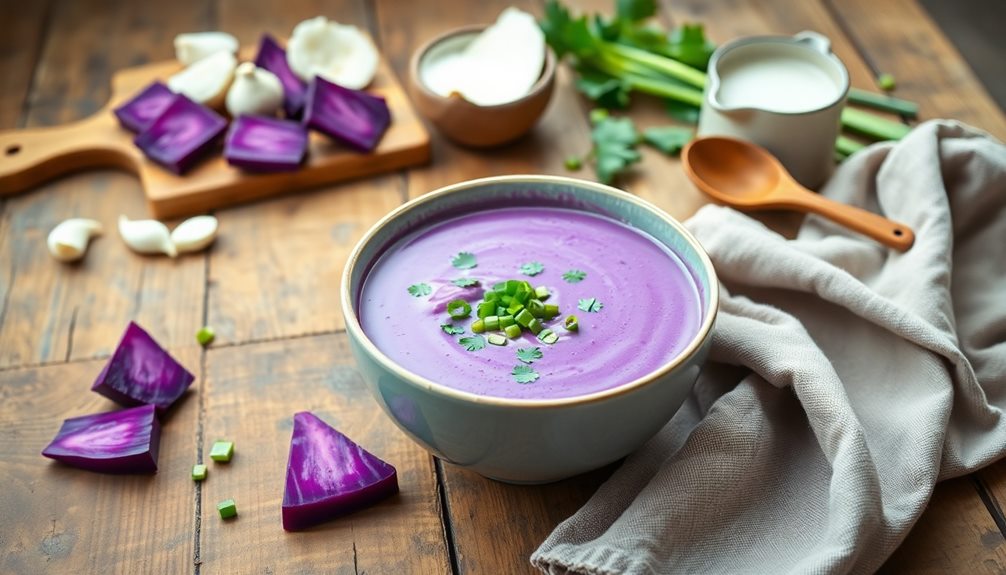
You’ll be blown away by Filipino desserts at Noche Buena! Imagine mountains of bibingka, a rice cake topped with salted egg and cheese, or the heavenly leche flan that melts in your mouth. Don’t miss ube halaya, a vibrant purple jam, or the crispy, sweet sapin-sapin layers. These Noche Buena sweets aren’t just desserts—they’re a festive explosion of flavors, making your Christmas Eve unforgettable!
How Has Modern Cuisine Influenced Traditional Noche Buena Dishes?
Modern cuisine has markedly influenced traditional Noche Buena dishes by introducing fusion cuisine and fast food options. You might find classic lechon paired with innovative sauces or Filipino-inspired sushi. Fast food staples like fried chicken now blend with traditional flavors, making the celebration more convenient and diverse. This evolution allows you to enjoy a mix of familiar and new flavors, reflecting how Filipino culture adapts while honoring its culinary roots.
Are There Specific Prayers or Rituals During Filipino Christmas Eve?
During Filipino Christmas Eve, you often participate in family prayers, thanking God for blessings and wishing everyone well. You may also sing Christmas carols, creating a warm, festive atmosphere. These rituals strengthen your family bonds and remind you of the spiritual significance of the holiday. You might also light candles, attend Midnight Mass, or share a special prayer before the Noche Buena feast, emphasizing faith and togetherness.
What Are Sustainable Practices Observed During Noche Buena Preparations?
During Noche Buena preparations, you can adopt sustainable practices by using eco-friendly utensils to reduce plastic waste. Additionally, sourcing local ingredients supports local farmers and minimizes carbon footprint. Opt for reusable containers and avoid excessive packaging. These simple steps make your celebration more environmentally friendly, ensuring you enjoy the holiday while caring for the planet. Your mindful choices help promote sustainability and preserve Filipino traditions for future generations.
Conclusion
As you gather around the table this Christmas Eve, remember that these cherished food traditions hold more than just flavors—they carry stories, memories, and the promise of new ones. Will the next Noche Buena bring a surprise, a new dish, or a deeper sense of togetherness? As the night unfolds, one thing’s certain: these Filipino culinary customs will continue to weave magic into your holiday, leaving you wondering what delicious tradition awaits next year.