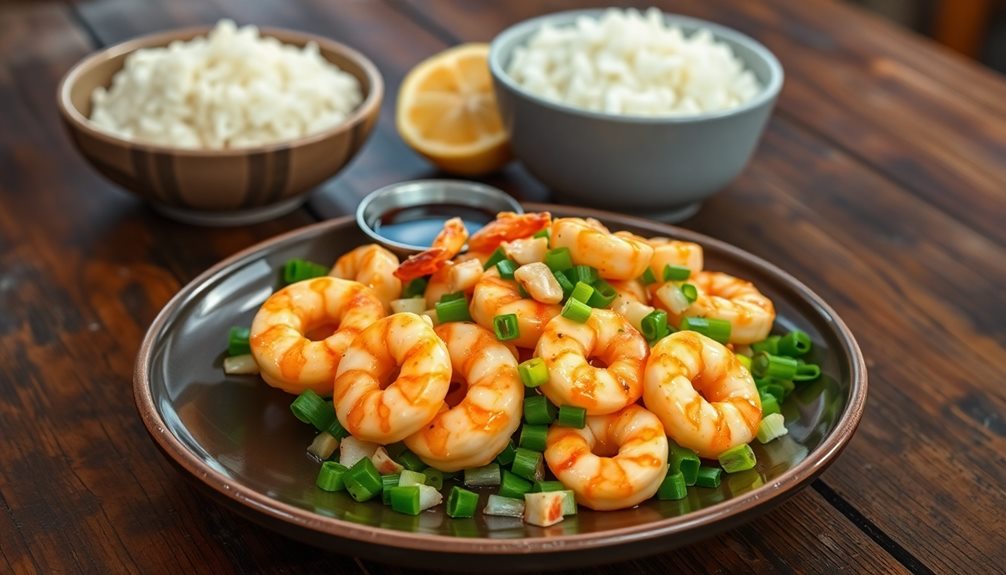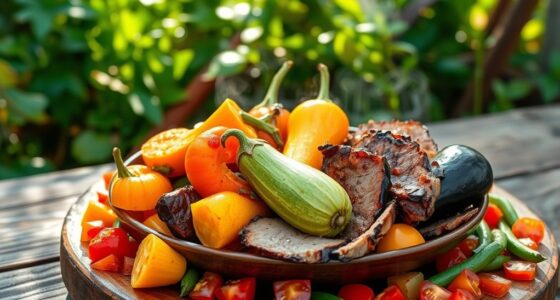
To balance sweet, sour, and salty in Filipino sinigang, start by carefully adding tamarind or other souring agents and taste frequently to reach the bright, lively acidity you desire. Gradually season with fish sauce or salt to build depth, then adjust with a pinch of sugar to soften sharpness. Keep tasting and fine-tuning throughout, ensuring each flavor complements the others. For more tips on perfecting your sinigang, continue exploring how to master each step.

Get kitchen staples and gadgets delivered free with Prime
- Fast, free delivery on millions of items
- Prime Video, Amazon Music and more included
- Member-only deals all year
Key Takeaways
- Taste the broth frequently and add tamarind gradually until achieving a bright, lively sourness.
- Incorporate fish sauce or salt slowly, adjusting to enhance flavor without overpowering.
- Add a small amount of sugar early to mellow acidity and balance the overall flavor profile.
- Continuously taste and fine-tune tamarind, salt, and sugar throughout cooking for harmony.
- Aim for a broth that is tangy, savory, and subtly sweet, ensuring all flavors complement each other.
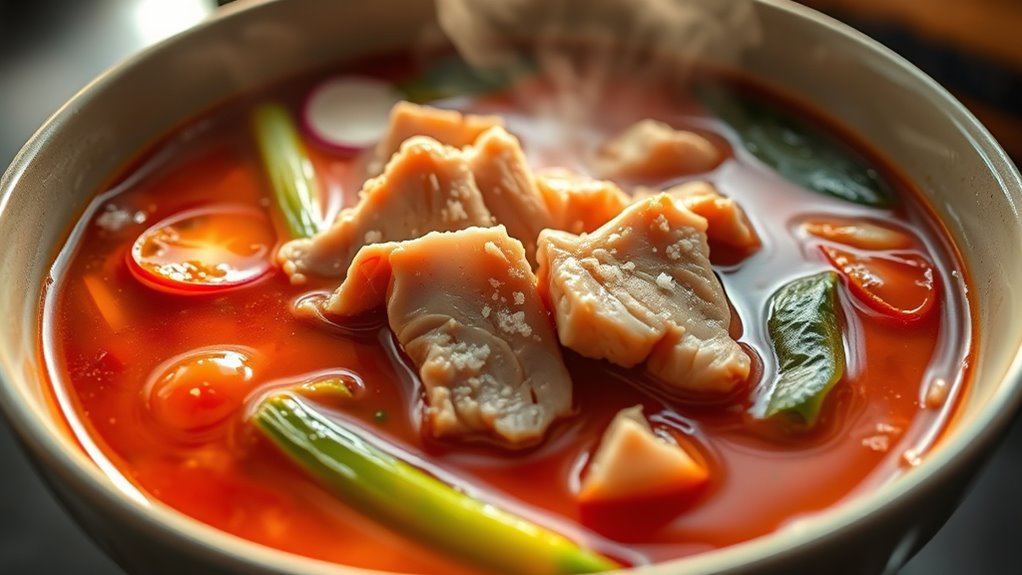
Sinigang is a beloved Filipino sour soup, but achieving its signature flavor requires more than just adding tamarind. The key lies in balancing the layers of flavor—tangy broth, savory seasoning, and the right touch of salt and sweetness. When you start making sinigang, you want that tangy broth to be vibrant and invigorating, but not overpowering. To do this, you need to carefully control the amount of tamarind or other souring agents you use. Taste as you go, adding small amounts until the broth hits that perfect tangy note without becoming overly sharp. Remember, the goal is a bright, lively sourness that complements the savory ingredients.
Achieve vibrant, balanced sinigang by carefully controlling tamarind and tasting as you go.
Next, focus on the savory seasoning, which forms the backbone of your sinigang. Typically, you’ll add fish sauce or salt to bring out depth and richness. Be cautious with the amount—you want to enhance the flavors without overwhelming the delicate balance. It’s best to add seasoning gradually, tasting after each addition. This allows you to fine-tune the flavor profile, ensuring the broth remains harmonious and well-rounded. The savory seasoning also helps mellow the acidity of the tamarind, creating a more balanced, inviting taste.
When it comes to the subtle interplay of sweetness and saltiness, it’s essential to keep your palate in mind. A pinch of sugar can round out the acidity, preventing it from being too sharp, especially if you prefer a milder tang. Some cooks prefer adding a small amount of sugar early on, letting it dissolve and meld into the broth. Conversely, if your sinigang tastes too tart, a little more sugar can soften the edge without sacrificing the overall brightness. As for salt, it’s the final touch that ties everything together. Too much, and it overshadows the sourness and sweetness; too little, and the broth feels flat. Adjust gradually, tasting frequently to hit that perfect balance.
Ultimately, making sinigang is about careful seasoning and tasting along the way. The goal is to create a broth that’s tangy and savory, with just enough sweetness and salt to enhance the natural flavors of the ingredients. With patience and attention, you’ll craft a bowl of sinigang that’s perfectly balanced—bright, comforting, and deliciously authentic.
Frequently Asked Questions
Can I Substitute Tamarind With Other Souring Agents?
You can definitely use tamarind substitutes or alternative souring agents in your sinigang. Lemons, limes, or even vinegar work well, providing the desired tang. Keep in mind that each substitute offers a slightly different flavor, so start with small amounts and adjust to taste. Using these alternatives allows you to customize your sinigang while maintaining the classic sour profile that’s essential for this Filipino dish.
How Do I Adjust Salt Levels Without Overpowering the Dish?
To adjust salt levels without overpowering your sinigang, focus on salinity control carefully. Start with small amounts of salt and taste frequently, adding more gradually. Remember, salt enhances flavors, so aim for a balanced taste that complements the sour and savory notes. You can also boost flavor with ingredients like fish sauce or a touch of sugar to achieve flavor enhancement without increasing saltiness too much.
What Are Common Mistakes in Balancing Flavors?
You might make over seasoning mistakes by adding too much salt or sugar, which can overpower the dish’s natural flavors. Also, using incorrect souring agent choices, like too much tamarind or lemon, can upset the balance. To avoid these mistakes, taste as you go and adjust gradually. Remember, balancing flavors is about harmony, so start small and build up to achieve a well-rounded, delicious sinigang.
Does the Type of Meat Affect Flavor Balancing?
The type of meat you choose definitely affects flavor balancing in sinigang. Your meat selection influences the dish’s overall flavor influence, as different meats release varying levels of richness and umami. For example, pork adds a hearty, savory base, while shrimp offers a lighter taste. Adjust your sour, sweet, and salty elements accordingly to complement the meat’s flavor influence, ensuring a well-balanced and flavorful sinigang.
How Long Should I Simmer Sinigang for Optimal Flavor?
Ah, the eternal mystery of perfect sinigang—how long should you simmer for ideal flavor? Well, you don’t want to turn your broth into a flavorless swamp, so a good 45 minutes to an hour usually suffices. This simmering duration allows for thorough flavor extraction from the meat and vegetables, creating a rich, balanced broth. Keep an eye on it, and don’t rush the magic of slow flavor development.
Conclusion
So, next time you plunge into sinigang, remember that perfect balance is a dance, not a science experiment—though it might feel like one. Just keep tasting, adjusting, and pretending you’re a flavor scientist on a quest for harmony. After all, who needs balance when you can have that glorious, chaotic bowl of salty, sour, and sweet chaos? Embrace the madness and enjoy every imperfect, delicious sip of your sinigang masterpiece.
Columbus Day / Indigenous Peoples' Day Picks
long weekend sales
As an affiliate, we earn on qualifying purchases.