To deep-fry a turkey safely and successfully, always use a large, sturdy pot and monitor the oil temperature with a reliable thermometer, keeping it around 350°F. Wear protective gear like gloves and long sleeves, and keep a Class K fire extinguisher nearby. Carefully thaw and dry the turkey before lowering it slowly into the hot oil to avoid splatters. Managing temperature and never leaving the oil unattended are key. If you proceed, you’ll discover essential steps to perfect your fry and ensure safety.
Key Takeaways
- Use a reliable thermometer to maintain oil temperature at around 350°F, avoiding overheating or undercooking.
- Wear appropriate safety gear, including gloves, long sleeves, and eye protection, and keep a Class K fire extinguisher nearby.
- Fully thaw and dry the turkey to prevent dangerous oil splatters and carefully lower it into the hot oil with a sturdy, heat-resistant hook or basket.
- Monitor the oil temperature constantly, adjusting the burner as needed, and never leave the hot oil unattended during frying.
- Carefully remove the turkey once cooked to an internal temperature of 165°F, allowing excess oil to drip off, and handle with safety precautions.
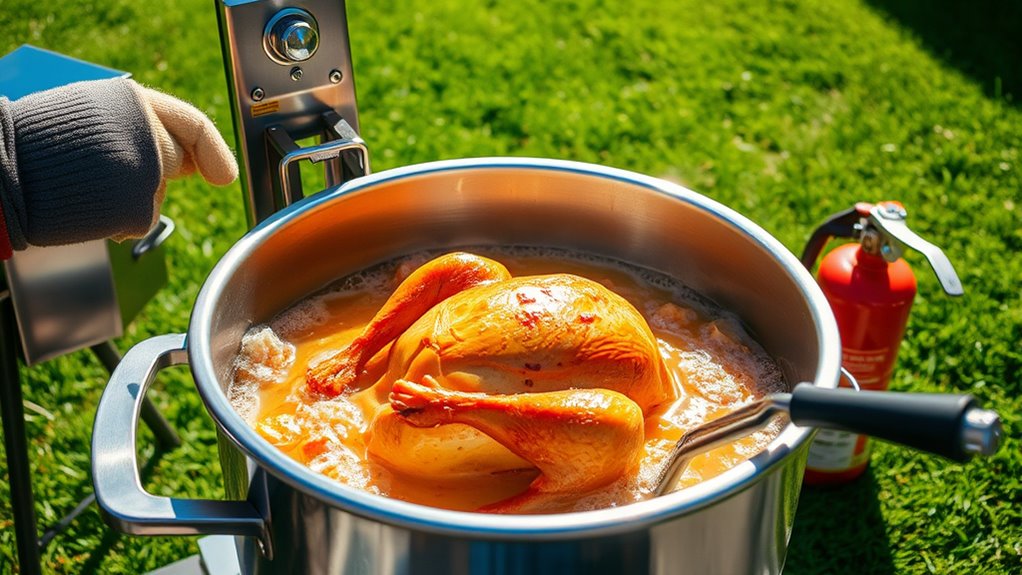
Deep-frying a turkey is a popular way to achieve a crispy, flavorful bird in a fraction of the time it takes with traditional roasting. But to do it safely and successfully, you need to pay attention to key details, especially oil temperature and safety gear. Maintaining the right oil temperature is essential; if the oil is too hot, it can cause dangerous flare-ups or even fires, while too low a temperature results in greasy, undercooked meat. Use a reliable thermometer to monitor the oil, aiming for around 350°F. This temperature allows the turkey to cook evenly and develop that perfect crispy exterior without risking dangerous splatters or fires.
Maintaining the right oil temperature is crucial for safe, crispy deep-fried turkey.
Before you start, equip yourself with proper safety gear. Wear long sleeves, heat-resistant gloves, and eye protection to shield yourself from hot oil splatters, which are common during the process. A fire extinguisher rated for oil fires, such as a Class K extinguisher, should always be nearby in case of emergencies. Never skip these safety measures, even if you’re experienced. Safety gear is your best defense against serious burns or accidents.
When you’re ready to begin, make sure your turkey is fully thawed and patted dry. Excess moisture can cause dangerous oil splatters when submerged. Carefully lower the turkey into the preheated oil, using a sturdy, heat-resistant hook or basket. Slowly and gently lower the bird to prevent splashing. Keep a safe distance while doing this, and never leave the hot oil unattended. Adjust the burner to maintain the ideal temperature, as the oil temperature will drop when you add the turkey. Reheat if necessary, but avoid overheating, which could cause the oil to ignite. Monitoring cooking temperature throughout the process is crucial for safety and perfect results.
Throughout the process, keep an eye on the thermometer to ensure the oil stays within the safe cooking range. Maintain constant supervision, especially during the first few minutes, when the temperature can fluctuate. When the turkey reaches an internal temperature of 165°F, it’s done. Carefully remove it from the oil, allowing any excess oil to drip off before transferring it to a platter. Use your safety gear during removal, as the oil and bird will still be hot.
Frequently Asked Questions
What Type of Oil Is Best for Deep-Frying a Turkey?
You should choose oils with high smoking points for deep-frying a turkey, like peanut oil, canola oil, or vegetable oil. These oils can withstand high temperatures without burning. Peanut oil, in particular, is popular because it has a high smoking point and neutral flavor. Avoid oils with low smoking points, like olive oil, which can break down and create smoke or hazards during frying.
How Do I Prevent Oil Splatters During Frying?
To prevent oil splatters during frying, always wear safety gear like goggles and long sleeves, and keep a safe distance from the hot oil. Use a controlled, steady heat and avoid overfilling your cooking area with oil. Carefully lower the turkey into the pot, and keep a fire extinguisher nearby. Maintaining a clean, organized cooking area also helps minimize splatters and guarantees a safer frying experience.
Can I Reuse the Frying Oil Safely?
Yes, you can reuse frying oil safely if you filter it properly using oil filtration to remove food particles, which helps maintain its quality. Store the oil in a sealed container in a cool, dark place to prevent spoilage. Always check for signs of rancidity, such as off smells or a sticky texture, before reusing. Proper oil storage and filtration extend your oil’s lifespan and ensure safe, tasty frying.
What Temperature Should I Maintain During Frying?
You should maintain a cooking temperature of 350°F when deep-frying your turkey. Studies show that oil reaches this temperature quickly, ensuring even cooking. Use a thermometer and place it securely in the oil, avoiding contact with the basket or pot sides. Regularly monitor the temperature to prevent overheating, which can cause dangerous fires, or undercooking, resulting in unsafe poultry. Staying consistent helps you achieve crispy, perfectly cooked turkey.
How Do I Dispose of Used Cooking Oil Responsibly?
You should dispose of used cooking oil responsibly by first letting it cool completely. Then, you can recycle used oil by taking it to a local recycling center or designated collection site. Avoid pouring it down the drain, as it can clog pipes and harm the environment. Many communities also offer eco-friendly disposal options, so check local guidelines to guarantee you’re practicing environmentally friendly disposal and recycling used oil safely.
Conclusion
Now that you know how to deep-fry a turkey safely, you’re ready to tackle this culinary adventure. Think of it like a dance—you lead with caution, keep your steps steady, and the turkey will follow perfectly. With careful attention and respect for the process, you’ll create a golden masterpiece that’s crispy on the outside and juicy inside. So go ahead, take the plunge, and enjoy the delicious symphony of flavors you’ve brought to life.