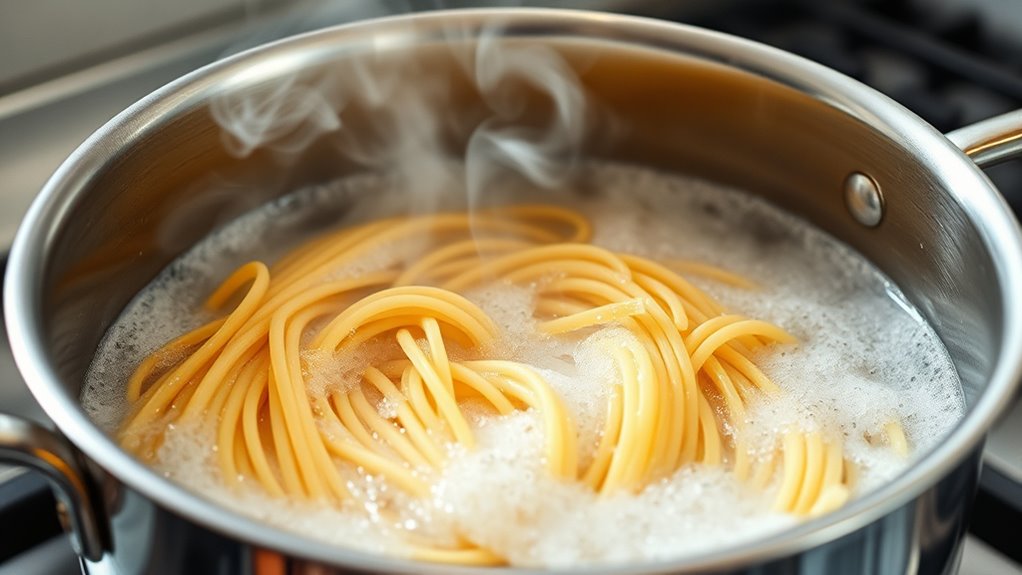

To boil pasta perfectly, start by using 4-6 quarts of water per pound and bring it to a rapid boil. Add about 1 tablespoon of salt per gallon to enhance flavor, then drop in all the pasta at once and stir immediately. Keep stirring occasionally and cook until al dente—tender yet firm. For best results, avoid rinsing and save some pasta water to adjust the sauce later. If you want to master the technique, keep exploring the details.
Key Takeaways
- Use 4-6 quarts of water per pound of pasta and bring it to a rapid boil before adding pasta.
- Add about 1 tablespoon of salt per gallon of water for flavor and even cooking.
- Drop all pasta at once, stir immediately, and continue stirring occasionally for even cooking.
- Cook until al dente, tasting 1-2 minutes early, following package instructions as a guide.
- Drain without rinsing, save some pasta water for sauces, and toss with a little oil if storing.
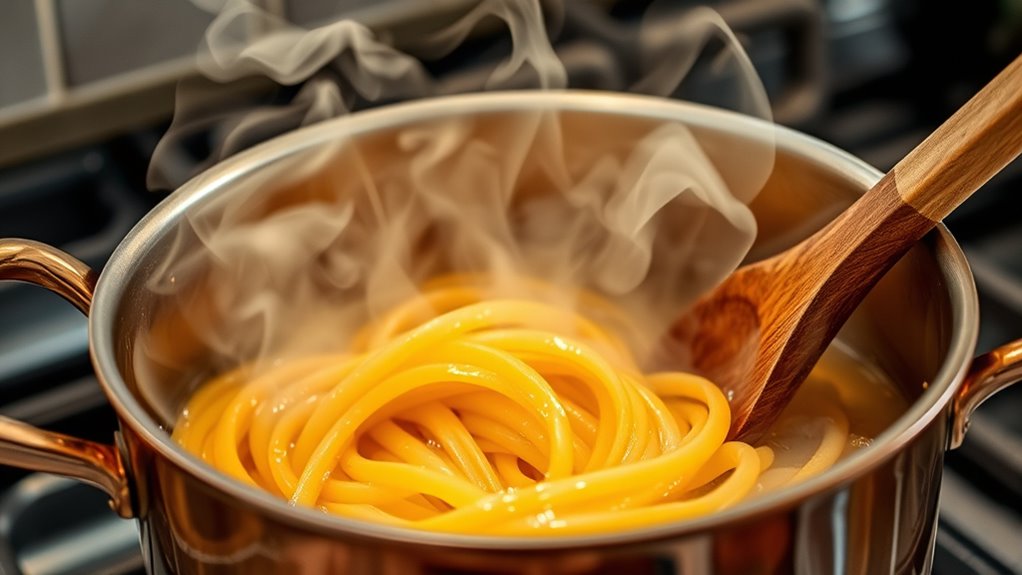
Cooking perfect pasta every time might seem tricky, but with a few simple tips, you can achieve restaurant-quality results at home. The key starts with using enough water—aim for about four to six quarts per pound of pasta—and bringing it to a rapid boil. Once boiling, add a generous amount of salt, roughly a tablespoon per gallon of water. Salt not only seasons the pasta but also enhances the flavor and helps it cook evenly. Drop the pasta in all at once, stirring immediately to prevent sticking, and continue stirring occasionally to keep the pasta separate. Follow the package instructions for cooking time, but always taste-test a minute or two before to ensure the pasta is al dente—firm to the bite but cooked through.
While the pasta cooks, think about sauce pairing. The shape and texture of your pasta can influence which sauce works best. For example, long noodles like spaghetti or linguine are perfect with lighter sauces such as olive oil or tomato-based ones, while ridged or tube-shaped pasta like penne or rigatoni hold onto thicker, creamy sauces better. Proper sauce pairing elevates your dish and makes every bite satisfying. Once cooked, drain the pasta, but don’t rinse it. Rinsing washes away the surface starch that helps the sauce cling, resulting in a less flavorful dish. Instead, save a cup of pasta water—starchy and salty—and add it to your sauce if it needs thinning or more adhesion. Additionally, understanding the importance of proper boiling can help prevent overcooking and ensure ideal texture.
Storing cooked pasta for later use involves a few careful steps. If you’re preparing in advance, toss the pasta with a tiny bit of olive oil to prevent sticking, then store it in an airtight container in the fridge. Keep in mind that pasta can become mushy if overcooked or stored improperly, so only store it for up to 24 hours for the best texture. When reheating, add a splash of pasta water or sauce to revive its original texture and flavor. Proper storage and reheating techniques ensure your pasta remains delicious even after a day or two.
Achieving perfect pasta isn’t just about the boil; it’s about understanding how to pair it with sauces and store it properly. When you master these details, every dish you make will be a step closer to restaurant-quality. With practice, you’ll develop a feel for timing and texture, making your pasta dishes consistently outstanding. Remember, the right sauce pairing and careful storage are just as important as boiling technique in creating a memorable pasta meal.
Frequently Asked Questions
Can I Reuse Pasta Water for Cooking or Sauce?
Yes, you can reuse pasta water for cooking or sauce. Pasta water uses include adding it to your sauce for extra flavor and starch, which helps thicken the sauce and help it cling to the pasta. Reusing cooking water is a smart way to conserve resources and enhance your dishes. Just make sure to save some before draining, and avoid using overly salty or starchy water for other recipes.
How Do I Prevent Pasta From Sticking Together?
Think of your pasta as dancers in a crowded ballroom—they need space to glide. To prevent sticking, stir the pasta during cooking, especially in the first few minutes. Use plenty of water, and don’t forget to adjust your cooking time based on pasta storage; older pasta may need a tad longer. Drizzle a little olive oil if needed, but aim for a gentle swirl to keep every piece separate and perfect.
What Type of Salt Is Best for Boiling Pasta?
You should choose coarse sea salt or kosher salt for boiling pasta because their mineral content enhances flavor better than regular table salt. These salts dissolve slowly, allowing you to control seasoning and prevent clumping. Avoid fine table salt, as it can make the water overly salty quickly. Use about 1-2 tablespoons per 4-6 quarts of water, adjusting based on your taste preferences and saltiness desired.
How Do I Know When Pasta Is Perfectly Al Dente?
You know pasta is perfectly al dente when it has a firm bite, not mushy or overly soft. To gauge this, start checking your pasta a minute or two before the suggested cooking time. Investigate the theory that texture reveals doneness; taste a piece to assess its firmness. Remember, pasta texture is key—aim for a slight resistance when you bite into it, ensuring ideal flavor and consistency.
Should I Rinse Pasta After Boiling?
You should avoid rinsing pasta after boiling if you’re planning to serve it with sauce. Rinsing removes the starch that helps the sauce cling better, which can lead to a less flavorful dish. However, if you’re using pasta for a cold salad or want to stop the cooking process quickly, rinsing is okay. Just remember, rinsing pasta can make sauce reuse less effective, so consider your dish before rinsing.
Conclusion
Now that you know how to boil pasta perfectly, you’re ready to enjoy every bite. Think of your pasta skills as a finely tuned instrument, where each step plays a crucial role in creating a harmonious dish. With practice, you’ll master the art just like a seasoned musician. Remember, patience and attention to detail make all the difference—turning simple ingredients into a culinary masterpiece, much like a painter transforms a blank canvas into a work of art.