During Chinese New Year, the reunion dinner brings families together to enjoy dishes rich in symbolism, like dumplings shaped like ingots for wealth, whole fish for abundance, and long noodles for longevity. Red decorations and new clothes highlight hopes for good fortune and renewal. Celebrations include dragon dances and storytelling that reinforce cultural traditions. If you want to explore more about these meaningful dishes and customs, there’s plenty to discover about this vibrant celebration.
Key Takeaways
- Traditional reunion dinner features symbolic dishes like dumplings, fish, and noodles representing wealth, abundance, and longevity.
- Dumplings shaped like gold ingots and round dumplings symbolize prosperity and family unity.
- Whole fish signifies abundance, with leaving some on the plate indicating ongoing good luck.
- Long, uncut noodles embody long life and good health.
- Festive decorations, red clothing, and sharing stories enhance the cultural significance of the meal.
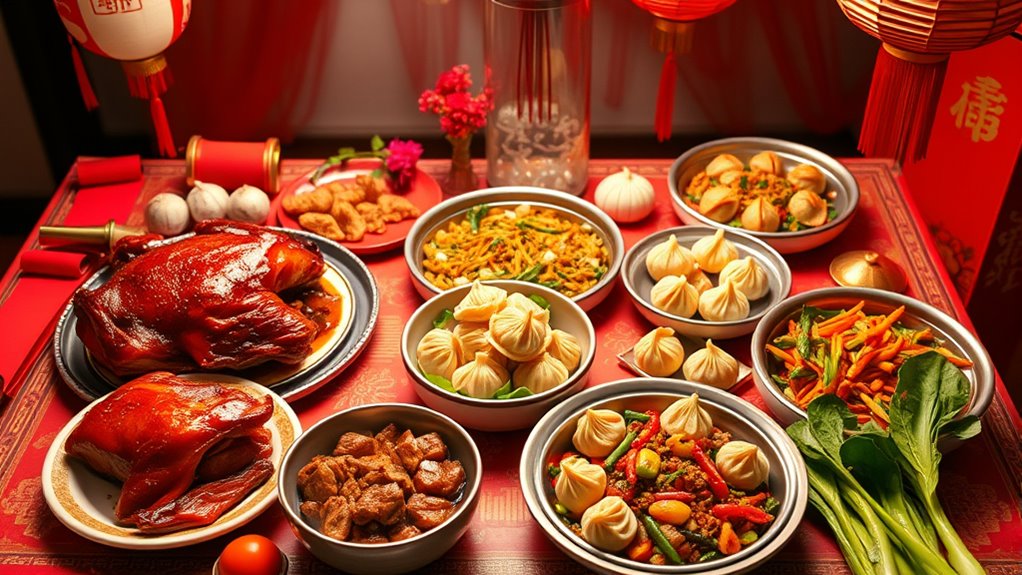
Are you ready to celebrate the vibrant traditions and lively festivities of Chinese New Year? As the holiday approaches, you’ll find yourself immersed in a world of colorful decorations, dragon dances, and the warm spirit of family reunions. One of the most important aspects of this celebration is the traditional reunion dinner, where everyone gathers to share a meal that’s rich in symbolism and history. During this time, the table is filled with an array of lucky foods that are believed to bring good fortune, health, and prosperity in the coming year. These dishes are more than just delicious—they carry meaningful messages, woven into festive traditions that have been passed down for generations.
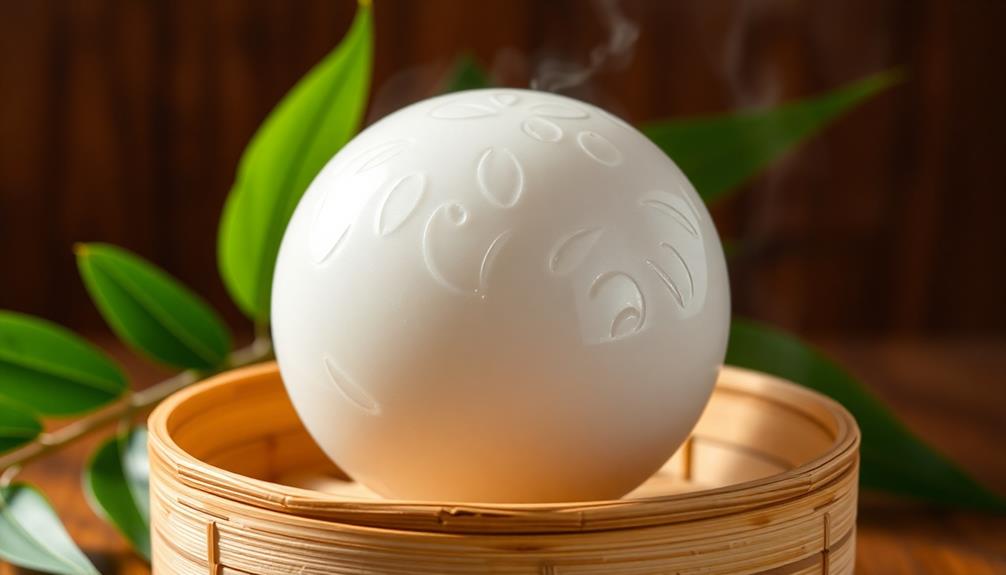
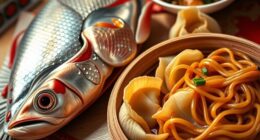
When you sit down for the reunion dinner, you’ll notice the variety of dishes that symbolize different hopes for the new year. For example, dumplings shaped like ancient gold ingots are a must-have, representing wealth and prosperity. The round shape of these dumplings also signifies completeness and unity among family members. Fish, often served whole, is another staple, symbolizing abundance and a good start to the year. It’s customary to leave some fish on your plate, as finishing it all might suggest that your good luck will be consumed and not carried into the new year. Noodles are also present, often long and uncut, embodying longevity and a long, healthy life. They’re typically served without breaking to maintain the wish for a smooth, uninterrupted year.
You’ll observe that the festive traditions around the reunion dinner extend beyond the food itself. Red decorations and lanterns adorn the home, and everyone wears new clothes to symbolize a fresh start. Children receive red envelopes filled with money, a gesture meant to bring them blessings and good fortune. As the evening progresses, the family shares stories, laughs, and hopes for the future, reinforcing bonds and celebrating unity. The act of preparing and sharing these lucky foods isn’t just about taste; it’s about honoring a culture that values harmony, prosperity, and happiness. These traditions serve as a reminder that the New Year is a time to cherish family ties and embrace the hopes of a prosperous future. So, when you partake in these festive traditions, remember that you’re partaking in a centuries-old celebration that’s all about hope, connection, and good fortune. Additionally, the cultural significance of these dishes highlights how deeply rooted these practices are in Chinese heritage.
Frequently Asked Questions
What Are the Symbolic Meanings Behind Each Dish?
You’ll find that each dish’s symbolism holds special meaning. For example, fish represents abundance, while dumplings symbolize wealth. Noodles stand for longevity, and sweet rice balls signify family unity. These dishes’ symbolic meanings reflect wishes for prosperity, health, and harmony in the new year. By enjoying these traditional dishes, you celebrate cultural values and send positive intentions for the year ahead.
Are There Regional Variations in Reunion Dinner Menus?
You’ll notice regional cuisines influence reunion dinner menus considerably, reflecting local flavors and customs. While some dishes are staples nationwide, others vary based on regional traditions or dietary restrictions. For instance, northern regions favor wheat-based foods like dumplings, while southern areas prefer rice and seafood. These variations enrich the celebration, showcasing diverse culinary heritages and accommodating guests’ dietary needs, making each family’s gathering unique and meaningful.
How Are Dishes Prepared Traditionally Versus Modern Methods?
You prepare traditional reunion dishes by following age-old recipes, using fresh ingredients, and cooking methods like steaming, braising, or stir-frying. Modern methods incorporate fusion cuisine techniques, such as blending Chinese flavors with Western ingredients, while accommodating dietary restrictions like vegetarian or gluten-free options. You might use innovative tools or shortcuts, but many still honor the traditional flavors and presentation that symbolize family unity and prosperity during the celebration.
What Are Some Lesser-Known Local Reunion Dishes?
Imagine uncovering hidden gems at a treasure hunt; that’s what exploring lesser-known regional delicacies feels like. You might find dishes like Yunnan’s crossing-the-bridge noodles or Sichuan’s spicy fish head, each offering unique flavors. Pair these with festive beverages like rice wine or herbal teas to elevate your celebration. These lesser-known dishes add depth to your reunion, turning your dinner into a memorable voyage through China’s diverse culinary landscape.
How Has the Reunion Dinner Evolved Over Recent Decades?
You’ve seen how the reunion dinner has evolved over recent decades, blending tradition with innovation. Today, you’ll notice more diverse ingredients and modern culinary techniques that elevate classic dishes, reflecting changing tastes. Despite these shifts, you still honor the cultural significance by maintaining traditional flavors and symbols. This balance keeps the dinner meaningful, connecting generations while embracing contemporary culinary creativity.
Conclusion
So, as you plunge into this year’s reunion dinner, remember: nothing says “wealth and prosperity” like a perfectly cooked dumpling—unless you accidentally set the kitchen on fire, then it’s just “fire and chaos.” Embrace the messy, flavorful chaos, because nothing says “New Year’s luck” like a slightly burnt noodle or a suspiciously wobbly fish. Cheers to feasting, family, and hoping the fire alarm stays silent—at least until after dessert.