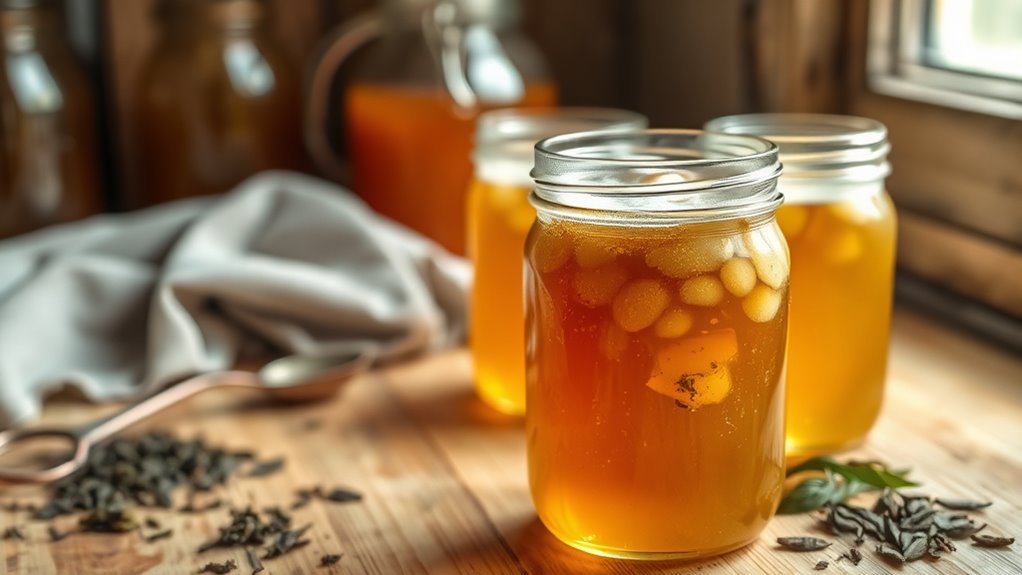

To ferment your own kombucha at home, start by brewing a sweet tea with black or green tea and sugar, letting it cool afterward. Pour it into a glass jar, add a SCOBY and some starter tea, then cover with a breathable cloth secured with a rubber band. Let it ferment undisturbed in a warm, dark spot for 7 to 14 days. Once done, flavor, bottle, and carbonate for a delightful, homemade probiotic drink. Keep exploring for detailed steps to perfect your brew.
Key Takeaways
- Use a clean glass jar, cover with breathable cloth, and ferment in a warm, dark place for 7-14 days.
- Brew and cool sweetened black or green tea before adding the SCOBY and starter tea.
- Remove the SCOBY, reserve a small amount of kombucha for future batches, and add flavors if desired.
- Bottle the kombucha with headspace, seal tightly, and let it undergo secondary fermentation for carbonation.
- Refrigerate to halt fermentation, taste for quality, and customize with various flavors for personalized batches.
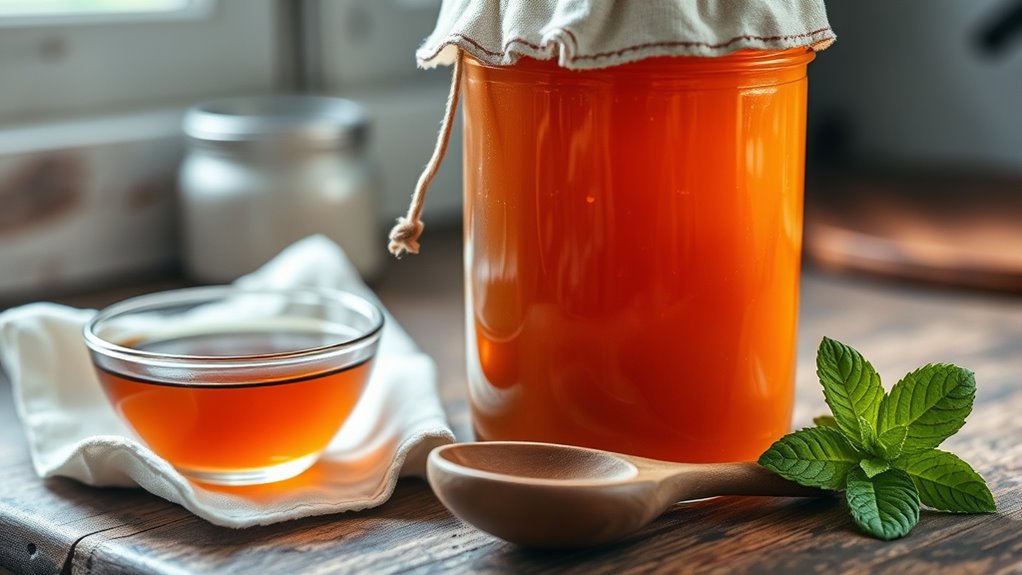
Have you ever wondered how to make your own kombucha at home? It’s easier than you might think, and all you need are some basic supplies and a little patience. The first step is choosing the right fermentation vessel. A glass jar works best because it’s non-reactive, easy to clean, and allows you to see the brewing process clearly. Make sure your vessel is large enough for the volume of tea you want to produce—about one to two gallons is a good starting point. Cover the opening with a breathable cloth or coffee filter secured with a rubber band. This keeps out dust and insects while letting air in, which is crucial for fermentation.
Once you’ve secured your fermentation vessel, brew your sweet tea as the foundation. Use black or green tea, and sweeten it with sugar—this feeds the SCOBY (symbiotic culture of bacteria and yeast) during fermentation. Pour the cooled sweet tea into your jar, then gently add the SCOBY along with some starter tea from a previous batch or store-bought unpasteurized kombucha. Place the jar in a warm, dark spot where it can ferment undisturbed for about 7 to 14 days, depending on your taste preference. During this time, the SCOBY works to ferment the sugars into beneficial acids, giving your kombucha its signature tang.
As fermentation progresses, you might want to experiment with flavor infusions. Once the initial fermentation is complete, remove the SCOBY and a cup of the brewed kombucha for your next batch. Now’s the fun part: flavor infusions. You can add fruits, herbs, spices, or even ginger to customize your kombucha’s taste. Pour the kombucha into bottles, leaving some headspace, and add your flavorings. Seal the bottles tightly and let them sit at room temperature for another 2-5 days for secondary fermentation. This step develops carbonation and enhances flavor complexity. When you’re satisfied with the taste and fizz, refrigerate the bottles to stop fermentation.
Making kombucha at home gives you control over ingredients and flavors, and it’s a rewarding process. Your fermentation vessels keep the environment safe and manageable, while flavor infusions let you tailor each batch to your preferences. With a little practice, you’ll be brewing delicious, fizzy kombucha that’s both healthy and satisfying. Plus, you can experiment endlessly with different teas, sweeteners, and flavor combinations, turning your kitchen into a personal kombucha brewery.
Frequently Asked Questions
How Long Does Homemade Kombucha Typically Last?
Your homemade kombucha usually lasts about 1 to 3 weeks in the fridge. During this storage duration, it may develop subtle flavor changes, becoming more vinegary over time. To keep it fresh, store it in a sealed bottle and check for any signs of spoilage like off smells or mold. For best taste, consume it within this timeframe, but always trust your senses to confirm it’s still good.
Can I Use Alternative Sweeteners in My Brew?
Absolutely, you can experiment with alternative sweeteners to enhance your brew’s flavor variations. Substituting honey, agave, or maple syrup adds sweetness and unique tastes, but remember, these can affect fermentation speed and tanginess. Always start small, observe your brew’s behavior, and adjust as needed. This playful, personalized approach keeps your kombucha exciting, ensuring each batch becomes a delightful, delicious discovery of diverse flavors and fermentation fun.
Is It Safe to Reuse the SCOBY Multiple Times?
Yes, it’s safe to reuse your scoby multiple times, but pay attention to its longevity and overall health. As your scoby ages, it may become thinner or develop mold, which means it’s time to replace it. Reuse safety depends on proper handling and storage—always keep it submerged in tea and avoid contamination. Regularly check for signs of mold or spoilage, and replace your scoby if you notice any issues.
What Are Common Signs of Contamination?
Did you know that up to 20% of home ferments can face contamination? Common signs include fuzzy mold, unpleasant smells, or slimy textures on your SCOBY or brew. To prevent mold, always keep your fermenting environment clean, use proper hygiene, and avoid introducing contaminants. If you spot any mold or unusual growth, discard the batch immediately to ensure safe kombucha and mold prevention.
How Do I Troubleshoot Mold Growth?
If you spot mold growth, act fast to guarantee brewing safety. First, identify mold by its fuzzy, colorful appearance, which is distinct from normal SCOBY growth. Remove the moldy tea and all affected parts immediately. Clean your brewing vessel thoroughly with hot water and vinegar. To prevent future mold issues, maintain proper hygiene, use clean utensils, and keep your kombucha in a warm, well-ventilated area.
Conclusion
Now that you know how to brew your own kombucha, you’ll find it’s like tending a living garden—full of potential and ripe for growth. With patience and care, your homemade brew will become a bubbling affirmation to your efforts, offering a revitalizing taste of achievement. So, roll up your sleeves and plunge in—your very own fermentation adventure awaits, turning simple ingredients into a symphony of flavors that dance on your palate. Cheers to your brewing journey!