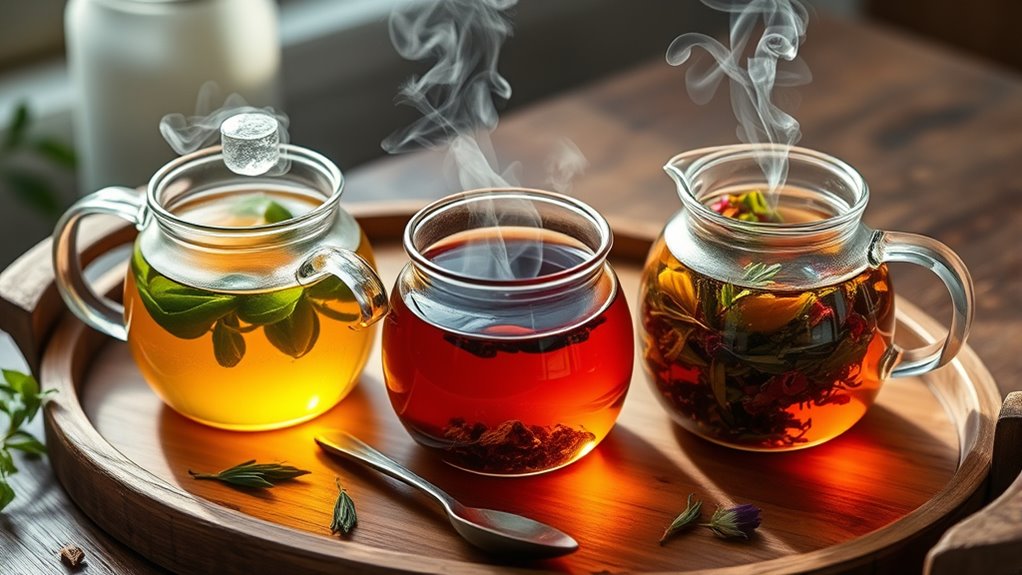

To brew the perfect cup of tea, start with fresh, clean water that enhances flavor. Use water heated to 150-180°F for green tea, 200-212°F for herbal and black teas, ensuring you don’t overheat to avoid bitterness. Steep green teas briefly, while black and herbal teas require longer steeping times. Adjust temperature and brewing time based on tea type to discover their unique flavors. If you keep these tips in mind, you’ll master each cup with ease.
Key Takeaways
- Use water between 150-180°F for green tea to preserve delicate, grassy flavors and prevent bitterness.
- Brew black tea at 200-212°F to fully extract bold, malty, and smoky notes.
- For herbal teas, use near-boiling water (200-212°F) to maximize aromatic oils and vibrant flavors.
- Ensure water quality is clean and fresh to enhance clarity, brightness, and overall flavor.
- Adjust brewing temperature based on tea type to prevent under- or over-extraction, ensuring the best flavor profile.
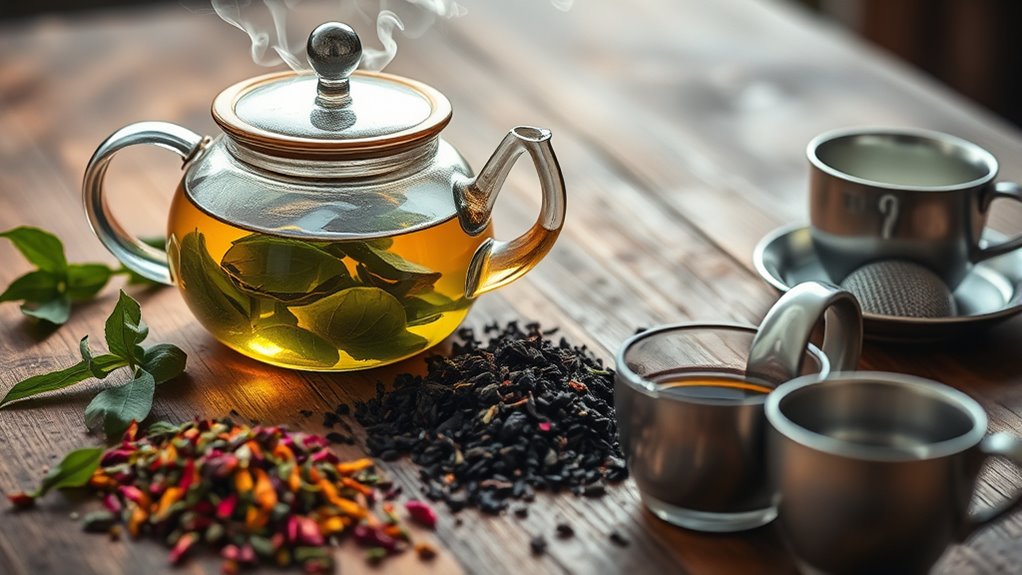
There’s nothing quite like a perfectly brewed cup of tea to start your day or provide a comforting pause. Achieving that ideal cup begins with understanding tea flavor profiles and how brewing temperature influences them. Different types of tea—green, black, or herbal—have unique characteristics that are best revealed when you pay attention to these details. For green teas, the flavor profiles tend to be delicate, grassy, and sometimes sweet, making them highly sensitive to brewing temperature. If you brew green tea too hot, it can become bitter and lose its subtle nuances. To preserve its fresh, vegetal notes, aim for a brewing temperature around 150-180°F (65-80°C). Using water that’s too hot can over-extract the tannins and polyphenols, overpowering the tea’s natural flavor. Conversely, water that’s too cool may result in a weak, underwhelming taste, so finding that perfect temperature guarantees you access the full spectrum of green tea’s flavor profile. Additionally, considering the water quality can significantly influence the clarity and brightness of your brew.
With black teas, the flavor profiles are bolder, often malty, fruity, or smoky, and they can handle higher brewing temperatures. Typically, black tea should be brewed at 200-212°F (93-100°C). This higher temperature releases the full range of flavors, from robust and astringent to sweet and complex. If your water isn’t hot enough, the tea might taste flat or dull, lacking the depth that black teas are known for. On the other hand, boiling water is usually ideal, as it ensures the tea leaves fully unfurl and release their rich flavors. Herbal teas, which are blends of dried herbs, flowers, or fruits, vary widely in flavor profiles—from soothing chamomile to invigorating peppermint. While many herbal infusions are forgiving, most are best brewed with near-boiling water at around 200-212°F. This high temperature helps extract the full range of aromatic oils and flavors, giving you a more vibrant, satisfying cup.
Getting the brewing temperature just right for each tea type is essential because it directly impacts the resulting flavor profiles. Too hot, and you risk bitterness or loss of delicate notes; too cool, and you might end up with a weak brew lacking depth. The key lies in adjusting your water temperature according to the tea’s nature and paying attention to the subtle changes in flavor that each brew produces. By mastering these elements, you’ll be able to craft a cup that truly highlights the unique character of each tea, making every sip a delightful experience.
Frequently Asked Questions
How Do I Store Different Types of Tea to Maintain Freshness?
To maintain freshness, you should store your tea in airtight containers away from light, heat, and moisture. Keep green, black, and herbal teas separate to prevent flavor transfer. Store them in a cool, dark place like a pantry or cupboard. Proper tea storage helps with freshness preservation, ensuring each cup tastes vibrant and aromatic. Avoid storing tea in the fridge, as moisture and odors can compromise its quality.
Can I Reuse Tea Leaves for Multiple Infusions?
You can definitely reuse tea leaves for multiple infusions, but it depends on the type. Reusable leaves work well, especially for green and black teas, which can often handle 2-3 infusions. Keep in mind, each brew may become milder, so be prepared to adjust steeping time. As the saying goes, “don’t count your chickens before they hatch,” so experiment to find what works best for your taste buds.
What Is the Ideal Tea-To-Water Ratio for Strong Flavor?
For a strong flavor, use about 1 teaspoon of tea leaves per 8 ounces of water, adjusting based on your preferred tea strength. This ratio guarantees ideal flavor extraction without making it overly bitter. If you want a more robust taste, increase the tea leaves slightly, but be mindful not to overpower the delicate nuances of green or herbal teas. Experiment to find your perfect balance for rich, flavorful cups.
How Does Water Temperature Affect Herbal Tea Extraction?
Think of water temperature as the key to revealing herbal tea’s secrets. If you use water that’s too hot, it’s like overexposing a story—bitterness and loss of delicate flavors. Too cool, and the herbal infusion remains muted. For ideal extraction, aim for just below boiling point, around 200°F. This gentle heat guarantees you draw out the full spectrum of herbal notes without overpowering their natural essence.
Are There Health Benefits Associated With Specific Types of Tea?
You can enjoy health benefits from specific tea types, as many have antioxidant properties that help protect your cells. Green tea is known for boosting your immune system and supporting disease prevention, while black tea may improve your heart health. Herbal teas, like chamomile or peppermint, can soothe your digestion and reduce stress. Incorporating these teas into your routine can enhance your overall well-being and provide natural disease-fighting benefits.
Conclusion
Now that you know the secrets to brewing the perfect tea, every cup becomes a moment of harmony. Like a delicate flower unfolding, your skills bloom with patience and care. Each sip symbolizes a journey—an escape from the chaos into serenity. So, embrace your newfound knowledge, and let your tea be a gentle reminder that sometimes, the simplest acts hold the deepest meaning. Cheers to crafting not just tea, but a peaceful pause in your day.