While induction cooktops heat faster by directly transferring electromagnetic energy to compatible cookware, there are practical limits. You need the right magnetic pots, and the initial cost is higher. Troubleshooting can be tricky, and repairs may be costly. Plus, induction isn’t always suitable for every cooking style or kitchen setup. To truly maximize their speed and efficiency, it helps to understand how they work and how to use them properly—there’s more to discover if you want the best results.
Key Takeaways
- Induction cooktops heat cookware directly via electromagnetic fields, providing faster heating than traditional methods.
- The speed depends on compatible ferromagnetic cookware; incompatible materials won’t benefit from rapid heating.
- Proper power settings and cookware choice are crucial to maximizing the speed advantages of induction cooking.
- Initial cost and potential repair expenses are hidden factors that may offset perceived speed benefits.
- Safety and maintenance considerations can influence overall efficiency and ease of use, affecting real-world speed.

CAROTE Nonstick Pots and Pans, Induction Titanium Cookware Set 16pcs Kitchen Cooking Sets, Pot and Pan Non Stick w/Frying pan (PFOS, PFOA Free)
Superior Nonstick Performance: Featuring a titanium nonstick coating, our pots and pans set offers exceptional durability and effortless…
As an affiliate, we earn on qualifying purchases.
As an affiliate, we earn on qualifying purchases.
How Do Induction Cooktops Work?

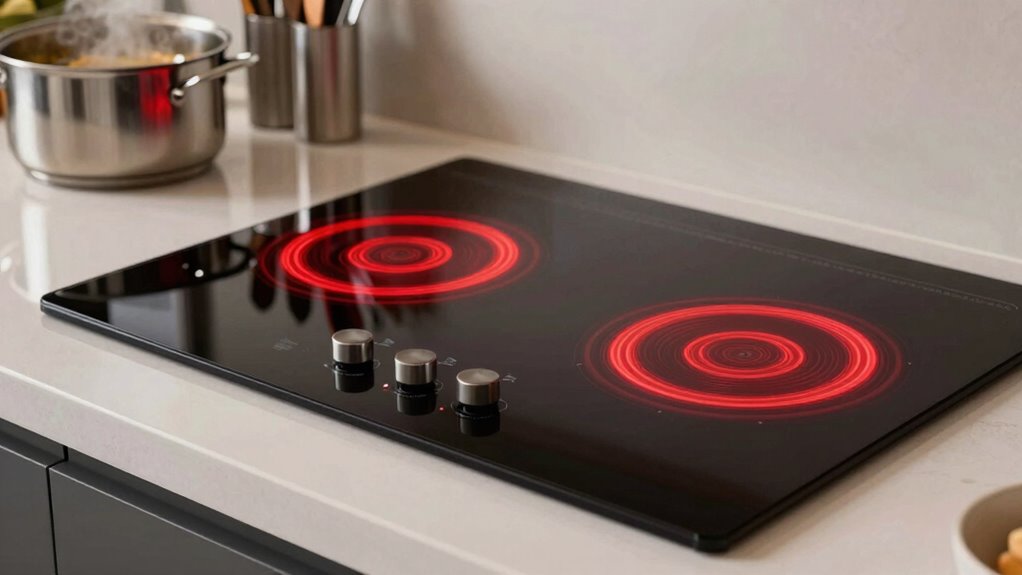
Have you ever wondered how induction cooktops heat so quickly? It all comes down to energy transfer through electromagnetic fields. When you turn on the stove, an electric current flows through a coil beneath the cooktop’s surface, creating a rapidly changing magnetic field. This electromagnetic field directly interacts with the ferromagnetic cookware placed on top. As a result, energy transfer occurs directly between the cooktop and the pot, generating heat inside the cookware itself. Unlike traditional stoves that heat the surface first, induction technology heats cookware almost instantly. This method is highly efficient because most of the energy goes straight into the pot, not the surrounding air or stove surface. Additionally, the presence of specialized cookware is essential for induction cooking to work effectively. The calibration of the electromagnetic field can also influence how evenly heat is distributed across the cookware, enhancing cooking performance. Understanding the energy transfer process and how it relates to efficient heat distribution helps explain why induction cooktops are so fast and responsive. For optimal performance, proper cookware compatibility is crucial, ensuring the electromagnetic field interacts effectively with the cookware material. That’s how induction cooktops deliver fast, precise heating.

Extra Large Translucent Induction Cooktop Protector Cover Mat (Magnetic) 21.2×35.4 In | 230°C (450℉) Heat-Resistant | Non-slip | Prevents Sliding & Scratches | Semitransparent Black
PROTECT COOKTOP & LENGTHEN LIFESPAN: ⚠️ Please Confirm Your Cooktop Size Before Purchase! KITCHENRAKU KR Semi-transparent Induction Stove…
As an affiliate, we earn on qualifying purchases.
As an affiliate, we earn on qualifying purchases.
Why Are Induction Cooktops Faster Than Traditional Stoves?
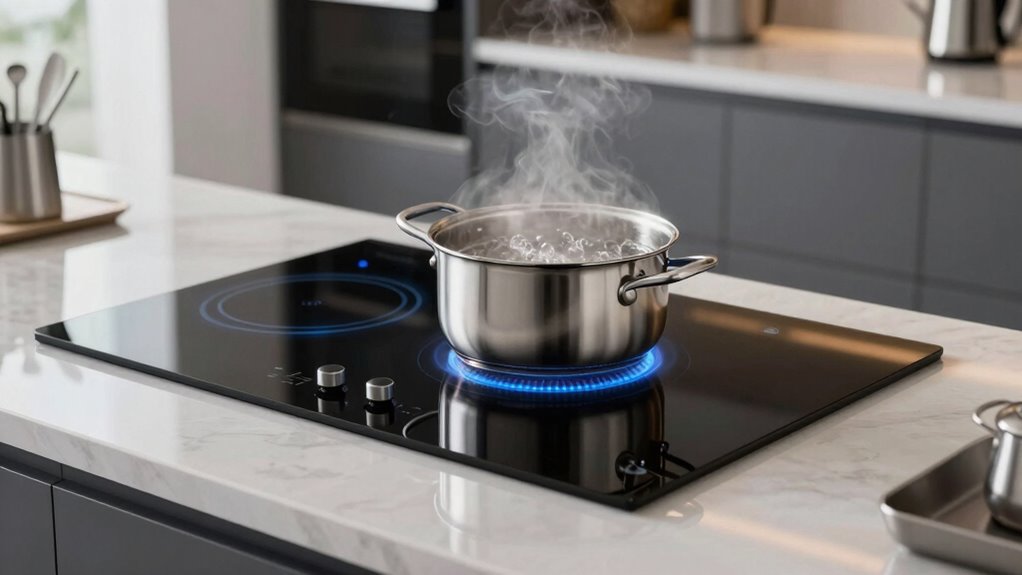
Induction cooktops heat faster than traditional stoves because they transfer energy directly to the cookware, bypassing the need to heat a surface first. This direct energy transfer makes heat distribution more efficient, allowing you to reach desired temperatures quickly. Unlike gas or electric stoves that heat the cooktop surface first, induction uses electromagnetic fields to generate heat within the cookware itself. This focused heat transfer minimizes energy loss, so you get faster response times and more precise control. Plus, because heat is generated directly in the pan, it heats evenly, reducing hot spots and improving overall heat distribution. Additionally, cooking accessories designed for induction stoves can further optimize performance and safety. The use of induction-compatible cookware ensures maximum efficiency and safety, making your cooking experience even better. As a result, your cooking becomes faster, more efficient, and more consistent compared to traditional stoves. Furthermore, understanding the technology behind induction can help users troubleshoot and optimize their cooking methods for better results. Recognizing the importance of energy transfer methods can also lead to more informed choices when selecting cookware and accessories. Moreover, exploring the design features of induction cooktops can enhance user experience and safety during cooking.
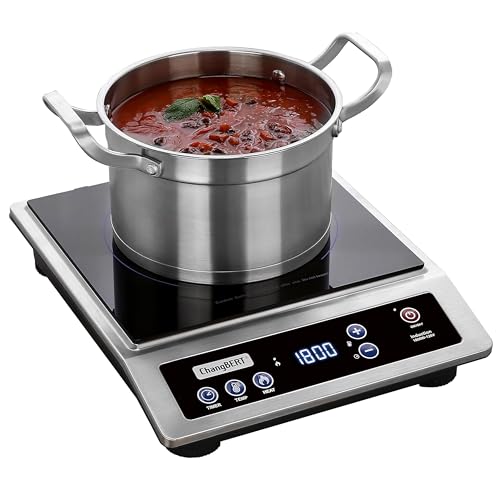
ChangBERT Induction Cooktop, Commercial Grade Portable Cooker, Large 8” Heating Coil, Premium Stainless Steel Countertop Burner with NSF Certified, 10 Hours Timer Powerful 1800W Professional Hot Plate
HIGH EFFICIENCY – ChangBERT Induction cooktop offers 9 preset power levels (200-1800W) and 18 preset temperature settings (120-460℉,…
As an affiliate, we earn on qualifying purchases.
As an affiliate, we earn on qualifying purchases.
What Should You Know About the Cost and Practical Limits of Induction Cooking?
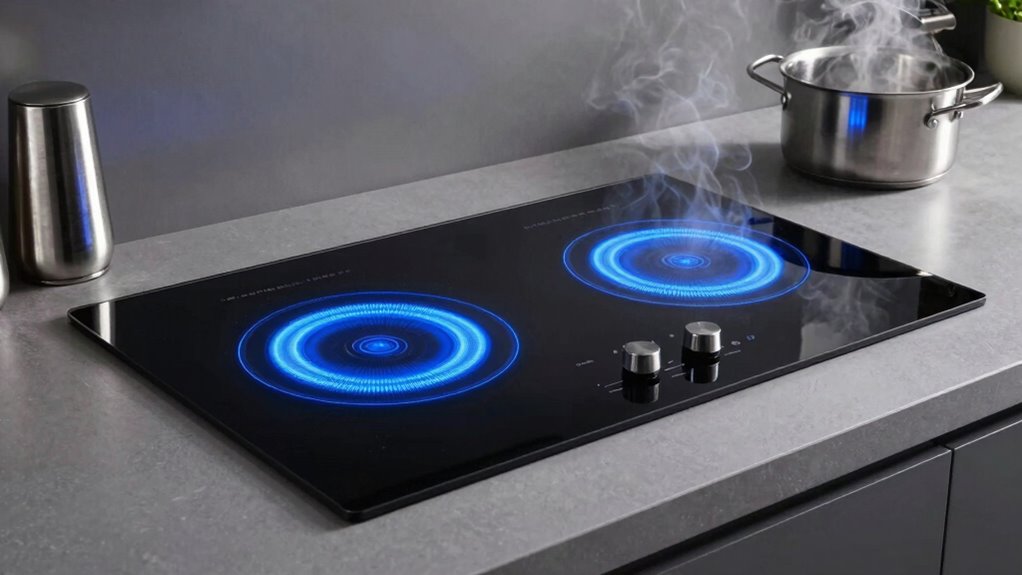
While induction cooktops excel in speed and efficiency, understanding their cost and practical limits helps you determine if they’re the right choice for your kitchen. Induction models can be more expensive upfront, so budget considerations are essential. You might pay more initially, but they often save money long-term through energy efficiency. Keep in mind, practical limits include compatibility—your cookware must be ferromagnetic—and space, as induction units vary in size. Long-term maintenance is generally low, but you should be aware that repairs can be costly if components malfunction. Additionally, some models require specialized cookware, which adds to overall costs. Induction technology also relies on electromagnetic fields, which may be a concern for individuals with certain medical devices. For those interested in cultural aspects, halal traditions and the importance of appropriate cookware can influence your choice. Weighing these factors helps you decide if the faster cooking times justify the investment and if induction fits your cooking habits and budget.

Astercook 21 Pcs Pots and Pans Set Non Stick, Ceramic Cookware Set Detachable Handle, RV Kitchen Cooking Set Removable Handles, Oven Safe, Induction Ready, Stackable, Black, Mothers Day Gifts
【High-Performance Nonstick Coating】 Equipped with a premium nonstick coating, our pots and pans offer exceptional durability and performance….
As an affiliate, we earn on qualifying purchases.
As an affiliate, we earn on qualifying purchases.
How Can You Troubleshoot Common Induction Cooktop Issues?
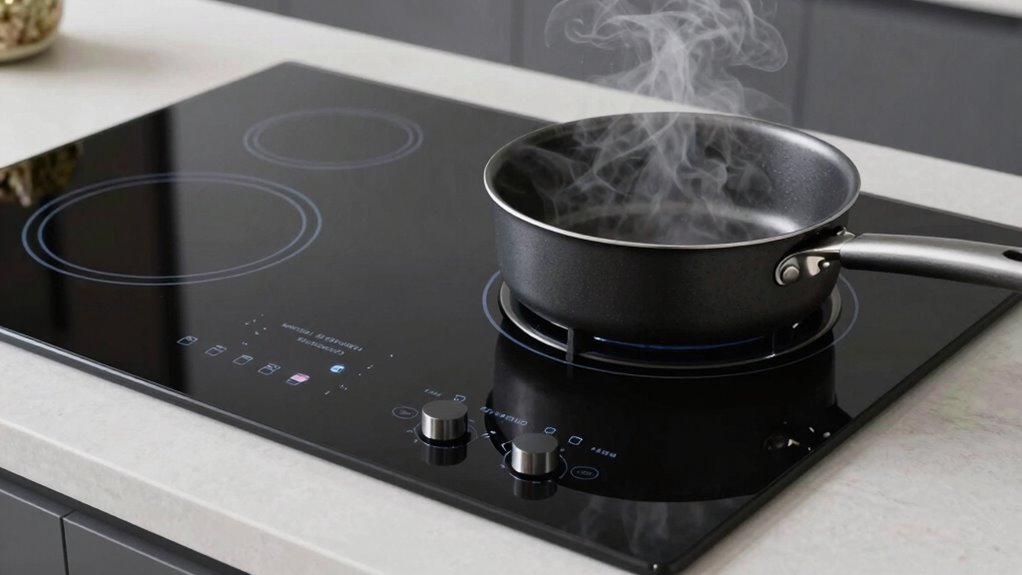
Are you noticing your induction cooktop isn’t working as it should? Troubleshooting power issues often starts with checking the power connection. Confirm the unit is plugged in securely and that the circuit breaker hasn’t tripped. If your cooktop isn’t heating, test other appliances on the same outlet to rule out a power supply problem. For resolving noise issues, listen for unusual sounds like buzzing or clicking. These can sometimes be caused by cookware that isn’t compatible or a loose component. Clean the surface thoroughly, and make sure you’re using magnetic cookware that fits the size of the heat zones. Additionally, understanding digital concepts can help you better troubleshoot electronic appliances. If problems persist, consult the user manual or contact a technician. Proper troubleshooting can help you quickly identify and fix common induction cooktop issues.
Is an Induction Cooktop a Good Fit for Your Kitchen and Lifestyle?
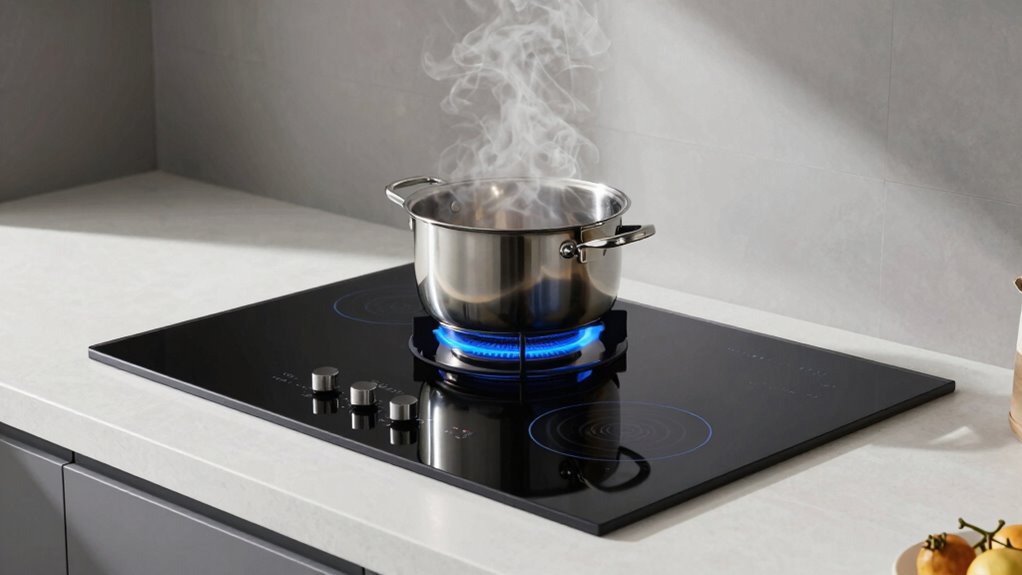
Considering whether an induction cooktop fits your kitchen and lifestyle depends on your cooking habits and priorities. If you value sleek kitchen aesthetics and quick, efficient cooking, induction is a great fit. However, if you prefer traditional cookware or have limited electrical capacity, it might not suit you. Think about your environmental impact goals—induction cooktops are energy-efficient and produce less heat waste. Here’s a quick comparison:
| Aspect | Pros | Cons |
|---|---|---|
| Kitchen aesthetics | Modern, sleek design | Requires compatible cookware |
| Cooking speed | Faster heating and precise control | Learning curve |
| Environmental impact | Lower energy consumption | Higher upfront cost |
| Lifestyle fit | Suitable for busy households, tech-savvy users | Not ideal for gas-dependent cooks |
Top Tips to Maximize Speed and Efficiency With Your Induction Cooktop

To get the most out of your induction cooktop, make sure you’re using the right cookware that heats quickly and evenly. Adjust your power settings wisely to save time without sacrificing safety or control. Remember to handle everything carefully to prevent accidents and keep your cooking efficient. Incorporating diverse culinary experiences can also inspire you to explore new recipes that maximize your cooktop’s speed and capabilities. Additionally, experimenting with different outdoor cooking setups can help you utilize your cooktop more effectively in various outdoor environments. Being aware of cultural influences on cooking methods can also enhance your overall culinary approach and efficiency. Recognizing tradition and innovation in cooking techniques can further improve your efficiency and adaptability in the kitchen. Keeping track of energy efficiency tips can also help you reduce waste and optimize your cooking process.
Use Proper Cookware
Using the right cookware is essential to get the most out of your induction cooktop. Confirm your cookware is compatible, meaning it has a magnetic base that responds to the magnetic field. Non-compatible cookware, like glass or aluminum, won’t heat efficiently and can slow down cooking. Stick with ferromagnetic materials such as cast iron or stainless steel for top performance. Proper cookware also improves magnetic field safety, preventing accidental overheating or sparks. Check for a magnetic test—if a magnet sticks firmly to the bottom, it’s induction-friendly. Using incompatible cookware wastes energy and reduces speed, so invest in quality pots and pans designed for induction. This way, you maximize efficiency and ensure safe, speedy cooking every time.
Optimize Power Settings
Once you’ve chosen compatible cookware, the next step is to fine-tune your power settings to maximize speed and efficiency. Power optimization is key to getting the most out of your induction cooktop. Start with the lowest setting and gradually increase until your food heats quickly without overcooking. Use the high-power settings for boiling or rapid heating, but switch to lower levels once your food reaches the desired temperature. This approach improves energy efficiency by preventing unnecessary power use. Keep an eye on your cooktop’s display to monitor adjustments. Properly managing power settings ensures faster cooking times and conserves energy, making your meals quicker and more cost-effective. Remember, precise power control is essential for maximizing the induction cooktop’s speed and energy efficiency. Additionally, understanding how to manage heat levels can further enhance your cooking experience by preventing energy waste. Being aware of your cooktop’s power settings can also help extend the lifespan of your appliance by avoiding overuse of high power. Regularly checking and performing maintenance such as filter cleaning and replacement can also contribute to optimal performance and prevent overheating of the unit. Adjusting these settings thoughtfully can also prevent overheating and reduce wear on your cooktop components.
Practice Safe Handling
Practicing safe handling is essential to maximize the speed and efficiency of your induction cooktop, as it helps prevent accidents that could slow down your cooking process. Follow safety precautions and handling tips to stay safe and keep your cooking on track. Always keep your hands dry and use heat-resistant gloves when adjusting pots or pans. Be mindful of cookware edges to avoid cuts. Place cookware securely on the surface to prevent spills and accidents. Here’s a quick visual:
| Safety Precautions | Handling Tips | Outcomes |
|---|---|---|
| Keep the area dry | Use heat-resistant gloves | Faster, safer cooking |
| Avoid clutter | Secure cookware firmly | Prevents accidents |
| Regular maintenance | Handle with care | Maintains efficiency |
Additionally, understanding the importance of proper kitchen safety can help you avoid common hazards and ensure your cooking remains both quick and safe. Maintaining your induction cooktop regularly is also crucial for optimal efficiency, ensuring consistent and speedy performance.
Frequently Asked Questions
Do Induction Cooktops Affect Food Flavor or Quality?
Induction cooktops don’t negatively affect food flavor or quality. In fact, they help with flavor preservation since they heat quickly and evenly, reducing the risk of burning or overcooking. This precise temperature control also supports nutrient retention, ensuring your food maintains its natural flavors and nutritional value. So, you can enjoy flavorful, nutritious meals without worrying about the induction process compromising your food’s quality.
Are Induction Cooktops Safe for Pregnant Women or Pets?
You’ll be glad to know induction cooktops are generally safe for pregnancy safety and pet safety. Studies show they emit lower electromagnetic fields than traditional stoves, reducing health concerns. Since they don’t produce open flames or hot surfaces, risks for pets and pregnant women are minimized. However, it’s wise to keep magnetic cookware away from children and consult your doctor about electromagnetic exposure if you’re pregnant. Overall, induction cooktops offer a safer cooking environment.
Can Induction Cooktops Be Used Outdoors or in RVS?
You can definitely use induction cooktops outdoors or in RVs, but check their outdoor durability and RV compatibility first. Many models are designed with rugged exteriors to handle outdoor conditions, and some are specifically made for RV use, featuring portable, compact designs. Just make sure they’re rated for outdoor use, avoid exposing them to excessive moisture or extreme temperatures, and use a proper power source for safe, efficient cooking wherever you go.
What Are the Environmental Impacts of Induction Cooking?
You’ll find induction cooking to be eco-friendly because it uses energy reduction, making it more sustainable. It heats cookware directly, reducing wasted heat and power consumption. Plus, using eco-friendly materials in the cooktop’s manufacturing minimizes environmental impact. This efficiency means less electricity is needed, lowering your carbon footprint. Overall, induction cooking supports greener living by conserving resources and reducing emissions, making it a better choice for the environment.
How Long Do Induction Cooktops Typically Last?
You usually get around 10 to 15 years from your induction cooktop, but durability concerns can vary with use. To extend its lifespan, keep the surface clean and avoid dragging heavy pots. Regular maintenance tips, like checking the power connections and avoiding impacts, help prevent issues. When properly cared for, your cooktop remains efficient and reliable, giving you years of trouble-free cooking and peace of mind.
Conclusion
Ultimately, understanding the ins and outs of induction cooktops empowers you to make smarter, speedier stove choices. By balancing benefits with budget, troubleshooting troubles, and tailoring your tactics, you turn your kitchen into a space where swift, seamless cooking shines. So, seize the speed, savor the savings, and stay savvy—because a well-wielded induction cooktop transforms your culinary corner into a powerhouse of precision and pace. Happy cooking!