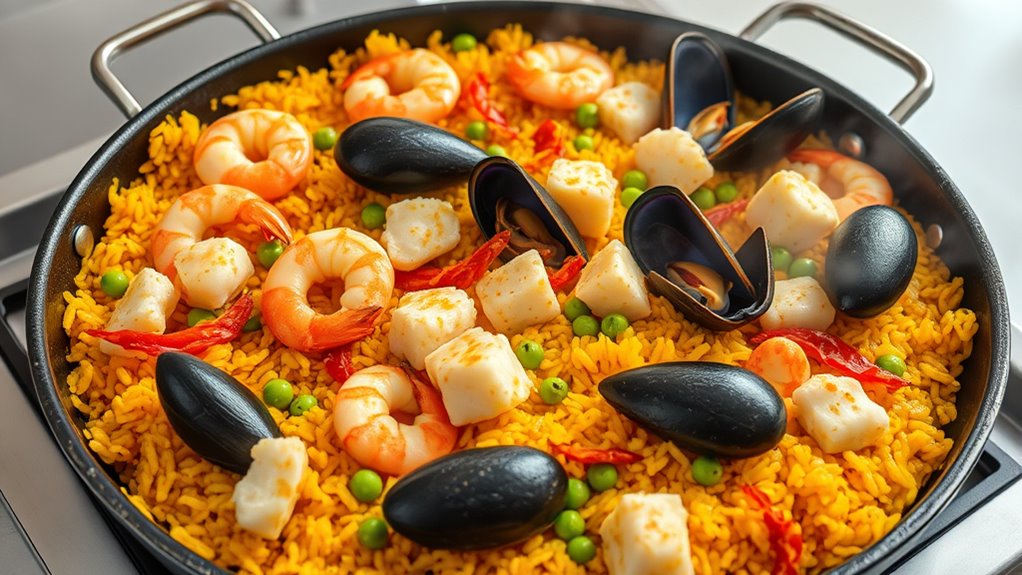

To make authentic Spanish seafood paella on the stovetop, start with high-quality saffron infused into warm broth to bring out vibrant color and flavor. Use fresh seafood like shrimp, mussels, and squid, and cook them gently to keep their natural juices. Sauté onions, garlic, and peppers in good olive oil, then add rice and broth carefully, avoiding stirring too much. Let the rice develop a crispy socarrat for authentic texture—exploring these steps can elevate your dish further.
Key Takeaways
- Use high-quality saffron infused in warm broth for authentic color and aroma.
- Select fresh, firm seafood like shrimp, mussels, and squid for optimal flavor.
- Sauté aromatics in good olive oil, add rice, then pour saffron-infused broth, and simmer gently.
- Arrange seafood on top after rice absorbs most liquid, avoiding stirring to develop socarrat.
- Rest the paella briefly off heat to deepen flavors and ensure a crispy, golden crust.
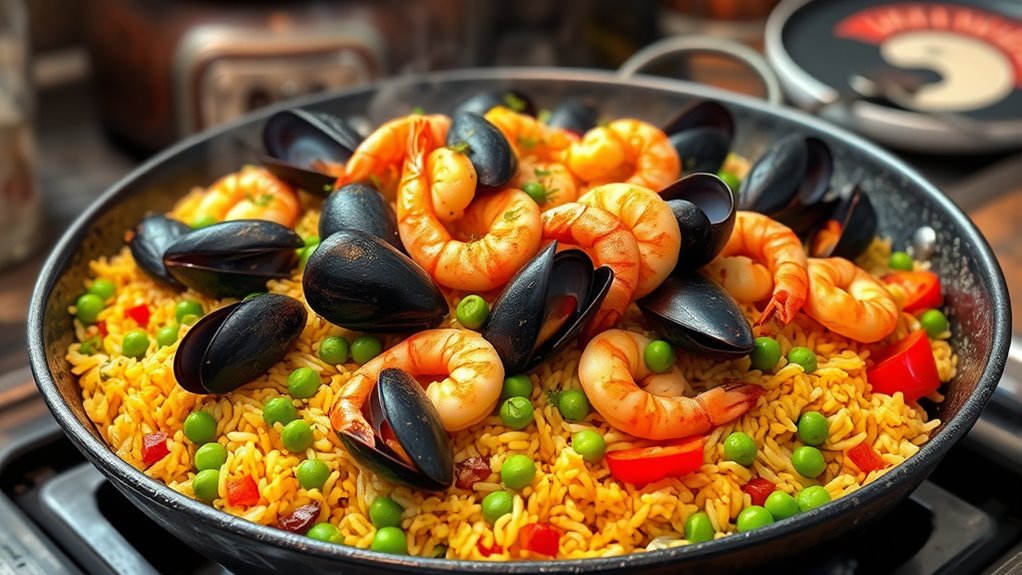
Have you ever wondered what makes Spanish seafood paella so irresistible? The secret lies in the careful choices you make, starting with saffron selection and the seafood you use. Saffron is the heart of authentic paella, providing that vibrant color and subtle, earthy aroma. When selecting saffron, go for high-quality threads rather than powdered versions, as this guarantees the best flavor and aroma. Take your time to find a reputable supplier or a premium brand, because cheap or stale saffron can dull the dish’s natural brilliance. The right saffron will infuse your rice with a golden hue and a rich, nuanced taste that elevates the entire dish. Pair this with seafood that’s as fresh as possible—nothing beats seafood that’s just been caught or purchased from a trusted market. Fresh seafood not only enhances the flavor but also guarantees safety and a better texture in your paella. Shrimp, mussels, clams, and squid are traditional choices, and you should look for ones with a firm texture and a clean, oceanic smell. Avoid any seafood that appears dull, slimy, or has an off-putting odor; these are signs it’s past its prime and can compromise the dish’s quality.
Once you’ve got your saffron and seafood sorted, focus on the cooking process. Start with a good quality olive oil and sauté onions, garlic, and peppers until fragrant. Add your rice, preferably a short or medium grain variety, and toast it lightly to give your paella a nutty depth. As soon as the rice is coated and slightly translucent, carefully pour in hot chicken or seafood broth infused with your saffron threads. This step is vital because proper saffron infusion develops the dish’s signature flavor and color. Bring the mixture to a gentle simmer, then arrange your seafood on top. Don’t stir too much once you add the seafood; let it cook undisturbed to develop a crispy socarrat—the treasured crust at the bottom of the pan. Incorporating fresh ingredients is essential because quality ingredients significantly impact the final flavor and authenticity of your paella.
Throughout the process, keep the seafood’s freshness at the forefront. Fresh seafood’s natural juices will meld with the saffron-infused rice, creating a harmonious symphony of flavors. As the paella cooks on the stovetop, resist the temptation to stir constantly. Instead, allow the rice to absorb the broth and develop its rich, golden crust. When finished, let it rest for a few minutes to deepen the flavors before serving. The combination of careful saffron selection and fresh seafood is what transforms a simple stovetop dish into an authentic, mouthwatering Spanish seafood paella.

Golden Saffron, Finest Pure Premium All Red Saffron Threads, Grade A+ Super Negin, Non-GMO Verified. For Tea, Paella, Rice, Desserts, Golden Milk and Risotto (2.0 Grams)
- Grade: Super Negin Grade A+
- Origin: Directly from farms
- Purity: 100% pure saffron threads
As an affiliate, we earn on qualifying purchases.
As an affiliate, we earn on qualifying purchases.
Frequently Asked Questions
Can I Substitute Different Seafood Types in Paella?
Yes, you can substitute different seafood types in paella. Just consider the seafood variety you prefer or have on hand, and adjust the cooking time accordingly, since some ingredients cook faster than others. Ingredient substitution is flexible, so feel free to experiment with shrimp, mussels, clams, or fish. Keep in mind that using a mix can enhance flavor and texture, making your paella uniquely delicious every time.
What Is the Ideal Rice-To-Liquid Ratio for Stovetop Paella?
Think of your rice as a sponge—it’s all about perfect liquid absorption. For stovetop paella, aim for a rice-to-liquid ratio of about 1:2. This creates a lovely rice consistency, where each grain is tender yet flavorful without being overly mushy. Keep in mind, the key is to add just enough liquid so the rice can soak it all up, giving you that ideal balance of texture and taste.
How Do I Prevent Rice From Sticking or Burning?
To prevent rice from sticking or burning, focus on proper cooking techniques and rice preparation. Use a wide, shallow pan to distribute heat evenly, and stir the rice only when necessary. Rinse the rice thoroughly before cooking to remove excess starch, which helps prevent sticking. Keep the heat at a gentle simmer, and add a little extra liquid if you notice the rice starting to stick. Cover the pan and let it finish cooking undisturbed.
Can I Prepare Paella in Advance and Reheat It?
Imagine savoring that vibrant paella again—yes, you can prepare it in advance and reheat it! For meal prep, store it properly to preserve flavor and avoid sogginess. Reheat gently on the stovetop or in the oven, covering it to keep moisture. While it may lose some freshness, careful reheating guarantees your dish remains flavorful, making your effort worthwhile without sacrificing the delicious taste you love.
What Are Authentic Traditional Garnishes for Seafood Paella?
You can enhance your seafood paella with authentic garnishes like lemon wedges, which add a bright, tangy flavor, and fresh parsley for a pop of color and freshness. Saffron is essential, giving the dish its rich aroma and golden hue, while a touch of garlic can deepen the flavor profile. These traditional garnishes beautifully complement the seafood and rice, creating a balanced, authentic experience.
Conclusion
Now that you’ve mastered this stovetop seafood paella, you’re all set to impress. Remember, Rome wasn’t built in a day, and practice makes perfect. With a little patience and your newfound skills, each dish gets better. So, don’t rush—savor every step, and enjoy the delicious results. Whether for a special occasion or a cozy night in, your homemade paella will always bring a taste of Spain to your table.