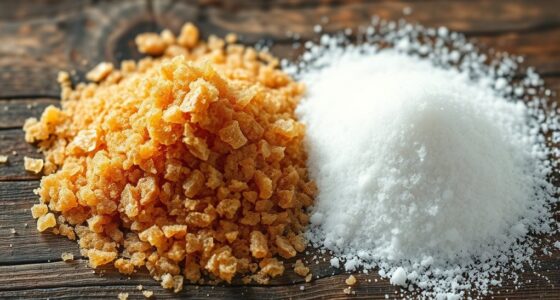
If you want to pucker up with a unique ingredient, tamarind is your go-to for added tangy sweetness. Its vibrant flavor brings depth and brightness to sauces, curries, and desserts, transforming ordinary dishes into memorable bites. You can use it as a paste or concentrate, adjusting it to suit your taste. Mastering tamarind’s versatility and balancing its acidity will elevate your cooking—keep exploring, and you’ll uncover even more flavorful possibilities.
Key Takeaways
- Tamarind offers a distinctive tangy flavor that adds depth and complexity to both savory and sweet dishes.
- Using tamarind as paste, concentrate, or raw pods allows for diverse preparation methods and flavor adjustments.
- Simmering or slow cooking tamarind enhances its richness and balances its acidity within various recipes.
- Balancing tamarind’s tang with spices, sugar, or fats ensures a harmonious flavor profile in dishes.
- Incorporating tamarind elevates sauces, curries, chutneys, and desserts with a vibrant, puckering punch.

Tamarind adds a unique tangy flavor that can elevate a wide variety of dishes, from savory sauces to sweet desserts. Its distinct, slightly sweet yet sour profile instantly adds depth and complexity, making it a versatile ingredient in many cuisines. When you incorporate tamarind into your cooking, you’re not just adding flavor—you’re creating a memorable taste experience that can transform ordinary recipes into extraordinary ones. To truly *release* its potential, mastering the right cooking techniques is essential. Tamarind flavor can vary depending on how you prepare it, whether you’re using tamarind paste, concentrate, or raw pods. Each form requires different handling to bring out the best in your dishes.
Tamarind’s tangy, sweet-sour profile adds depth and complexity to a variety of dishes.
If you’re working with tamarind paste or concentrate, the key is to balance its acidity with other ingredients. You might start by soaking raw tamarind pods in warm water to extract the pulp, then straining out seeds and fibers. This method allows you to control the intensity of the tamarind flavor, adjusting it to suit your needs. When cooking with tamarind, simmering is a common technique—slowly letting the pulp break down and meld with other ingredients helps develop a rich, harmonious flavor. You can also incorporate tamarind into sauces, curries, or marinades by adding it early in the cooking process, allowing the acidity to mellow and deepen over time.
For desserts, tamarind’s tanginess offers a delightful twist. You might blend tamarind pulp with sugar and lime juice to create a tangy syrup or incorporate it into fruit compotes. When using raw tamarind pods, roasting or toasting can enhance its flavor, adding a smoky undertone that complements sweeter elements. A popular technique is to simmer the pulp with spices like cumin, coriander, or chili, which not only enhances the tamarind flavor but also creates a more complex taste profile. Additionally, understanding how to balance flavors is crucial when cooking with tamarind, ensuring that its acidity complements rather than overpowers the dish.
Achieving the perfect balance when cooking with tamarind requires a bit of experimentation. Taste as you go, and remember that tamarind flavor can be quite potent—less is often more. Whether you’re making a vibrant Thai pad thai, Indian sambar, or a tangy homemade chutney, your success hinges on understanding these cooking techniques. With practice, you’ll learn how to harness tamarind’s unique properties, elevating your dishes with its bright, lively character. So go ahead, get creative and enjoy the vibrant, puckering punch tamarind brings to your culinary adventures.
Frequently Asked Questions
How Do I Select Ripe Tamarind for Cooking?
To select ripe tamarind, you should look for pods with a rich brown color, indicating good ripeness. Gently press the pods; they should feel firm but slightly soft, showing they’re fresh and moist inside. Avoid pods with mold, cracks, or excessive dryness. Selecting fresh tamarind involves checking ripeness and quality, ensuring you get the best flavor for your cooking. This way, your dishes will have that authentic, tangy taste.
Can Tamarind Be Used in Both Sweet and Savory Dishes?
Tamarind is like a culinary chameleon, easily adapting to both sweet and savory dishes thanks to its unique flavor profiles. You can add it to desserts for a tangy twist or mix it into sauces and curries for depth. Its versatility makes it a pantry staple, transforming simple recipes into vibrant, flavorful creations. So, don’t hesitate—experiment and discover how tamarind’s complex flavor elevates every dish you make.
What Are the Best Storage Methods for Tamarind?
You should store tamarind in an airtight container in a cool, dark place to maintain its freshness. If you have tamarind fermentation or dried tamarind, keep the fermented version refrigerated and use it within a few weeks. For tamarind cultivation, store fresh pods in the fridge or process them into paste for longer shelf life. Proper storage prevents spoilage, preserves flavor, and guarantees your tamarind stays ready for your culinary adventures.
Are There Any Health Benefits Associated With Tamarind?
You’ll find that tamarind offers several health benefits thanks to its nutritional content. It’s rich in antioxidants, which help fight free radicals, and provides vitamins like B6 and C that boost your immune system. Tamarind also supports digestion and may help regulate blood sugar levels. Incorporating it into your meals can improve your overall health, making it a nutritious addition with natural medicinal properties.
How Do I Adjust Tamarind’s Sourness in Recipes?
Did you know tamarind’s acidity can be adjusted by balancing it with sweetness? When a dish’s tamarind is too sour, try adding a teaspoon of sugar or honey to mellow the acidity. Conversely, if it’s not sour enough, add a splash of lime juice or more tamarind paste. Taste as you go to achieve the perfect balance of sweetness and acidity, ensuring your dish tastes just right.
Conclusion
So, next time you’re trying to add a little zing to your dish, remember tamarind’s unique tang. It’s funny how a simple ingredient can turn your cooking around, just like that unexpected twist in a good story. You might start out just experimenting, but suddenly, you’re creating flavors that surprise everyone, including yourself. Tamarind isn’t just an ingredient; it’s that little coincidence that makes your meals memorable. Give it a try—you might just fall in love with the unexpected!