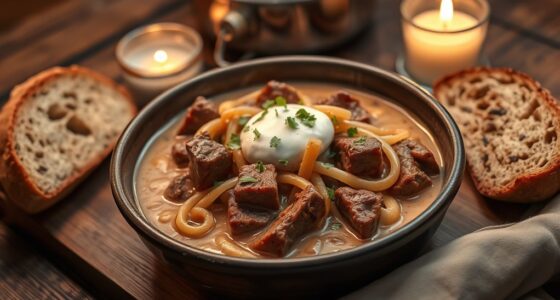
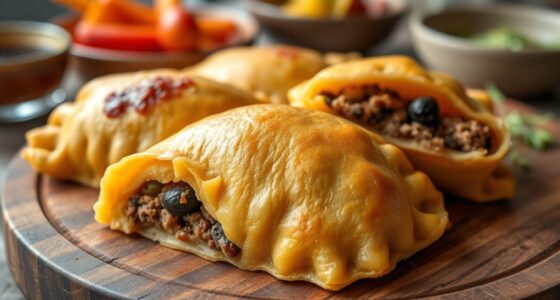
Around the world, Christmas dinners are as diverse as the cultures celebrating them. In Italy, you might enjoy a feast of pasta, seafood, and panettone, while in Mexico, traditional tamales and spicy dishes take center stage. Australia often features seafood and barbecues, and in Japan, people indulge in KFC, a popular holiday tradition. In Germany, hearty roast meats and Christmas cookies are common. Exploring these special holiday menus reveals how local customs shape festive culinary traditions. Keep exploring to learn more!
Key Takeaways
- Different countries celebrate Christmas with unique traditional dishes, such as roast turkey in the US, ham in the UK, and bacalao in Spain.
- Many nations include regional specialties like tamales in Mexico, stollen in Germany, or gingerbread in Nordic countries.
- Festive dinners often feature symbolic foods representing prosperity, health, or religious significance specific to each culture.
- Christmas dinner customs vary from formal family gatherings to communal feasts, highlighting local traditions and social norms.
- International holiday dinners reflect cultural history, ingredients, and culinary influences, enriching the global Christmas celebration.
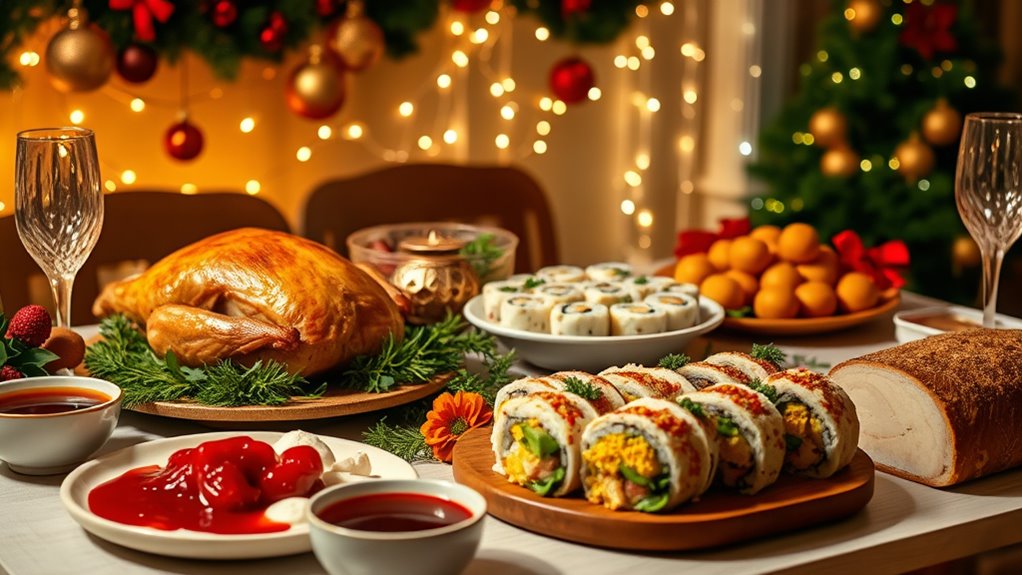
Have you ever wondered how people celebrate Christmas in different parts of the world? Each country has its unique traditions, but some elements are universal, like the joy of gift giving and the festive music that fills the air. In many places, gift giving traditions are deeply rooted in history and culture, shaping how people exchange presents during the holiday season. For example, in Western countries, children eagerly await Santa Claus or Father Christmas, believing he delivers presents on Christmas Eve. They often leave out cookies and milk, hoping to leave a treat for Santa and show their gratitude. In contrast, countries like Japan have adopted their own gift-giving customs, blending Western influences with local practices, making gift exchanges more personalized and meaningful. Demonstrating emotional intelligence during these exchanges often enhances relationships and cultural understanding.
Festive music also plays an essential role in creating the holiday atmosphere worldwide. The melodies vary from country to country, but they all serve to bring people together and amplify the spirit of celebration. In the United States and many European nations, traditional carols like “Silent Night” and “Jingle Bells” are performed in churches, shopping centers, and homes. These songs evoke feelings of warmth and nostalgia, encouraging joyful singing and community bonding. In Latin America, lively tunes and danceable rhythms like salsa or merengue fill the streets, adding an energetic vibe to Christmas festivities. Meanwhile, in Scandinavian countries, folk songs and choral music echo through towns, blending old traditions with modern melodies. Whether it’s Christmas songs sung around a crackling fire or lively street parades with marching bands, music shapes the cultural identity of holiday celebrations around the world.
Festive music unites cultures, from carols to dance rhythms, creating joyful holiday atmospheres worldwide.
While the core ideas of exchanging gifts and enjoying festive music are common, the way they’re practiced varies widely. Some cultures emphasize elaborate gift exchanges, with multiple presents and generous displays of gratitude. Others focus on simple, heartfelt gifts that symbolize love and appreciation. The type of gifts also changes, from handmade crafts to high-end items, reflecting local customs and economic factors. Similarly, the style of festive music ranges from traditional hymns to contemporary holiday hits, adapting to modern tastes while preserving cultural heritage. Understanding cultural diversity in these traditions helps deepen appreciation for the global nature of Christmas celebrations.
Understanding these differences helps you appreciate the rich diversity of Christmas celebrations worldwide. It’s not just about the presents or the songs, but about coming together to share joy, tradition, and connection. So next time you hear a Christmas carol or see a beautifully wrapped gift, remember that each tradition has a story behind it, making the holiday season truly worldwide in its spirit.

Kenmore 17.5 cu. ft 30" Wide French Door Refrigerator - FPR Stainless Steel
- Counter-Depth Design: Saves space with built-in look
- Ample Storage Capacity: 17.5 cu ft. capacity
- Chill & Multi-Flow System: Ensures quick cooling and even temperatures
As an affiliate, we earn on qualifying purchases.
Frequently Asked Questions
How Do Different Cultures Celebrate Christmas Eve Traditions?
You celebrate Christmas Eve with unique traditions depending on your culture. You might sing Christmas carols to spread joy or participate in special church services. Many of you enjoy gift exchanges, sharing presents with family and friends. Some cultures have festive meals or midnight prayers, while others light candles or attend fireworks. These diverse customs make your Christmas eve meaningful, filled with warmth, music, and the spirit of giving.
What Are Unique Christmas Dinner Dishes in Non-Christian Countries?
In non-Christian countries, you’ll find unique Christmas dinner dishes that showcase festive fusion and cultural variations. For example, in Japan, fried chicken from KFC is popular, while in the Philippines, lechon (roast pig) takes center stage. In India, you’ll enjoy a rich, spicy feast with vegetarian curries and sweets. These dishes reflect local flavors and traditions, creating a diverse and vibrant holiday culinary experience that’s truly memorable.
Are There Regional Variations in Christmas Dessert Recipes Worldwide?
You’ll notice regional pastry variations shape festive sweet traditions worldwide, creating diverse Christmas dessert recipes. In Italy, Panettone’s a must, while in Mexico, you savor buñuelos. In Sweden, you indulge in gingerbread cookies, and in Australia, pavlova takes center stage. These regional pastry variations reflect local ingredients and cultural history, making each celebration unique. Embrace these festive sweet traditions to experience the rich diversity of holiday desserts around the globe.
How Do Holiday Meal Customs Differ Between Urban and Rural Areas?
Imagine a giant feast where in the city, fancy tables groan with imported delicacies and trendy dishes, while in the countryside, family meals simmer with age-old rural food practices. Urban dining customs often lean toward sophistication, innovation, and social flair, whereas rural traditions emphasize hearty, homemade fare passed down through generations. Your holiday experience shifts dramatically—whether you’re savoring gourmet treats or enjoying simple, time-honored comfort foods in a cozy rural setting.
What Role Do Family Customs Play in International Christmas Dinners?
Family customs play a essential role in international Christmas dinners by fostering family bonding and preserving generational traditions. You actively participate in these customs, which might include specific recipes, rituals, or gatherings passed down through generations. These traditions create a sense of continuity and cultural identity, making the celebration meaningful. By honoring family customs, you help keep the holiday spirit alive, strengthening relationships and passing cultural values to younger family members.
Conclusion
No matter where you celebrate, Christmas brings people together with delicious food and joyful traditions. Each culture’s unique dishes remind us of the diverse ways we share love and gratitude. Isn’t it wonderful how a simple meal can connect us across borders? So, next time you sit down to your holiday dinner, think about the rich stories behind every dish. After all, isn’t it the shared spirit of the season that truly makes it special?