Oysters Rockefeller is a luxurious seafood dish perfect for holiday celebrations, known for its rich, buttery flavor and crispy topping. It’s a symbol of elegance and special occasions, often enjoyed during festive gatherings. Choosing sustainable oysters supports healthy marine ecosystems and responsible farming practices, ensuring future enjoyment. If you want to discover how to serve this classic responsibly and add an eco-friendly touch to your festivities, there’s more to explore beyond the surface.
Key Takeaways
- Oysters Rockefeller is a luxurious, festive dish perfect for holiday celebrations and special occasions.
- Using sustainably sourced oysters ensures responsible consumption and supports marine conservation efforts.
- Sustainable fisheries and eco-friendly aquaculture methods help maintain oyster populations for future holidays.
- Incorporating ethically farmed oysters promotes environmental stewardship and preserves marine biodiversity.
- Celebrating Oysters Rockefeller aligns with traditions of elegance and responsible seafood enjoyment during the holidays.
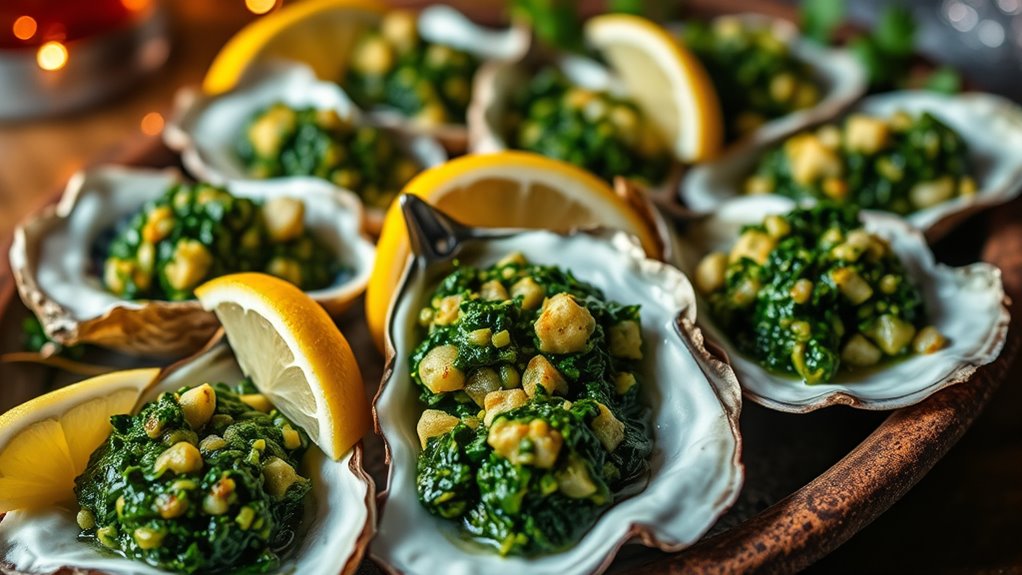
Have you ever wondered what makes Oysters Rockefeller a classic seafood dish? Its rich, buttery flavor combined with a crispy topping has made it a favorite for special occasions, especially during the holidays. But behind its popularity lies an important story about sustainability and responsible sourcing. When you indulge in oysters prepared Rockefeller style, you’re also supporting efforts that prioritize sustainable fisheries and innovative oyster farming techniques. These practices ensure that oysters are harvested in ways that protect marine ecosystems and promote healthy oyster populations, allowing future generations to enjoy this delicacy.
Oysters Rockefeller support sustainability and responsible sourcing for future generations to enjoy.
Sustainable fisheries play a vital role in maintaining the balance of our oceans. They focus on harvesting seafood at a rate that doesn’t deplete natural stocks, preventing overfishing and habitat destruction. For oysters, sustainable practices mean carefully managing oyster beds and ensuring that wild populations are not overexploited. Many fisheries now adopt strict regulations and monitoring systems to track oyster harvests, making sure that these bivalves are collected responsibly. When sourcing oysters for a Rockefeller dish, it’s smart to look for suppliers committed to sustainable fisheries, as this helps preserve marine biodiversity and supports local economies.
Oyster farming techniques, also known as aquaculture, have advanced considerably to meet the growing demand for oysters while reducing environmental impact. Modern oyster farms use methods that minimize habitat disruption and improve water quality. Techniques such as suspended cultivation or off-bottom farming allow oysters to grow in clean, controlled environments, leading to healthier, more flavorful oysters. As a consumer, choosing oysters from farms that employ sustainable oyster farming techniques ensures you’re enjoying a product that’s both delicious and eco-friendly. These practices often involve recycling natural resources, reducing waste, and avoiding chemicals, all of which contribute to a healthier marine environment.
When you prepare Oysters Rockefeller, you’re not just indulging in a luxurious dish—you’re also supporting these responsible practices. Many restaurants and markets now emphasize sourcing from sustainable fisheries and reputable oyster farms. This awareness helps promote a more ethical seafood industry that values environmental stewardship. By choosing oysters that are farmed using sustainable techniques, you’re making a conscious decision that benefits the oceans and the communities that depend on them. Additionally, understanding the importance of marine conservation can deepen your appreciation for sustainable seafood choices. So, as you savor the richness of oysters Rockefeller during the holidays, remember that your choice can make a positive impact on marine conservation efforts, ensuring this delicious tradition continues for years to come.

The Joy of Oysters: A Complete Guide to Sourcing, Shucking, Grilling, Broiling, and Frying
As an affiliate, we earn on qualifying purchases.
As an affiliate, we earn on qualifying purchases.
Frequently Asked Questions
Can Oysters Rockefeller Be Made Vegetarian?
Yes, you can make oysters Rockefeller vegetarian by using a plant-based oyster substitute or mushrooms as the base. Simply replace traditional oysters with these options and follow the same preparation steps. A vegetarian substitution like king oyster mushrooms works well because of their meaty texture. This way, you enjoy a delicious, plant-based version of oysters Rockefeller that captures the flavor and presentation without using seafood.
What Wine Pairs Best With Oysters Rockefeller?
For oysters Rockefeller, a crisp, dry white wine like Chablis or Sauvignon Blanc works best. These wines complement the rich, buttery flavors and enhance the fresh oyster taste. A light sparkling wine can also elevate the experience, adding a touch of elegance. The goal is to choose a wine that balances the dish’s complexity, creating a harmonious flavor enhancement that elevates your holiday seafood indulgence.
How Long Can Leftover Oysters Rockefeller Be Stored?
Storing seafood securely is smart, so you should stash your leftovers promptly. Leftover oysters Rockefeller can stay safe for about 1 to 2 days in the refrigerator. To maximize freshness, store them in an airtight container and keep them chilled at 40°F or below. Follow these refrigeration tips diligently, and you’ll keep your oysters safe and savory, preventing spoilage and ensuring your seafood stays fresh for as long as possible.
Are There Any Health Risks Associated With Eating Oysters Rockefeller?
Yes, there are health risks if you eat oysters Rockefeller, especially if food safety guidelines aren’t observed or if you have allergy concerns. Consuming raw or undercooked oysters can expose you to bacteria like Vibrio, which can cause illness. If you’re allergic to shellfish, eating oysters can trigger serious reactions. Always verify proper storage, cooking, and check for allergies to reduce these risks and enjoy your holiday meal safely.
What Are the Best Alternatives for People With Shellfish Allergies?
If you have a shellfish allergy, you’re not alone—about 2% of adults are affected. To enjoy similar flavors, try allergy-friendly options like grilled mushrooms with herbs or avocado-based spreads. Shellfish substitutes such as jackfruit or eggplant can mimic the texture of oysters without risking an allergic reaction. These alternatives allow you to indulge in festive dishes safely while still savoring delicious, seafood-inspired flavors during the holidays.
Conclusion
As you savor each bite of oysters Rockefeller this holiday season, it’s funny how the perfect blend of flavors seems like a coincidence of tradition and taste. Perhaps it’s simply the universe aligning to make your celebration memorable, or maybe, just maybe, this classic dish was destined to elevate your festivities. Either way, you’ll find that a little unexpected magic in every forkful leaves you feeling both satisfied and inspired, ready to toast to the moments that matter most.