To get perfectly crispy lechon kawali, you need to control moisture during frying. Make sure to dry the pork thoroughly before adding it to hot oil, and maintain a steady oil temperature around 180°C to 200°C to prevent sogginess. Keep an eye on steaming and avoid temperature drops, which cause uneven skin. Proper drainage and resting also help preserve crispness. Want to master these techniques? Continue to learn how to achieve the ideal crackling skin.
Key Takeaways
- Maintain a steady, high oil temperature (180°C to 200°C) using a thermometer for even crisping.
- Thoroughly dry the pork before frying to prevent splattering and promote crispy skin.
- Control moisture release during frying by keeping the oil temperature stable and avoiding fluctuations.
- Fry the pork for 20-30 minutes, adjusting based on size, to ensure crisp skin without over-drying the meat.
- Drain the fried lechon kawali on a wire rack to remove excess oil and maintain its crunchiness.
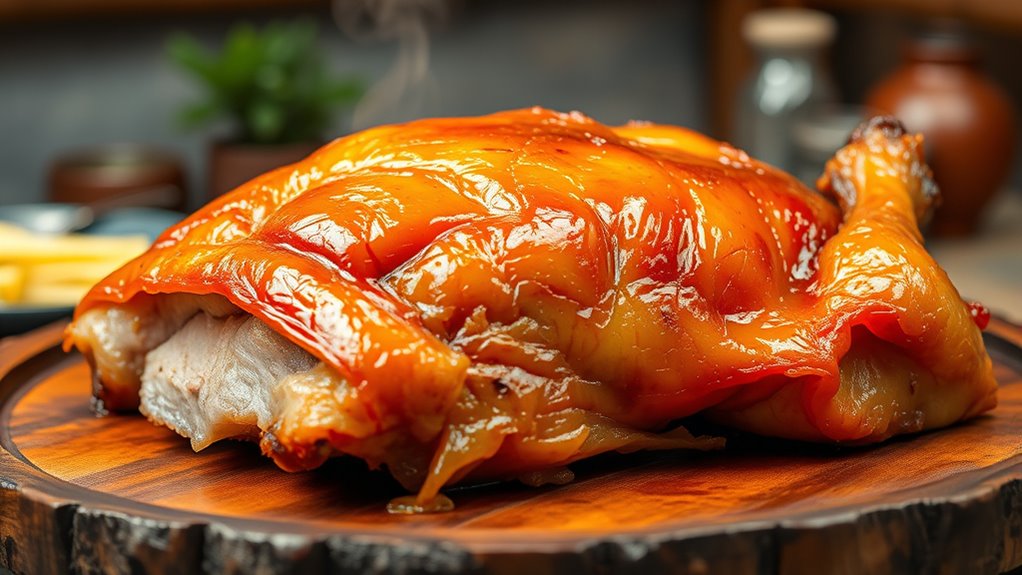
Achieving perfectly crackling lechon kawali starts with mastering moisture control. To get that crisp, golden skin, you need to pay close attention to how you manage moisture throughout the cooking process. One of the most critical factors is controlling the oil temperature. When frying, it’s essential to keep the oil at a steady, high temperature—around 180°C to 200°C (355°F to 390°F). If the temperature drops too low, the skin won’t crisp up properly; instead, it’ll absorb more oil, leading to a soggy texture. Conversely, if the oil gets too hot, the skin might burn before the meat is thoroughly cooked inside. Using a thermometer helps you maintain consistent oil temperature, ensuring an even, thorough fry. This control over temperature directly influences the cooking duration, which should be carefully timed. Typically, frying takes about 20 to 30 minutes, depending on the size of your pork belly and your stove’s heat consistency. Overcooking can cause the meat to dry out and make the skin less crispy, while undercooking leaves the meat underdone and the skin not sufficiently crisped. Hence, monitoring the cooking duration is essential; it’s better to check the doneness periodically rather than rely solely on timing. Proper moisture management is also supported by understanding the importance of drying the pork thoroughly before frying, which prevents splattering and promotes even crisping. Ensuring the skin is free of excess moisture enhances the crisping process and results in a more desirable texture. Proper drying not only helps with crispiness but also reduces the risk of oil splatters during frying. Additionally, maintaining proper air circulation around the pork during drying can further improve moisture removal. When you submerge the pork into hot oil, the moisture on the surface instantly turns to steam, creating a barrier that can prevent the skin from crisping if not properly dried. During frying, you’ll notice the sizzling intensifies as moisture escapes, and maintaining a stable oil temperature helps manage this process. If the heat fluctuates, moisture won’t escape uniformly, leading to uneven skin texture. Once the skin puffs up and turns a deep golden brown, it’s usually a sign that your moisture control is on point, and the skin is ready. After frying, let the lechon kawali rest briefly on a wire rack to allow excess oil to drain. This step helps prevent the skin from becoming soggy due to residual oil. Proper moisture control—via precise oil temperature, appropriate cooking duration, and thorough drying—ensures you achieve that coveted crackling skin that Filipino lechon kawali is famous for. Maintaining consistent temperature also helps in preventing oil absorption, which is crucial for achieving crispy skin. With practice, these steps become second nature, making it easier to consistently serve crispy, flavorful lechon kawali every time.

Vuwwey Instant Read Meat Thermometer Digital with Dual Probe, Food Thermometer for Cooking & Grilling, Large Backlit & Calibration, for Kitchen/Oven/Grill/Smoker/BBQ/Candy/Oil/Fry, Gifts for Mom & Dad
【Dual Safe Probes for Multi-Use】Vuwwey meat thermometer probe is great for meat, liquids, oil frying, baking, candy making,…
As an affiliate, we earn on qualifying purchases.
As an affiliate, we earn on qualifying purchases.
Frequently Asked Questions
How Long Should I Boil the Pork Before Frying?
When boiling pork for lechon kawali, you should simmer it for about 45 minutes to an hour, depending on the size of the meat. This step helps loosen the moisture, making it easier to control moisture during frying. Proper pork boiling guarantees the meat is tender, yet the skin remains dry enough for that perfect crackling. Just make sure not to overboil, or the meat will be too soft to fry properly.
What Type of Oil Is Best for Crispy Skin?
When choosing oil for crispy skin, you want a high smoke point oil like canola, vegetable, or peanut oil. These oils withstand high frying temperatures without burning, ensuring crispiness. Maintain a frying temperature of about 350-375°F (175-190°C) for ideal results. Proper oil selection and consistent frying temperature help you achieve that perfect, crackling skin on your lechon kawali every time.
Can I Use a Microwave to Dry the Skin?
Using a microwave for drying skin can be effective for achieving that crispy texture, but you need to be careful. Microwave drying helps remove excess moisture quickly, which can enhance the skin’s crackling quality. However, avoid overdoing it, as too much heat might make the skin tough or uneven. Patience and careful monitoring are key to using microwave drying successfully for perfect skin texture.
How Do I Prevent the Skin From Becoming Too Greasy?
Think of your lechon kawali as a sponge soaking up excess oil, which can turn crispy skin into a greasy mess. To prevent this, use paper towels or a wire rack to absorb oil and control moisture after frying. Keep the skin dry and avoid stacking the pieces. Proper oil absorption and moisture control are key to maintaining that irresistible, crackling skin you crave, making each bite perfectly crispy.
What Are Common Mistakes That Prevent Crispy Crackling?
You often prevent crispy crackling by avoiding common mistakes like insufficient moisture control and poor skin preparation. Make certain to pat the skin dry thoroughly, as excess moisture prevents skin from crisping up. Also, avoid overcrowding the pan, which traps steam. Properly drying and preparing the skin, along with controlling moisture, helps achieve that perfect crackling texture. Focus on these steps to guarantee your skin turns out crispy and delicious.

Lodge 3 Quart Pre-Seasoned Cast Iron Deep Skillet – Signature Teardrop Handle & Assist Handle – Use in the Oven, on the Stove or Grill, or Over a Campfire – Use to Sear, Sauté, Bake, Broil, Braise, Fry, or Grill – Black
YOUR NEW GO-TO PAN: Lodge cast iron cookware is the perfect kitchen tool for beginners, home cooks and…
As an affiliate, we earn on qualifying purchases.
As an affiliate, we earn on qualifying purchases.
Conclusion
To get that perfect crackling skin, think of controlling moisture like taming a wild fire—keep it steady and dry. Always pat your pork dry before frying, and avoid overcrowding the pan to prevent excess steam. With patience and attention, your lechon kawali becomes as crispy as a sun-baked cracker. Just remember, moisture is the enemy of crunch, so master this step, and you’ll enjoy irresistibly crispy skin every time.

2PCS Cooling Racks for Cooking and Baking – 10" x 15"Heavy Duty Stainless Steel Wire Rack for Baking, Grilling, Roasting – Oven & Dishwasher Safe – Fits Jelly Roll Sheet Pan-Silver
QUALITY STAINLESS STEEL CONSTRUCTION: Made from food grade stainless steel instead of metal plating or coating, the grill…
As an affiliate, we earn on qualifying purchases.
As an affiliate, we earn on qualifying purchases.

304 Stainless Steel Double-Layer Hanging Meat Rack with Wheels and Drip Trays, Commercial Kitchen Drying Rack for Duck, Goose, Bacon, Sausage, Heavy-Duty Food Storage Cart, 24.6×16.14×57.09 Inches
PREMIUM CONSTRUCTION: Made from high-quality 304 stainless steel for superior durability, rust resistance, and easy cleaning in commercial…
As an affiliate, we earn on qualifying purchases.
As an affiliate, we earn on qualifying purchases.