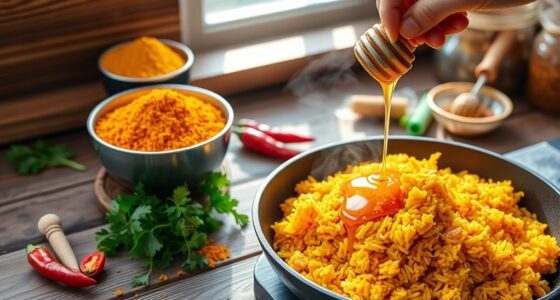
Paprika comes in sweet, smoked, and hot varieties, each adding unique flavors to your dishes. Use sweet paprika for stews and dips, where it provides a mild, earthy sweetness. Smoked paprika adds a smoky aroma perfect for grilled meats and roasted vegetables. Hot paprika brings heat to marinades and spice blends, intensifying flavors. Exploring these types lets you customize your cooking, so keep exploring to uncover even more about how paprika can elevate your meals.
Key Takeaways
- Sweet paprika adds mild, earthy flavor to stews, dips, and roasted vegetables without heat.
- Smoked paprika provides a smoky aroma, ideal for grilled meats, roasted dishes, and adding depth.
- Hot paprika introduces heat, perfect for marinades, spicy sauces, and spice blends.
- Different types of paprika allow customization of flavor profiles and intensity in various recipes.
- Its cultural significance, especially in Hungarian cuisine, elevates dishes with rich history and craftsmanship.
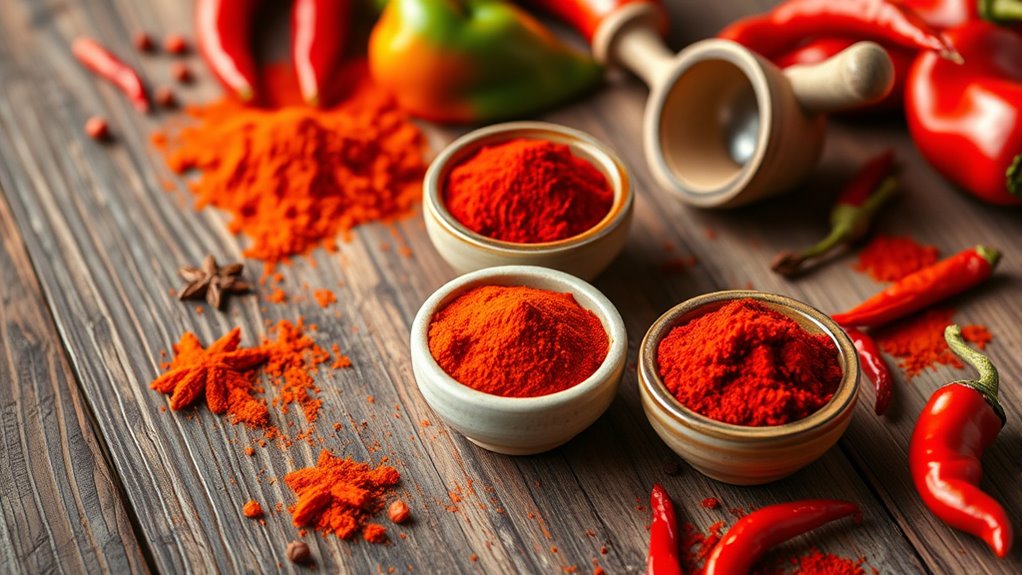
Paprika is a vibrant spice that adds both color and flavor to your dishes. Its history origins trace back centuries, rooted in Central Europe, particularly Hungary, where it became a staple in traditional cuisine. Originally, paprika was derived from dried and ground red peppers, and over time, it evolved into a key ingredient that defines many regional dishes. Its journey across cultures highlights its significance, and today, it’s embraced worldwide. The flavor profile of paprika varies depending on the type, but generally, it offers a sweet, smoky, or hot taste, each bringing a unique dimension to your cooking. Sweet paprika presents a mild, slightly sweet flavor with subtle earthy undertones, perfect for adding depth without overwhelming heat. Smoked paprika, on the other hand, is made from peppers that are smoked before grinding, imparting a rich, smoky aroma and a deeper, more complex flavor. Hot paprika contains a spicy kick, making it ideal when you want to add some heat and intensity to your dishes.
When you choose paprika, understanding its origins helps you appreciate its unique qualities. The spice’s roots in Hungarian cuisine, where it became a national symbol, influence its traditional uses, such as in goulash or paprikash. Its history also ties to the Columbian exchange, where peppers were introduced to Europe from the Americas, and Europeans began cultivating and drying these peppers, leading to paprika’s development. The spice’s journey from indigenous cultivation to global popularity underscores its versatility and cultural significance. Its flavor profile, thus, is not just about taste—it’s about history, tradition, and the craft of drying and smoking peppers to achieve distinct profiles. Additionally, high-quality paprika often involves precise drying techniques, which influence the final flavor and color.
When you’re experimenting in the kitchen, consider using sweet paprika for a gentle, fruity sweetness in stews, rubs, or dips. If you’re craving a smoky undertone that complements grilled meats or roasted vegetables, smoked paprika can transform your dish with its deep, earthy aroma. For those who like a bit of heat, hot paprika offers a spicy punch that can elevate marinades, sauces, or spice blends. Each type of paprika allows you to tailor your flavor experience, whether you’re aiming for subtle sweetness, smoky richness, or fiery heat. Its history origins and flavor profile make paprika more than just a colorful garnish—it’s a versatile ingredient that connects you to centuries of culinary tradition and global spice trade. Incorporating the right type of paprika can truly elevate your cooking and add layers of complexity to your favorite dishes.
Frequently Asked Questions
What Are the Health Benefits of Paprika?
You gain health benefits from paprika through its rich nutrition and anti-inflammatory properties. Paprika is packed with vitamins like A, E, and B6, which support your immune system and skin health. Its antioxidants help reduce inflammation and combat free radicals. Incorporating paprika into your diet can boost your overall wellness, improve circulation, and may even lower your risk of chronic diseases, making it a flavorful way to enhance your health naturally.
How Should Paprika Be Stored for Maximum Freshness?
To keep paprika fresh, store it in an airtight container away from direct sunlight, heat, and humidity. Use glass jars or tightly sealed spice containers for ideal storage methods. This helps preserve its potent flavor and vibrant color, extending its shelf life. Keep it in a cool, dark pantry or cupboard, and avoid frequent opening to prevent exposure to air, which can diminish its quality over time.
Can Paprika Be Used in Sweet Dishes?
Think of paprika as a gentle whisper in your sweet dishes. Yes, you can use paprika in desserts, where it adds an unexpected depth. Its sweetness and spice balance creates a warm, layered flavor, elevating chocolates, fruit compotes, or custards. Just a pinch can transform your treats, offering a subtle smoky or sweet note that surprises and delights, turning ordinary desserts into memorable culinary experiences.
What Are Some Common Substitutes for Paprika?
If you’re looking for substitutes for paprika, try ground cayenne or smoked chili powder for a similar smoky flavor, or sweet paprika if you want milder taste. If you have a paprika allergy or need to avoid it in vegetarian dishes, consider using ground cumin or paprika-free spice blends. Always check labels and taste as you go to guarantee your dish remains flavorful without paprika.
How Does Paprika Influence the Flavor Profile of Dishes?
Paprika enhances the flavor profile of your dishes by adding a sweet, smoky, or hot note, depending on the variety. It brings a rich depth and warmth that elevates your culinary creations, making them more vibrant. Its versatility allows you to experiment with different dishes, from soups to meats. By incorporating paprika, you boost flavor enhancement and reveal a wide range of culinary possibilities, enriching your cooking experience.
Conclusion
Now that you’ve uncovered the secrets of paprika, your dishes will burst with flavor so intense, it’s like a fireworks show in every bite. Whether you choose sweet, smoked, or hot, this spice transforms ordinary meals into fiery masterpieces that awaken your senses and leave everyone begging for more. Get ready to turn your kitchen into a flavor-packed arena where paprika reigns supreme—because once you’ve experienced its magic, nothing else will ever compare!