
Using moringa and other supergreens in your cooking boosts nutrition and adds vibrant flavor to meals. You can blend dried moringa into smoothies, sprinkle fresh leaves over salads, or add greens towards the end of cooking to preserve their nutrients. Sautéing, steaming, or lightly blending greens helps maximize their health benefits while enhancing taste. Experimenting with different techniques makes incorporating these powerful ingredients easy and delicious. Keep exploring, and you’ll discover more ways to elevate your dishes with supergreens.
Key Takeaways
- Incorporate moringa leaves or powder at the end of cooking to preserve its delicate nutrients and vibrant color.
- Sauté supergreens like kale or spinach with garlic and olive oil for added flavor and nutrient retention.
- Use blending techniques to create smoothies that combine moringa, other greens, and fruits for quick, nutrient-dense snacks.
- Sprinkle dried moringa leaves over salads or soups to add texture, flavor, and nutritional boost.
- Balance subtle greens’ flavors with lemon juice, spices, or garlic to enhance taste and encourage regular consumption.

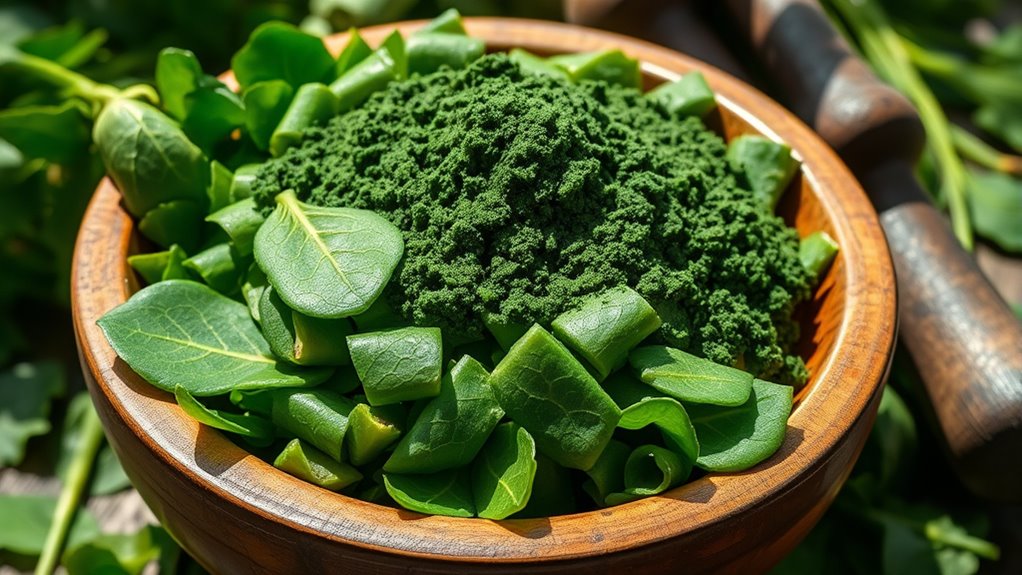
Supergreens like moringa are quickly becoming staples in healthy kitchens thanks to their nutrient density and vibrant flavors. When you incorporate moringa into your meals, you’re not just adding a splash of color—you’re boosting your dishes with an array of nutritional benefits. Moringa leaves are packed with vitamins A, C, and E, along with minerals like calcium, potassium, and iron. These nutrients support your immune system, improve digestion, and promote overall vitality. To maximize these benefits, you can incorporate moringa into your diet using a variety of culinary techniques. For example, blending dried moringa powder into smoothies is a quick way to add a nutritional punch without altering the flavor much. You might also sprinkle fresh or dried moringa leaves over salads or soups for added texture and nutrients. When cooking with moringa, it’s best to add the leaves toward the end of the process to preserve their delicate nutrients. This approach ensures you retain the maximum nutritional benefits while enhancing the flavor profile of your dishes.
Other supergreens like kale, spinach, and collard greens share similar nutritional benefits, making them versatile choices for your kitchen. They’re rich in antioxidants, fiber, and chlorophyll, which help detoxify your body and boost energy levels. You can employ various culinary techniques to make the most of these greens. Sautéting them with garlic and a touch of olive oil is a simple way to develop deeper flavors while maintaining their nutritional value. Steaming greens is another gentle method that preserves nutrients while softening their texture for easy incorporation into stir-fries, casseroles, or pasta dishes. For a quick, nutrient-dense snack, try blending greens into smoothies with fruits and a splash of liquid. When working with supergreens, remember that their subtle flavors can easily be amplified or balanced with ingredients like lemon juice, garlic, or spices, making them adaptable to many recipes.
In your kitchen, the key to cooking with moringa and other supergreens lies in understanding their unique culinary techniques and nutritional benefits. Whether you’re blending, sautéing, or sprinkling them raw, these ingredients can elevate your meals and nourish your body. By experimenting with different methods, you’ll discover how versatile and rewarding it is to include supergreens in your everyday cooking. This not only enhances your diet but also helps you develop a deeper appreciation for nutrient-dense foods that support your health. So, don’t hesitate to get creative—your body will thank you for it.
Frequently Asked Questions
How Do I Store Fresh Moringa Leaves Effectively?
To store fresh moringa leaves effectively, you should focus on leaf preservation and proper storage techniques. Rinse the leaves gently, then pat them dry. Wrap them in a damp paper towel and place them in an airtight container or plastic bag to maintain moisture. Store the container in the refrigerator’s crisper drawer, and use the leaves within 2-3 days for ideal freshness. This way, your moringa stays fresh longer.
Are There Any Side Effects From Consuming Supergreens Regularly?
Consuming supergreens regularly offers great nutritional benefits like vitamins, minerals, and antioxidants, but there are potential risks. You might experience digestive issues or allergic reactions if you consume too much or have sensitivities. It’s important to start with small amounts and monitor how your body reacts. Always consult with a healthcare provider if you’re pregnant, breastfeeding, or on medication to avoid any adverse effects.
Can Supergreens Be Grown Indoors at Home?
Yes, you can definitely cultivate supergreens indoors. For successful indoor cultivation, guarantee you provide proper lighting requirements, such as bright, indirect sunlight or grow lights, to mimic natural conditions. With consistent watering, suitable containers, and a warm environment, you’ll promote healthy growth. So, if you’re seeking a sustainable supergreen source, start sowing seeds indoors and enjoy fresh, nutritious greens right at home.
What Are the Best Flavor Pairings With Moringa?
You’ll find that moringa pairs well with bright citrus flavors like lemon and lime, adding a invigorating zing. Herbal pairings like basil, mint, and cilantro enhance its earthy notes, creating vibrant flavor combinations. Consider combining moringa with garlic and ginger for savory dishes or blending it into smoothies with tropical fruits such as pineapple and mango. These herbal pairings and flavor combinations make your dishes more dynamic and delicious.
How Do I Harvest Moringa Leaves Sustainably?
To harvest moringa leaves sustainably, use proper harvesting techniques like selective pruning, removing only mature leaves and avoiding excessive cutting. This promotes healthy growth and guarantees the tree’s longevity. Incorporate sustainability practices by rotating harvests, avoiding overharvesting, and leaving enough foliage for the tree’s health. Regularly monitor your moringa plants, maintain soil health, and use eco-friendly tools to minimize environmental impact.
Conclusion
So, here you are, marveling at these vibrant supergreens, thinking they’re just a trendy add-on. But in reality, you’re holding a secret weapon for health and flavor. It’s funny how something so humble can pack such a punch, yet we often overlook it. Next time you cook, remember: the real superpower isn’t in the fancy sauces, but in these simple greens waiting to transform your dishes—and maybe, just maybe, your life.