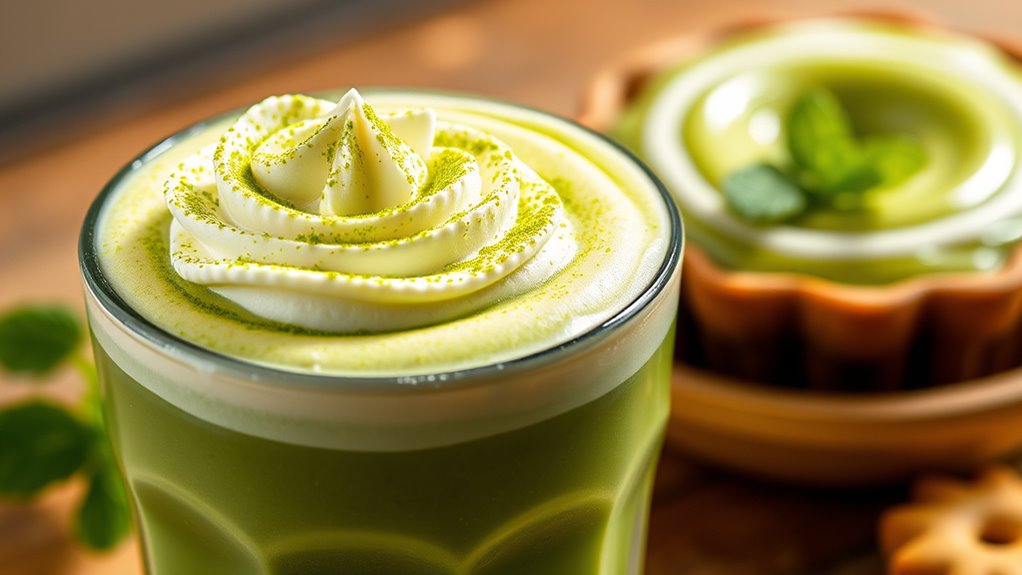

You’re noticing how matcha is taking over modern desserts and drinks with its vibrant green color, earthy flavor, and health perks. It’s loved for its antioxidants and gentle caffeine boost, making it a favorite among health-conscious trends. From lattes to cakes, it blends tradition with innovation, connecting cultural roots to contemporary tastes. If you want to discover more about how this centuries-old ingredient is shaping today’s culinary scene, keep exploring what’s behind the matcha magic.
Key Takeaways
- Matcha’s vibrant color and earthy flavor are fueling its popularity in modern desserts and beverages worldwide.
- Its health benefits, including antioxidants and gentle caffeine, appeal to health-conscious consumers seeking nutritious treats.
- Culinary innovations incorporate matcha into a variety of products like lattes, ice creams, cookies, and smoothies.
- The cultural heritage of matcha adds depth and authenticity to its modern use in trendy food and drink items.
- The trend’s enduring appeal lies in its blend of tradition, health benefits, and visual appeal, captivating diverse audiences globally.
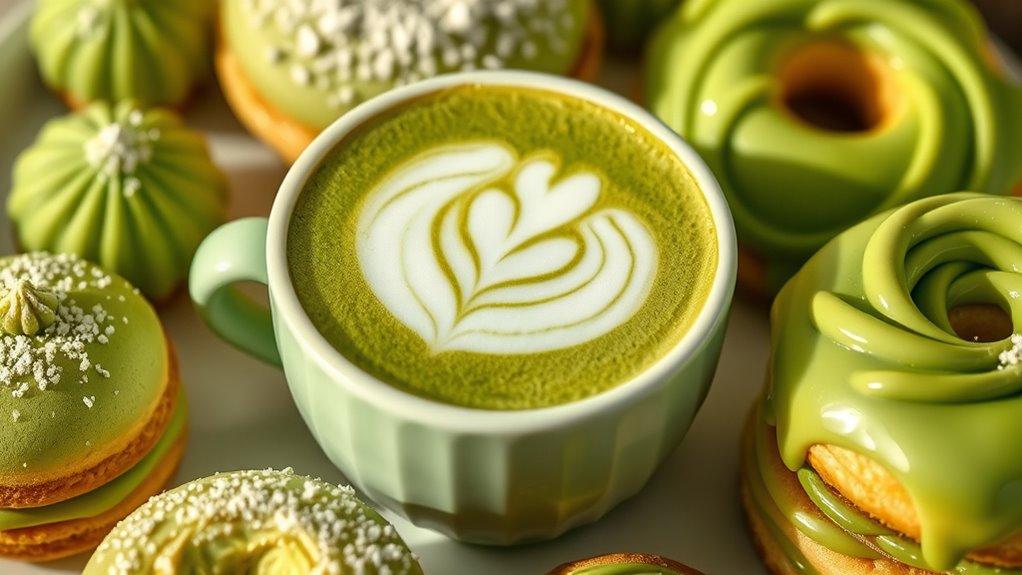
As matcha continues to surge in popularity, it’s clear that this vibrant green tea powder has become a staple in modern desserts and drinks. You might notice it’s often praised not just for its striking color and flavor but also for its health benefits. Matcha is packed with antioxidants, particularly catechins, which help combat free radicals and may support your immune system. It also contains a moderate amount of caffeine, providing a gentle, sustained energy boost without the jitters typically associated with coffee. Additionally, matcha has been linked to improved metabolism and fat oxidation, making it an appealing choice for health-conscious consumers. These benefits help explain why so many are turning to matcha as a nutritious ingredient.
Understanding its cultural origins adds a richer layer to your appreciation of matcha. This powdered green tea has been an integral part of Japanese culture for centuries, especially rooted in the traditional tea ceremony called “chanoyu.” This ritual emphasizes mindfulness, aesthetics, and the meditative process of preparing and drinking matcha. The Japanese have perfected the art of cultivating, harvesting, and processing matcha, which involves shading the tea plants before harvest to boost chlorophyll levels and produce its vibrant hue. The powder is ground from high-quality tencha leaves using stone mills, resulting in a fine, smooth texture. Recognizing this cultural background helps you see matcha not just as a trendy ingredient but as a product with deep historical significance.
In recent years, chefs and baristas worldwide have embraced matcha, incorporating it into a wide array of desserts and beverages. From velvety matcha lattes and frappés to baked goods like cookies, cakes, and mochi, it lends a distinctive earthy flavor and a brilliant green color. Its versatility makes it easy to blend into everything from smoothies to ice creams. The experience of enjoying matcha can be both sensory and cultural, connecting you to Japanese traditions while offering a healthy twist. The popularity of specialized preparation techniques further highlights how tradition and innovation blend in modern culinary trends. As you indulge in these matcha-infused treats, you’re not just savoring a flavor but also embracing centuries of cultural heritage and health-conscious choices. This combination of tradition and modern innovation explains why matcha continues to captivate palates and health enthusiasts around the globe.

Micro Ingredients Organic Matcha Green Tea Powder, First Harvest, Culinary Grade from Japan, 100% Pure & Unflavored, Great for Tea, Latte, & Smoothies, Non-GMO, No Sugar, Eco-Friendly Packaging, 1 Lb
Micro Ingredients 100% fresh culinary grade matcha powder. A smooth tasting green tea powder that is derived from…
As an affiliate, we earn on qualifying purchases.
As an affiliate, we earn on qualifying purchases.
Frequently Asked Questions
What Are the Health Benefits of Matcha?
You benefit from matcha’s antioxidants, which help protect your cells from damage and boost your immune system. It also enhances your metabolism, making it easier to burn calories and maintain a healthy weight. Drinking matcha can improve your focus and energy levels thanks to its moderate caffeine content. Plus, its calming properties help reduce stress. Overall, incorporating matcha into your routine supports your health and well-being naturally.
How Is Authentic Matcha Prepared?
Imagine a quiet garden where matcha cultivation begins, nurturing vibrant green leaves. To prepare authentic matcha, you sift high-quality powder into a bowl, then whisk it with a bamboo chasen until frothy and smooth. Follow traditional preparation methods, using water heated to just the right temperature, to discover its full flavor. This ritual transforms simple powder into a serene, emerald elixir, connecting you to centuries of Japanese tea culture.
Can Matcha Be Used in Savory Dishes?
Yes, you can use matcha in savory dishes. Its unique matcha flavor pairing works well in sushi, pasta, or roasted vegetables, adding a subtle earthy note. Matcha culinary uses extend beyond sweets, enhancing soups, marinades, and sauces. You’ll find that incorporating matcha brings a vibrant color and a mild, umami-rich flavor, making your savory creations more interesting and visually appealing.
What Are Common Substitutes for Matcha?
You might be surprised to learn that about 60% of people prefer green tea powder as a matcha substitute. When you need alternatives, powdered herbs like spirulina, moringa, or even powdered spinach can work. These provide similar vibrant color and earthy flavor, making them great natural substitutes for matcha in recipes. Just remember, the flavor profile differs slightly, so adjust your recipe accordingly for the best taste.
Is Matcha Suitable for People With Allergies?
If you have allergies, you should be cautious with matcha. It can contain allergy triggers like pollen or cross-contaminants, making it unsafe for some. Always check labels and source details to guarantee safe consumption. If you’re allergic to grasses or specific allergens, consult your healthcare provider before trying matcha. While many can enjoy matcha without issue, being vigilant helps prevent allergic reactions and ensures a safe experience.

Jade Leaf Matcha Organic Matcha Latte Mix – Bulk Value Size – Lightly Sweet Japanese Matcha Green Tea Powder with Organic Cane Sugar for Café Style Blend, 17.6 Ounce / 500g (Pack of 1)
CAFE STYLE MATCHA AT HOME: Our matcha latte blend is crafted by baristas with a balance of flavor…
As an affiliate, we earn on qualifying purchases.
As an affiliate, we earn on qualifying purchases.
Conclusion
As you embrace the vibrant hue and earthy charm of matcha, you’re not just tasting a trend—you’re savoring a whisper of tradition wrapped in modern flair. It’s like sipping on a piece of history, stirred into your favorite treat, awakening your senses with each bite. Let this green wonder be your passport to a world where flavor and culture seamlessly blend, reminding you that sometimes, the simplest ingredients hold the most extraordinary magic.

Jade Leaf Matcha Organic Culinary Grade Matcha Powder – Japanese Green tea for Baking, Smoothies, Lattes, and Skin Care, 30g / 1.06 Ounce (Pack of 1)
ORGANIC MATCHA GREEN TEA POWDER: Our Culinary Grade Matcha is a versatile ingredient great for everything from smoothies,…
As an affiliate, we earn on qualifying purchases.
As an affiliate, we earn on qualifying purchases.

Naoki Matcha Organic Ceremonial First Spring Blend – Authentic Japanese First Harvest Ceremonial Grade Matcha Green Tea Powder from Kagoshima, Japan (100g / 3.5oz)
✓ Our Organic Ceremonial Grade Matcha in Larger Packaging – Bigger packaging that offers both convenience and even…
As an affiliate, we earn on qualifying purchases.
As an affiliate, we earn on qualifying purchases.