When choosing between brown and white sugar, remember that brown sugar contains molasses, giving it a rich, caramel flavor and extra moisture that keeps baked goods tender and soft. White sugar provides a cleaner sweetness with less moisture, resulting in crisper textures. Your choice affects flavor, moisture, and appearance. Curious how these differences impact specific recipes? Keep exploring to discover how each sugar type can elevate your baking creations.
Key Takeaways
- Brown sugar contains molasses, imparting a rich, caramel flavor and deeper browning during baking.
- Its moisture content promotes tender, soft baked goods, unlike the drier white sugar that produces crisper textures.
- Brown sugar enhances caramelization, adding complex flavors, whereas white sugar offers a cleaner, lighter sweetness.
- The moisture in brown sugar helps baked items stay moist and fresh longer.
- White sugar provides neutral sweetness and crispness, ideal for lighter, less moist baked treats.
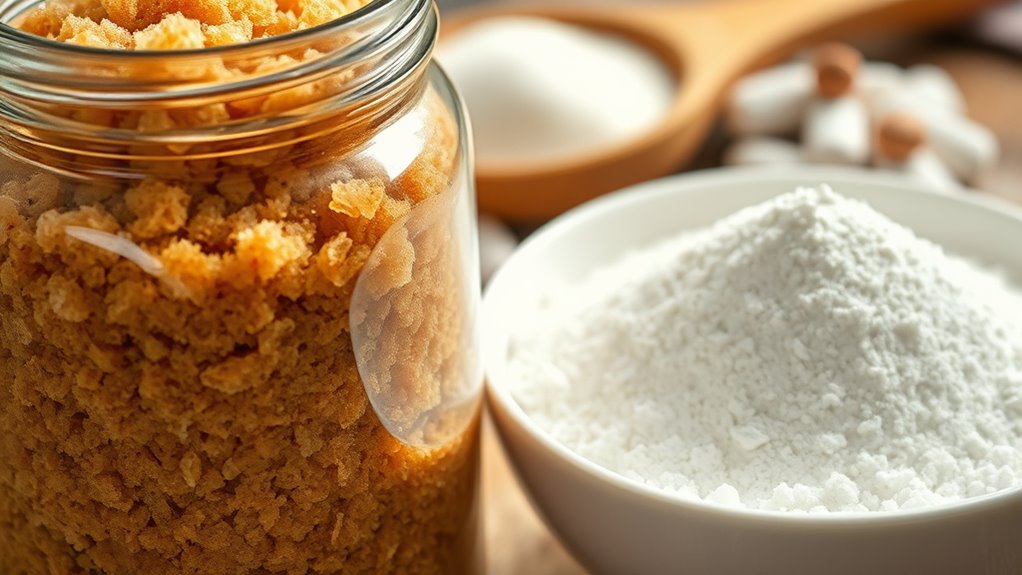
Ever wondered what sets brown sugar apart from white sugar? The main difference lies in their composition and how they behave during baking. Brown sugar contains molasses, which gives it its rich, caramel-like flavor and moist texture. This molasses content is what allows brown sugar to undergo natural caramelization more readily than white sugar. When heated, the moisture trapped within the molasses helps brown sugar develop a deep, complex flavor, creating a more robust caramel profile in baked goods. This natural caramelization process adds depth to cookies, cakes, and sauces, setting brown sugar apart from its white counterpart.
Another key aspect of brown sugar is its moisture retention. Because it’s moist and sticky, it tends to keep baked goods softer and more tender. When you add brown sugar to recipes, its moisture helps maintain the freshness of your baked items longer, preventing them from drying out quickly. This quality makes it ideal for recipes like cookies, muffins, and quick bread, where a tender crumb is desired. White sugar, on the other hand, is drier and more refined. It lacks the molasses that provide moisture, so baked goods made with white sugar tend to be crisper and less moist. If you prefer your cookies chewy and soft, brown sugar’s moisture retention is a significant advantage.
In baking, the choice between brown and white sugar can influence both flavor and texture. Brown sugar’s natural caramelization, thanks to its molasses content, imparts a richer, more toasted flavor that can enhance the overall taste of your baked goods. Its moisture retention also means your treats stay softer for longer, making it a favorite for recipes where tenderness is key. White sugar, with its clean sweetness and lack of moisture, is often used when you want a lighter, crisper result or when you’re aiming for a more neutral sweetness that won’t overshadow other flavors.
Additionally, the sugar’s moisture content impacts how baked goods develop their texture and appearance during baking. Ultimately, understanding these differences helps you decide which sugar to use depending on the outcome you want. If you’re after deep, caramelized flavors and moist textures, brown sugar is your go-to. For a lighter, crisper finish, white sugar might be better. Knowing how each interacts during baking allows you to tweak recipes for perfect results every time. So, next time you bake, think about what kind of sweetness you’re aiming for, and choose accordingly, keeping in mind the natural caramelization and moisture retention that brown sugar offers.
Frequently Asked Questions
How Does Brown Sugar Affect the Moisture Content of Baked Goods?
Brown sugar increases the moisture retention in your baked goods because of its molasses content. This extra moisture helps keep textures soft and chewy, preventing dryness over time. By using brown sugar, you enhance the overall texture and make your treats more tender and moist. So, if you want baked goods with better moisture retention and a richer, more satisfying texture, opt for brown sugar instead of white.
Can Brown Sugar Be Substituted Equally for White Sugar in All Recipes?
Think of sugar as a key to flavor enhancement and sugar crystallization, but it’s not a one-size-fits-all remedy. You can substitute brown sugar for white, yet it may alter texture and moisture. Brown sugar brings a deeper, richer flavor, while white sugar offers a neutral sweetness. Use it interchangeably when the recipe’s profile allows, but be mindful of the subtle differences that can impact your baked goods’ final touch.
Does the Type of Brown Sugar (Light vs. Dark) Influence Flavor Differently?
Yes, the type of brown sugar influences flavor nuances and color variations. Light brown sugar has a milder, caramel note, making it ideal for delicate baked goods. Dark brown sugar offers a richer, more intense molasses flavor, perfect for robust recipes. You’ll notice darker sugar also darkens the color of your baked items, adding depth. So, choose your brown sugar type based on the flavor profile and appearance you want to achieve.
How Does Sugar Choice Impact the Browning Process During Baking?
Your choice of sugar markedly impacts browning during baking through the caramelization process and Maillard reaction. Brown sugar, containing molasses, promotes deeper caramelization, resulting in richer color and flavor. White sugar, with less moisture, browns more slowly, producing a lighter crust. By selecting the right sugar, you can control the browning level and flavor development, ensuring your baked goods meet your desired appearance and taste.
Are There Health Differences Between Using Brown Sugar and White Sugar?
You might notice some health benefits and nutritional differences between brown sugar and white sugar. Brown sugar contains small amounts of minerals like calcium, potassium, and magnesium, due to molasses, but these are not significant enough for health claims. White sugar is more refined, offering fewer nutrients. Overall, both should be consumed in moderation, as excess intake can impact your health, regardless of the type.
Conclusion
So, next time you reach for brown or white sugar, remember, the choice seems simple but surprises lurk behind each. You might think white sugar’s plainness wins, but brown sugar’s rich, complex flavor often steals the show. Ironically, what’s “plain” could be what makes your baked goods truly special. So go ahead, experiment—you might just find that the “ordinary” ingredient is the secret to extraordinary sweetness. After all, baking’s full of sweet surprises.