
Black garlic is a unique ingredient known for its sweet, umami flavor and complex profile. You can use it by blending into sauces, spreading on bread, or adding to salads and pasta for depth. It pairs well with meats like beef, chicken, or pork to enhance marinades or stews. Its mellow, rich taste elevates many dishes without overpowering. Keep exploring to discover how this versatile ingredient can transform your cooking.
Key Takeaways
- Black garlic has a sweet, umami-rich flavor profile with subtle caramel and wine-like notes, distinct from raw garlic.
- Its complex taste develops during fermentation, resulting in a smooth, mellow, and sophisticated flavor.
- Use black garlic in sauces, dressings, spreads, or as a topping to add depth to various dishes.
- Incorporate into salads, pasta, meats, and soups for enhanced flavor without overpowering ingredients.
- Can be used raw, lightly heated, roasted, or caramelized to preserve or intensify its unique sweet and umami qualities.
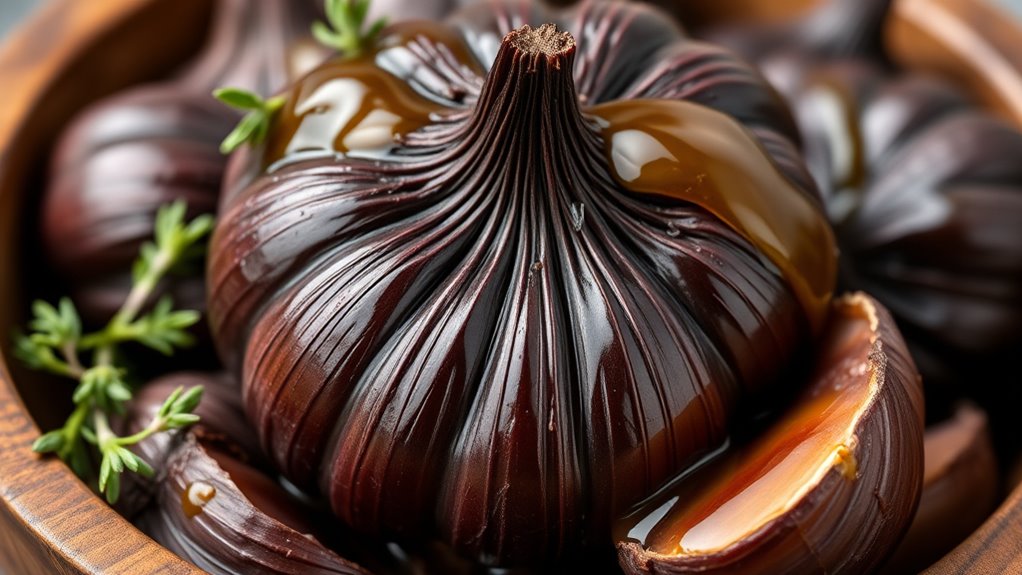
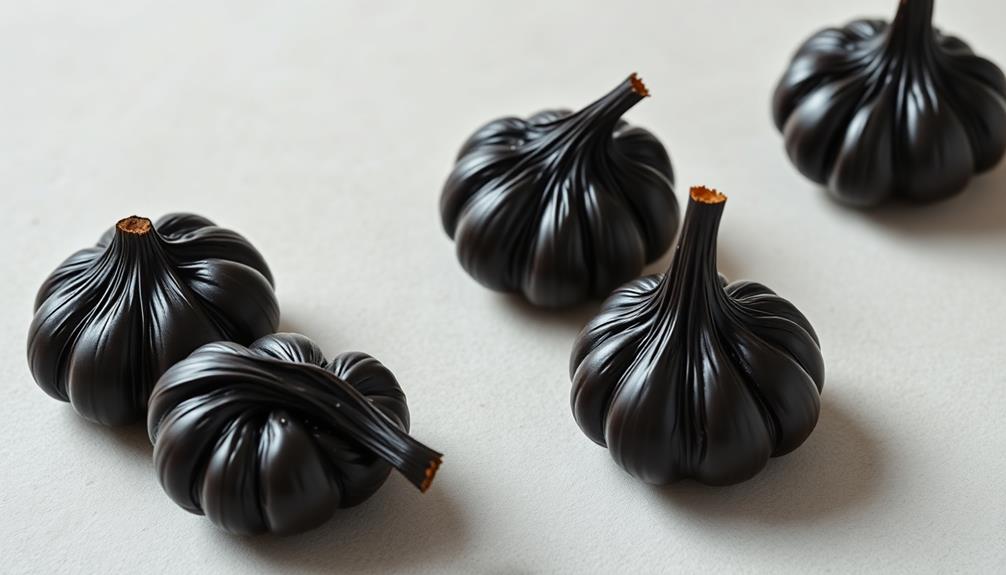
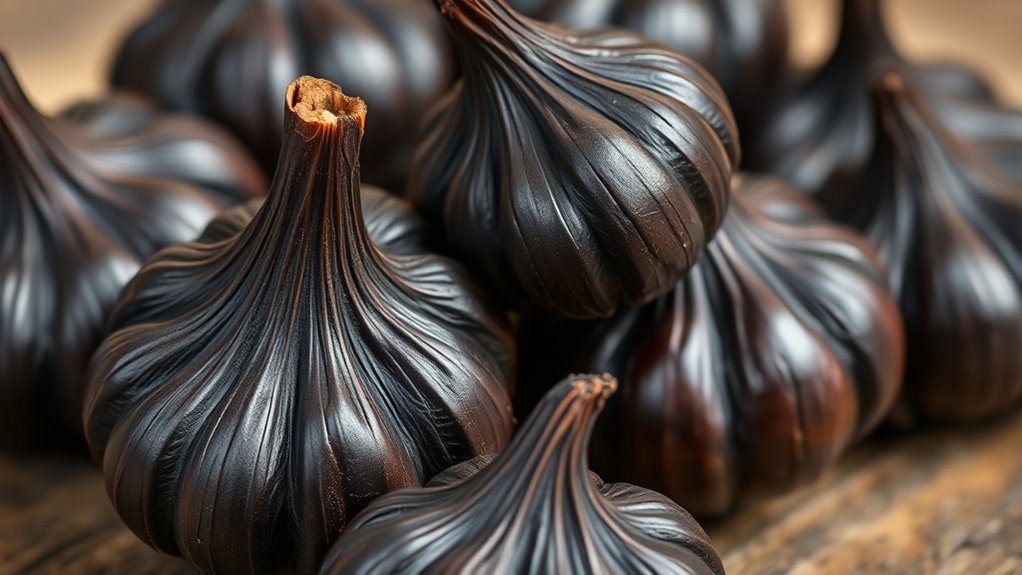
Black garlic, with its rich, sweet, and umami flavor, has become a popular ingredient for adding depth to dishes. This unique ingredient is produced through a fermentation process that transforms fresh garlic into a dark, soft, and intensely flavorful bulb. During fermentation, the garlic undergoes a controlled aging process at specific temperatures and humidity levels, which breaks down its enzymes and complex sugars. This process not only alters the garlic’s appearance but also markedly enhances its flavor profiles, giving it a sweet, mellow taste with hints of balsamic and molasses, while maintaining a subtle garlic aroma. The fermentation process is essential because it develops the deep, savory qualities that set black garlic apart from fresh garlic.
When you taste black garlic, you’ll notice how its flavor profile combines sweetness with umami, creating a balanced and complex taste. The mellow sweetness makes it a versatile ingredient, while the umami adds a savory punch that can elevate many dishes. Its flavor is less sharp and pungent than raw garlic, making it suitable for a wide range of culinary applications. You might find that the flavor intensifies and smooths out during fermentation, offering a unique taste experience that’s both rich and refined. The transformation during fermentation brings out subtle caramel and wine-like notes, which add sophistication to your recipes.
In terms of usage, black garlic can be incorporated into various dishes to enhance flavor. You can mash or chop it into sauces, dressings, or spreads to add depth and complexity. It works wonderfully in salads, pasta, risottos, and even as a topping for pizzas. Its sweet and umami qualities can also complement meats like beef, chicken, or pork, making marinades more flavorful. If you’re into soups or stews, blending black garlic into the broth can bring a rich, nuanced taste that’s difficult to achieve with raw garlic alone. Because of its mellow flavor, it’s often used raw or lightly heated to preserve its delicate flavor profiles, but it can also be roasted or caramelized for a different dimension.
Frequently Asked Questions
How Long Does Black Garlic Last in Storage?
Black garlic typically lasts about 3 to 4 months if stored properly. To maximize its shelf life, keep it in an airtight container in a cool, dark, and dry place, following good storage tips. Avoid exposing it to moisture or heat, which can cause spoilage. For longer storage, you can refrigerate black garlic, extending its freshness up to six months. Always check for signs of mold or an off smell before use.
Can Black Garlic Be Used in Desserts?
Yes, you can use black garlic in desserts! Its sweet flavor pairing adds a unique, rich depth to dishes like chocolates, ice creams, or caramel sauces. Black garlic desserts create a surprising twist with a mellow sweetness and umami undertones. Just finely chop or puree it, then blend into your recipes. Experimenting with black garlic in sweet creations can elevate your desserts with its complex, savory-sweet profile.
Is Black Garlic Suitable for All Diets?
Black garlic is generally suitable for most diets, but you should check its diet compatibility based on your specific needs. It’s versatile in the kitchen, offering culinary versatility in both savory and sweet dishes. If you’re on a low-sodium or specific restrictive diet, consider the garlic’s salt content and ingredients. Overall, black garlic can enhance your meals without major concerns, but always verify if it fits your dietary restrictions.
How Does Black Garlic Compare to Raw Garlic in Nutrition?
You might think black garlic and raw garlic are the same, but their nutritional differences tell a different story. While raw garlic packs a punch with allicin, black garlic offers a milder, sweeter flavor profile with more antioxidants. So, if you’re after robust health benefits, raw garlic’s your go-to. But if you prefer a mellow, umami-rich taste, black garlic’s the flavorful choice, even if its nutrition’s slightly different.
Are There Any Health Risks Associated With Black Garlic?
You should be aware that black garlic is generally safe, but if you have garlic allergies, it could trigger reactions. Additionally, black garlic may interact with certain medications, especially blood thinners, so consult your healthcare provider before adding it to your diet. While it’s lower in risk than raw garlic, always start with small amounts to monitor how your body responds.
Conclusion
Black garlic’s rich, sweet umami flavor can elevate any dish you make. With its growing popularity, sales of black garlic have increased by over 200% in the last five years, showing how much people are discovering its culinary magic. Whether you’re using it in sauces, spreads, or salads, it’s a versatile ingredient that adds depth and complexity. Give it a try—you’ll be surprised how it transforms your cooking and impresses your taste buds.