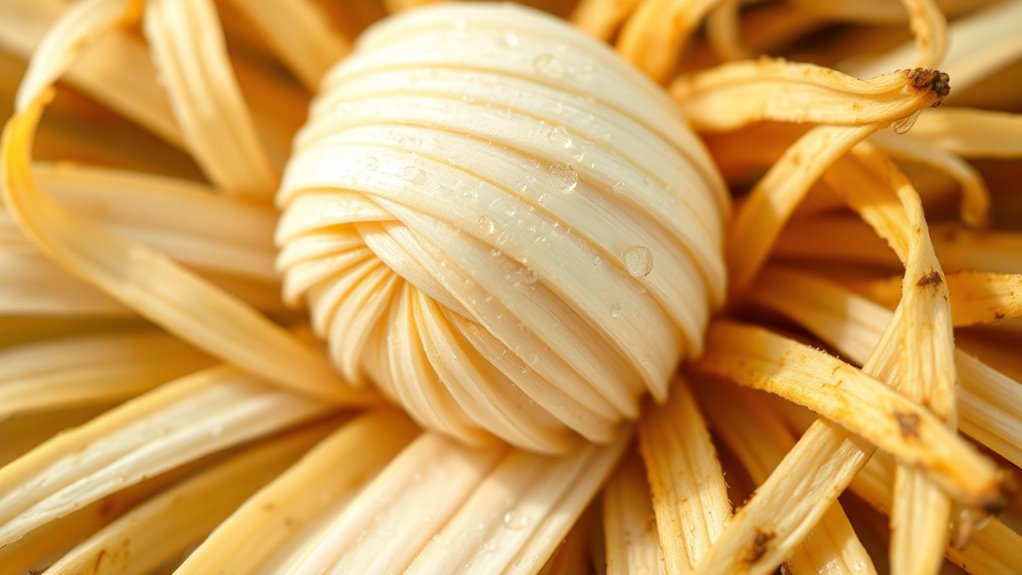

To explore culinary uses of banana blossoms through texture manipulation, try fermenting for a tangy flavor that tenderizes and adds probiotics. Use slicing or julienning to control crunchiness, perfect for salads or stir-fries, while thicker cuts give a chewy bite for stews. Marinate with lemon and herbs to soften fibers and boost flavor, or employ cooking methods like steaming or stir-frying to achieve crisp or tender textures. Keep experimenting and discovering new ways to transform banana blossoms into delicious dishes.
Key Takeaways
- Slice or julienne banana blossoms to achieve desired textures for salads, stir-fries, or stews.
- Use blanching, steaming, or stir-frying to vary tenderness and crunchiness in dishes.
- Marinate blossoms with acids and herbs to soften fibers and infuse flavors before cooking.
- Employ fermentation techniques to develop complex textures and tangy flavors.
- Combine cutting, marinating, and cooking methods to finely control the final texture in culinary applications.
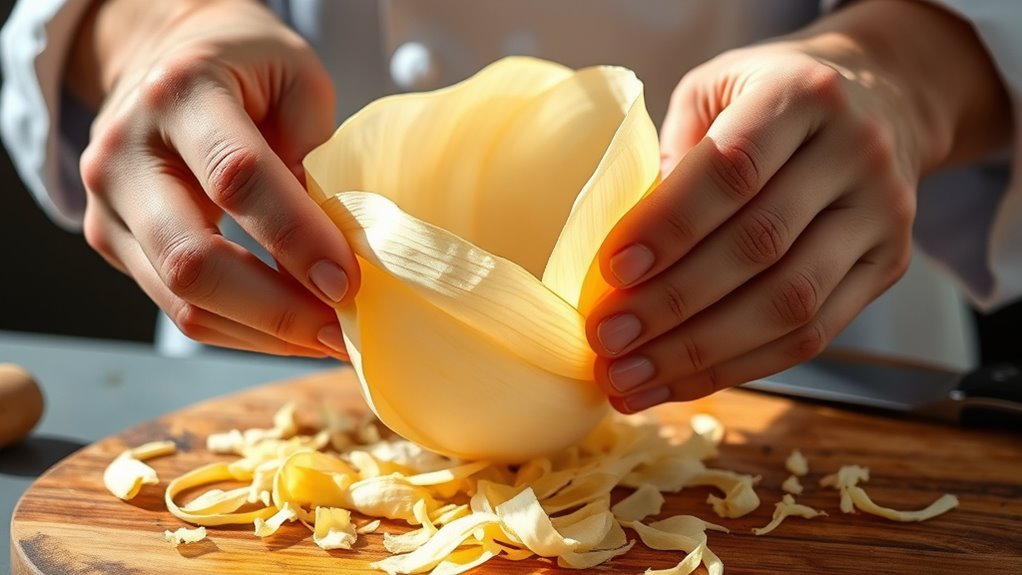
Have you ever considered using banana blossoms in your cooking? These unique ingredients offer more than just visual appeal—they open up a world of texture manipulation techniques that can elevate your dishes. One of the most versatile methods to enhance banana blossoms is through fermentation techniques. Fermenting banana blossoms can deepen their flavor profile, adding a subtle tang and complexity that pairs beautifully with a variety of dishes. By fermenting, you break down some of the tougher fibers, resulting in a tender, slightly sour component that can be incorporated into salads, wraps, or even spreads. To do this effectively, you’ll need to manage temperature and fermentation time carefully, ensuring the blossoms develop flavor without turning overly sour. This process not only enhances texture but also introduces probiotic benefits, making your dishes both delicious and healthy.
Beyond fermentation, you can also manipulate the texture by using specific flavor pairing strategies. For instance, combining banana blossoms with bold, spicy ingredients like chili, garlic, or ginger can create a delightful contrast, balancing their slightly crunchy texture with the heat and aroma of these spices. Alternatively, pairing them with creamy elements such as coconut milk or yogurt can soften their bite and add a luscious mouthfeel. These strategies help you craft dishes that are harmonious in both flavor and texture, transforming banana blossoms from a simple garnish into the star ingredient. Slicing or julienning the blossoms can also influence their texture—thin strips become crisp and tender, perfect for salads or stir-fries, while thicker cuts maintain a chewy, substantial bite suitable for hearty stews.
Another technique involves marinating banana blossoms before cooking to alter their texture further. Marination can soften their fibers and infuse them with complementary flavors, allowing you to experiment with different herbs, acids, and oils. For example, marinating with lemon juice and herbs can make the blossoms more tender and add a fresh zing, ideal for quick salads. Additionally, cooking methods like blanching, steaming, or stir-frying enable you to manipulate their texture to suit your dish’s needs, whether you’re aiming for a crisp bite or a more tender consistency. Using these techniques in combination with thoughtful flavor pairing strategies gives you control over the final texture, making banana blossoms adaptable to a wide range of culinary styles.
In essence, mastering texture manipulation with banana blossoms involves understanding both fermentation techniques and flavor pairing strategies. These approaches allow you to experiment confidently, creating vibrant, texturally interesting dishes that showcase the versatility of this often-overlooked ingredient. Whether fermented for depth, marinated for softness, or paired with contrasting flavors, banana blossoms can become a dynamic component that elevates your culinary creations to new heights.

IMUSA USA Wood Plantain Slicer "Mariquitera", 13.8 x 4 x 1 inches
Made of Wood
As an affiliate, we earn on qualifying purchases.
As an affiliate, we earn on qualifying purchases.
Frequently Asked Questions
How Long Does It Take to Prepare Banana Blossoms for Cooking?
Preparing banana blossoms for cooking usually takes about 15 to 20 minutes. You start with the cleaning process, which involves removing tough outer petals and trimming the stem. Then, you cut and soak the blossom to prevent browning and bitterness. This preparation time guarantees your banana blossoms are clean and ready to use in recipes, making the cooking process smoother and more enjoyable.
Can Banana Blossoms Be Used in Raw Dishes?
Did you know that banana blossoms are often used in raw dishes in Southeast Asia? You can certainly incorporate them using raw preparation techniques, like thinly slicing or shredding, which preserve their crunch and delicate flavor. To enhance flavor, marinate them with lime juice, chili, or herbs. Using banana blossoms raw adds a unique texture and subtle taste, making your dishes more vibrant and nutritious without cooking.
Are There Any Health Benefits Associated With Banana Blossoms?
You’ll find that banana blossoms offer several health benefits. They’re rich in dietary fiber, which supports digestion and helps regulate blood sugar levels. Plus, they have antioxidant properties that may protect your cells from damage and boost your immune system. Including banana blossoms in your diet can contribute to overall health, thanks to these nutrients. So, it’s worth exploring ways to incorporate them into your meals regularly.
How Do Different Cooking Methods Affect Their Texture?
Imagine slicing into a banana blossom, then choosing your cooking technique—boiling, frying, or steaming. Each method transforms its texture differently: boiling yields tender, soft bites, while frying creates crispy, chewy edges. Steaming offers a balanced, delicate bite. Your choice of cooking technique shapes the final texture outcome, making the banana blossom versatile. So, experiment with these methods to find the perfect texture that suits your dish perfectly.
What Are Common Flavor Pairings With Banana Blossoms?
When exploring flavor pairings with banana blossoms, you’ll find they work well with exotic flavor combinations and complementary herbs. You might try pairing them with ingredients like coconut, lime, or chili for a vibrant taste. Fresh herbs such as cilantro or mint add brightness, enhancing their subtle, earthy flavor. Play around with these options to create dishes that balance their unique taste, making your culinary creations truly stand out.

Folinstall 2 Pack 1 Gallon Large Fermentation Jars w 2 SCREW Lid and 3 Airlock – 100% Airtight Lid, Wide Mouth Glass Jar, Pickle Jar w Scale Mark for Sourdough Starter
Super Wide Mouth Pickle Jar – The diameter of the opening is 4.3 inches, A Large mouth allows…
As an affiliate, we earn on qualifying purchases.
As an affiliate, we earn on qualifying purchases.
Conclusion
Now that you know how to manipulate banana blossom textures, you might wonder if they truly mimic seafood in dishes. Fascinatingly, some chefs believe the flower’s fibrous texture can resemble shellfish, making it a popular vegan substitute. While not identical, with the right prep, banana blossoms can convincingly evoke seafood’s mouthfeel. So, next time you experiment, trust that their versatility might just surprise you—and perhaps even challenge the idea that seafood is irreplaceable.
Zulay Kitchen Stainless Steel Wok Spatula – 14.8” Heat-Resistant Metal Turner for Stir-Fry, Sauté & Grilling – Durable, Rust-Proof & Dishwasher Safe Kitchen Utensil for Everyday Use
LARGE STAINLESS STEEL SPATULA: Crafted from premium, food-grade stainless steel with a polished mirror finish for long-lasting durability….
As an affiliate, we earn on qualifying purchases.
As an affiliate, we earn on qualifying purchases.

Winproper Mixing Bowls with Lids Set, 6 PCS Stainless Steel Mixing Bowls with 3 Grater Attachments, Kitchen Food Storage Organizers Nesting Mixing Bowl, Large Size 4.5, 3.5, 2.1, 1.5, 1.1, 0.7QT
【Various Size & Large Capacity】 You will get 6 piece mixing bowls stainless steel (4.5, 3.5, 2.1, 1.5,…
As an affiliate, we earn on qualifying purchases.
As an affiliate, we earn on qualifying purchases.