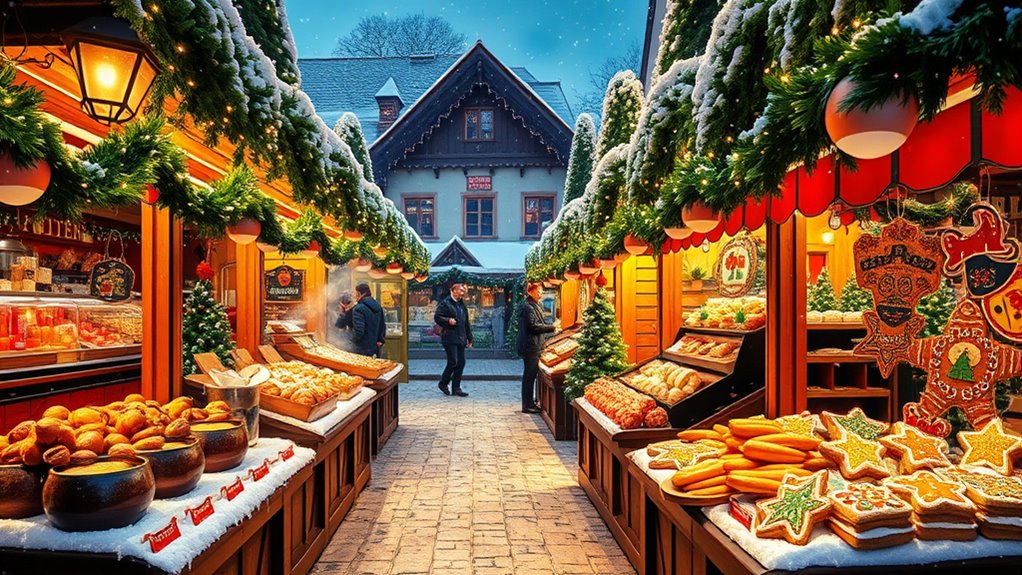

During your culinary trip to European Christmas markets, you’ll experience a festive atmosphere filled with warm, fragrant foods. Sip steaming Glühwein, flavored with cinnamon, cloves, and citrus, to warm your hands and spirit. Sample colorful gingerbread cookies, shaped into stars or hearts, decorated with icing. These treats embody holiday traditions and foster a sense of warmth and community. Keep exploring to uncover more delightful flavors and the stories behind these festive favorites.
Key Takeaways
- Savor traditional Glühwein, a spiced mulled wine served warm in festive mugs, enhancing the cozy market atmosphere.
- Indulge in colorful gingerbread cookies shaped into holiday symbols, flavored with cinnamon and ginger.
- Experience the vibrant market environment, where aromatic foods and seasonal beverages foster community cheer.
- Discover regional variations of holiday treats that reflect local culinary traditions and cultural heritage.
- Create lasting memories by enjoying classic festive foods that embody the warmth and joy of European Christmas markets.
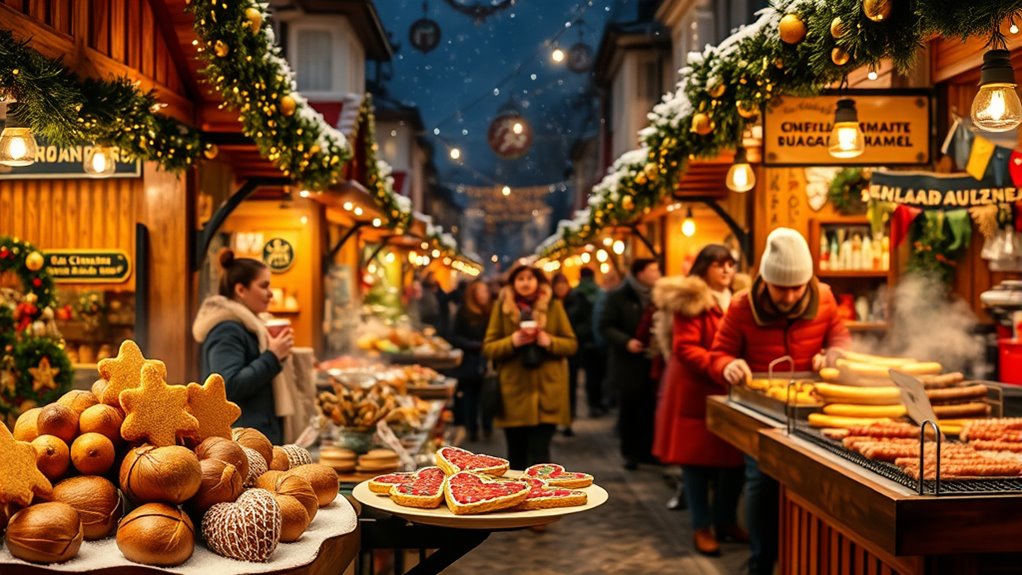
European Christmas markets are renowned for their festive atmosphere and delicious seasonal foods. As you wander through the bustling stalls, the aroma of warm beverages and baked treats fills the air, inviting you to indulge in the holiday spirit. One of the most iconic drinks you’ll encounter is traditional Glühwein. Served steaming in often beautifully decorated mugs, this mulled wine is infused with spices like cinnamon, cloves, and citrus peel, creating a comforting warmth that instantly lifts your spirits. You’ll notice locals and visitors alike clutching their mugs, savoring each sip as they soak in the lively surroundings. The process of making Glühwein varies by region, but the essence remains the same: a fragrant, flavorful drink that embodies the heart of Christmas cheer. It’s a perfect way to stay warm while exploring the market’s many delights.
Alongside the beverages, you’ll find an array of sweet treats, with gingerbread cookies standing out among the favorites. These cookies are more than just a snack; they’re a symbol of holiday tradition. Usually shaped into Christmas stars, hearts, or men, gingerbread cookies are decorated with colorful icing and sometimes tiny candies. Their spicy-sweet flavor, combined with the rich aroma of cinnamon and ginger, makes them irresistible. As you bite into a freshly baked gingerbread cookie, you experience a delightful crunch followed by a warm, spicy taste that evokes memories of holiday gatherings and family recipes. Many vendors sell them by weight, allowing you to sample a variety of shapes and decorations. Some markets also offer personalized gingerbread cookies, letting you add your own icing designs or messages, making the experience even more special. gingerbread cookies are also a great example of how traditional ingredients like cinnamon and ginger are celebrated during the holiday season.
Both Glühwein and gingerbread cookies are more than just festival foods—they’re part of the cultural tapestry that makes European Christmas markets so enchanting. Sharing these treats with friends or family creates a sense of community and tradition that enhances the holiday experience. Whether you’re warming your hands around a mug of Glühwein or tearing into a freshly baked gingerbread cookie, these foods help you connect to the season’s warmth and joy. As you continue exploring, you’ll find that these classic treats are not only delicious but also deeply rooted in holiday customs, making your culinary journey through the markets truly memorable. From the first sip of Glühwein to the last bite of gingerbread, these foods embody the festive spirit that makes European Christmas markets so uniquely magical.
Frequently Asked Questions
What Are the Origins of Popular Christmas Market Foods?
You might be curious about the origins of popular Christmas market foods like mulled wine and gingerbread. The history of mulled wine dates back to ancient times when hot, spiced drinks were used for warmth and medicinal purposes. Gingerbread has roots in medieval Europe, originally crafted as a festive treat for feasts and religious celebrations. These traditions have evolved, becoming beloved staples at holiday markets across Europe.
How Do Recipes Vary Between Different European Regions?
You might think all European recipes are the same, but they actually showcase diverse regional flavor profiles. In Germany, spiced gingerbread and sausage dishes dominate, while France favors rich, buttery pastries. Italy’s culinary fusion trends bring in unique ingredients like candied fruits and nuts. Variations reflect local ingredients, culture, and history, making each region’s Christmas market foods a delicious reflection of its identity—so, explore beyond borders to taste the true diversity.
Are There Vegetarian or Vegan Options Available at These Markets?
Yes, European Christmas markets offer plenty of vegetarian options and vegan-friendly treats. You’ll find roasted chestnuts, fresh fruit, and vegetable-based snacks, along with vegan gingerbread and sweets. Many vendors now cater to plant-based diets, so you won’t miss out on festive flavors. Just ask around or look for signs indicating vegetarian or vegan options, and you’ll enjoy a delicious, inclusive holiday experience at these vibrant markets.
How Are Traditional Festive Treats Prepared and Preserved?
Traditional festive treats are prepared with passion and preserved through careful techniques. You’ll see gingerbread decoration come to life as bakers blend spices into dough, then cut and bake it to perfection. Mulled wine brewing fills the air with warmth and aroma, while syrups and jams are sealed for long-lasting flavor. These methods guarantee the magic of holiday treats endures, enabling you to enjoy festive flavors long after the markets close.
What Are Some Lesser-Known Regional Delicacies to Try?
You should definitely try regional delicacies like Slovenian potica, a nut roll, or Polish oscypek, a smoked cheese. Seek out hidden gems such as Slovak lokše, potato pancakes, or Latvian grey peas with speck. These lesser-known treats offer authentic flavors and unique textures that showcase local traditions. Exploring these regional delicacies enriches your experience, giving you a true taste of the area’s culinary heritage beyond the more common holiday fare.
Conclusion
As you wander through European Christmas markets, savoring the rich aromas and festive treats, remember that variety is the spice of life. From hearty sausages to sweet roasted nuts, each bite tells a story of tradition and warmth. Don’t forget, “You are what you eat,” so indulge mindfully and embrace the holiday spirit through every delicious morsel. After all, the best memories are made around good food shared with loved ones.