
On Boxing Day in Britain, many enjoy making Bubble and Squeak from leftover holiday food like roast vegetables and meat. This dish showcases how resourceful and community-minded people are, often sharing leftovers with neighbors or charities to spread warmth and kindness. It’s a tradition that emphasizes gratitude and togetherness, reflecting the holiday’s generous spirit. If you continue exploring, you’ll discover even more about how these customs help reinforce cherished cultural values.
Key Takeaways
- Bubble and Squeak is a traditional Boxing Day dish made from leftover holiday vegetables and meat.
- It symbolizes resourcefulness by repurposing festive leftovers into a crispy, hearty meal.
- The dish promotes community sharing, often enjoyed with neighbors or given to charities.
- Passed down through generations, it reflects practicality and the continuity of Christmas traditions.
- Bubble and Squeak embodies the holiday spirit of gratitude, warmth, and festive generosity.

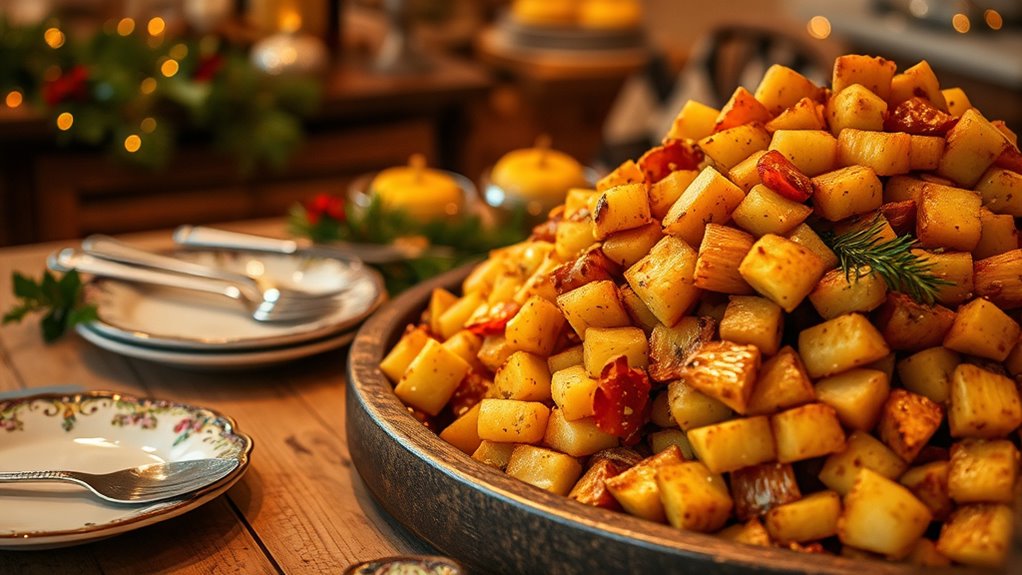
Boxing Day, celebrated on December 26th, is a holiday rich with unique traditions that vary across countries. In Britain, one cherished custom is making Bubble and Squeak, a dish that transforms holiday leftovers into a delicious meal. After the Christmas feast, you might find yourself with an abundance of holiday leftovers—roast vegetables, potatoes, and sometimes even bits of meat. Instead of letting these go to waste, you gather them together to create Bubble and Squeak, turning leftovers into a hearty dish. You mash or chop the cooked vegetables, then fry them in a skillet until they develop a crispy, golden crust. This simple yet satisfying meal embodies the resourcefulness of Boxing Day traditions, emphasizing how leftover food can be repurposed into something tasty.
On Boxing Day, leftover vegetables are transformed into crispy, golden Bubble and Squeak.
This tradition isn’t just about saving food; it’s also tied to the spirit of charitable giving that marks the holiday season. Many families and communities see Boxing Day as a time to share their abundance with others. After preparing the Bubble and Squeak, you might package up any extra food to give to neighbors or local charities. It’s a way of spreading warmth and kindness, making sure that no one in your community goes hungry during the festive season. The act of sharing leftovers echoes the broader sense of generosity associated with Boxing Day, reminding you that the holiday isn’t only about receiving but also about giving back.
In Britain, making Bubble and Squeak also connects you with a sense of tradition and continuity. It’s a dish that’s been passed down through generations, often made with whatever is available, reflecting the practicality of the holiday season. You might add a dash of salt and pepper or a sprinkle of herbs to enhance the flavor, but fundamentally, this dish relies on the simple principle of using what you have. As you cook, you’re not just preparing a meal—you’re participating in a cultural ritual that celebrates resourcefulness, community, and kindness. Additionally, many people opt for tea accessories like teapots or cups while enjoying this warm, comforting dish, further enriching the festive experience.
In essence, Boxing Day’s focus on holiday leftovers and charitable giving highlights the holiday’s core values. It’s a day to reflect on gratitude, to make use of what’s around you, and to share those blessings with others. Whether you’re frying up a batch of Bubble and Squeak or donating excess food, you’re embodying the generous spirit that makes Boxing Day a meaningful and joyful occasion.
Frequently Asked Questions
How Did Bubble and Squeak Originate?
You might be curious about how Bubble and Squeak originated. Its historical origins trace back to regional influences in Britain, where leftover vegetables from Sunday roasts were combined and fried to avoid waste. This dish became popular as a hearty, economical meal, especially around Christmas and Boxing Day. Over time, it evolved into a traditional British comfort food, symbolizing resourcefulness and community, with recipes varying across regions.
Are Bubble and Squeak Unique to Britain?
You might think bubble and squeak is unique to Britain, but regional variations exist across the UK, reflecting local ingredients and traditions. While it’s a quintessential British dish, modern adaptations have spread beyond, inspiring similar recipes in other countries. This dish’s charm lies in its versatility and history, making it a beloved comfort food. So, yes, bubble and squeak is distinctly British, yet its influence and variations reach far beyond.
What Variations Exist in Bubble and Squeak Recipes?
You’ll find plenty of variations in bubble and squeak recipes, especially with vegetarian adaptations that omit meat and focus on vegetables. Regional ingredients also influence the dish, like using kale in Scotland or carrots in southern England. Some cooks add herbs or spices for extra flavor, while others top it with a fried egg or serve it with chutney. This flexibility lets you customize it to suit your taste and available ingredients.
Is Bubble and Squeak Eaten at Other Holidays?
You might enjoy bubble and squeak as a holiday snack beyond Boxing Day, especially during Christmas festivities. For example, a family in London serves this traditional dish on New Year’s Day to use up leftover roast vegetables. Its versatility makes it perfect for various holidays when leftovers are abundant. So, yes, bubble and squeak can be a delicious, traditional dish enjoyed during different celebrations, not just Boxing Day.
How Has Bubble and Squeak Evolved Over Time?
You’ve seen bubble and squeak evolve from a simple leftover recipe to a popular breakfast dish. Originally, it used leftover vegetables from Sunday roasts, but now people add ingredients like eggs, meats, or cheese to enhance flavor. You can enjoy it as a quick, hearty breakfast or a versatile side. Its adaptability keeps it relevant, turning leftover vegetables into a tasty, satisfying dish that’s both traditional and modern.
Conclusion
As you embrace Boxing Day traditions like British bubble and squeak, remember it’s like turning yesterday’s holiday feast into today’s joyful leftover masterpiece. Just as the bubbling skillet transforms leftovers into something new, these customs turn post-Christmas time into a warm, lively celebration. So, whether you’re sharing stories or savoring leftovers, you’re part of a centuries-old dance—blending tradition and togetherness—making every Boxing Day a delightful, bubbling reminder of holiday cheer.