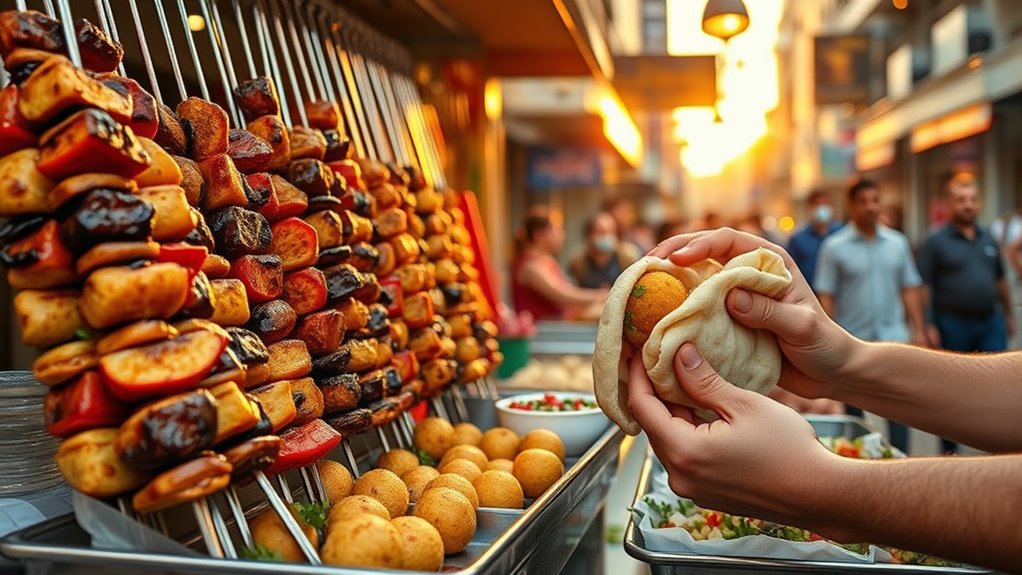

Discover the top Middle Eastern street eats that showcase centuries-old traditions and bold flavors. Try crispy falafel stuffed in pita with tahini, fresh shawarma sizzling on spits, and warm manakish topped with za’atar or cheese. These vibrant dishes reflect local customs and culinary innovation, blending regional tastes with modern twists. As you explore, you’ll experience the lively market atmosphere and the cultural stories behind each bite—keep going to uncover even more delicious secrets.
Key Takeaways
- Falafel, served in pita with tahini and fresh vegetables, is a iconic Middle Eastern street food symbolizing tradition and flavor.
- Shawarma, marinated meats cooked on rotating spits, offers aromatic spices like cumin, paprika, and turmeric, with regional variations.
- Manakish, a baked flatbread topped with za’atar or cheese, is a popular community snack or breakfast staple in Middle Eastern markets.
- Fusion influences introduce creative twists, such as stuffed falafel or shawarma wraps with international ingredients like sriracha or aioli.
- Vibrant market atmospheres and lively street stalls highlight the cultural significance and social bonding centered around Middle Eastern street foods.
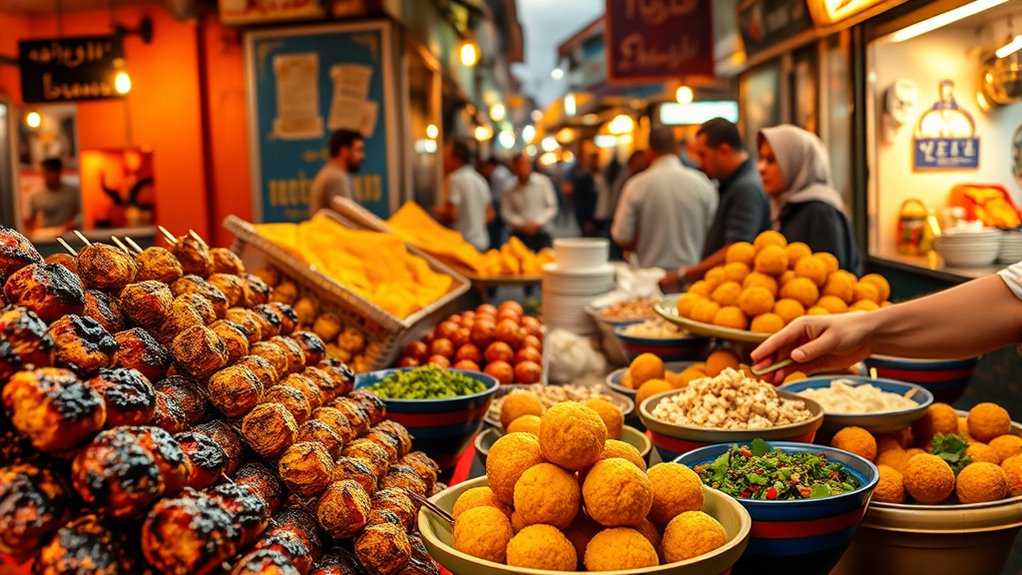
Middle Eastern street foods offer a vibrant and flavorful glimpse into the region’s rich culinary traditions. As you explore the bustling markets and lively street stalls, you’ll notice how these foods blend tradition with innovation, creating exciting fusion flavors that captivate both locals and visitors alike. The history of street food in this region is deeply rooted, dating back centuries when vendors served simple, hearty dishes to travelers and merchants passing through trade routes. Over time, these humble beginnings evolved into a dynamic street food culture known for its bold spices, fresh ingredients, and inventive combinations.
When you indulge in a classic dish like falafel, you’re tasting more than just a crispy ball of ground chickpeas—you’re experiencing a staple that embodies the street food legacy of the Middle East. Vendors often serve falafel in pita bread, topped with tangy tahini, pickles, and fresh vegetables, showcasing how traditional recipes have adapted over generations. The street food scene here isn’t static; it constantly evolves through fusion flavors, where chefs and vendors incorporate influences from nearby regions or even global cuisines. For example, you might find falafel with a hint of harissa or stuffed with cheese, reflecting a creative twist on the classic.
Similarly, shawarma stands are everywhere, offering marinated meats cooked on rotating spits. The aroma alone draws crowds, and the flavors are a perfect harmony of spices like cumin, paprika, and turmeric. Vendors often put their unique spin on shawarma by combining it with international ingredients—think of a shawarma wrap with a splash of spicy sriracha or a drizzle of garlic aioli. These innovations highlight the region’s openness to fusion influences, bringing new life to age-old recipes.
Another must-try is manakish, a flatbread topped with za’atar or cheese, baked fresh and often enjoyed as a quick breakfast or snack. It’s a testament to the street food heritage of the Middle East, where baking bread and sharing it with neighbors is a community tradition. Over time, the toppings have diversified, blending local flavors with modern tastes, further emphasizing the region’s culinary adaptability.
As you wander through Middle Eastern street markets, you’ll realize that these foods are more than just quick bites—they’re a living history of cultural exchange and innovation. The street food scene captures the region’s ability to honor its past while embracing new flavors, making every bite a flavorful journey through history and fusion. Whether you’re savoring a simple kebab or a more inventive dish, you’re experiencing a culinary tradition that continues to evolve, reflecting the vibrant spirit of Middle Eastern street food culture.
Top picks for "street global food"
Open Amazon search results for this keyword.
As an affiliate, we earn on qualifying purchases.
Frequently Asked Questions
What Is the History Behind Middle Eastern Street Foods?
You might find that Middle Eastern street foods have a rich history shaped by diverse cultural influences and a dynamic historical evolution. As you explore, you’ll see how ancient trade routes brought spices, grains, and techniques that transformed local cuisines. Over centuries, these foods adapted to regional tastes and resources, creating vibrant street eats. This blend of history and culture makes Middle Eastern street foods a delicious reflection of centuries of interconnected traditions.
Which Ingredients Are Essential in Authentic Middle Eastern Street Eats?
You need to include essential ingredients like aromatic spice blends such as za’atar, sumac, and cumin to achieve authentic flavors. Fresh bread varieties like pita and flatbread are also vital for street eats. Vegetables like tomatoes, cucumbers, and onions add freshness, while meats like lamb or chicken provide protein. Don’t forget to use olive oil and lemon juice for authentic seasoning, making each bite rich and flavorful.
How Do Street Food Vendors Maintain Food Safety Standards?
You can’t afford to overlook food safety when serving street eats! You maintain high standards by strictly following food handling practices and practicing impeccable vendor hygiene. Regular handwashing, using clean utensils, and keeping food at proper temperatures are your secret weapons. These steps build trust and ensure every bite is safe. Your dedication to cleanliness makes your street food not just delicious, but also a safe, irresistible experience that keeps customers coming back for more.
Are There Regional Variations in Middle Eastern Street Foods?
You’ll notice regional flavor profiles vary across Middle Eastern street foods, reflecting local ingredients and culinary traditions. In some areas, street food fusion mixes traditional spices with international influences, creating unique tastes. For example, you might find a blend of classic shawarma with Asian-inspired sauces or Mediterranean herbs. These regional variations make Middle Eastern street eats diverse and exciting, offering a delicious journey through different cultural tastes and innovative food combinations.
What Are Some Popular Beverages to Pair With These Street Eats?
You’ll love pairing your street eats with traditional drink pairings like mint tea, ayran, or pomegranate juice. These invigorating beverage options complement the rich flavors and spices perfectly, keeping you cool and hydrated. Opt for a cold glass of laban or a citrusy juice to balance the savory bites. These traditional drinks enhance your street food experience, making each bite even more enjoyable and memorable.
Conclusion
So, next time you wander the bustling streets of the Middle East, let these street eats be your guide—each bite a story, a burst of culture on your palate. Imagine the vibrant aromas wrapping around you like a warm embrace, inviting you to explore more. These flavorful treasures aren’t just food; they’re a journey through history and tradition, waiting to be savored. Surrender to the magic of Middle Eastern street eats—you won’t regret it.