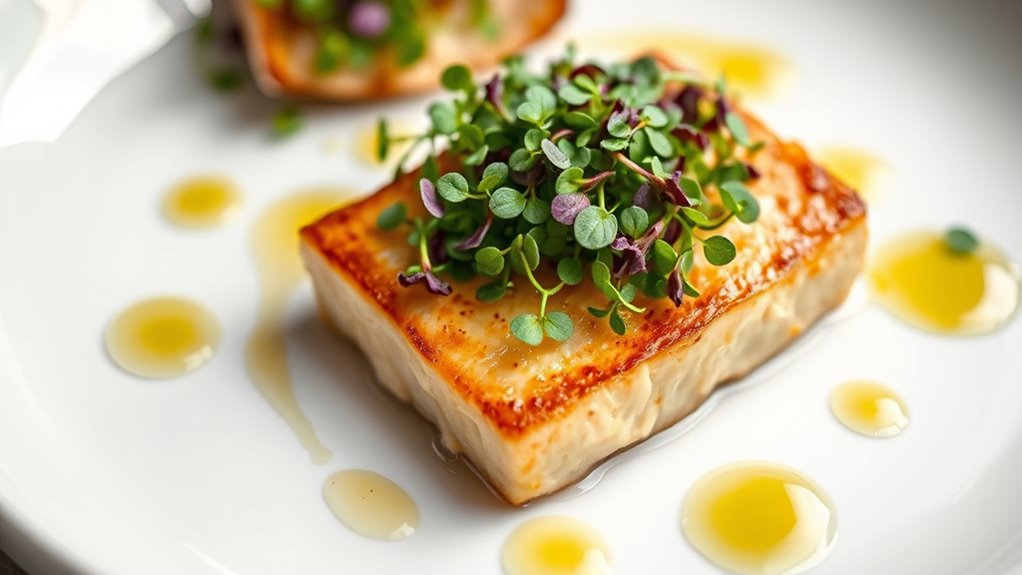

To elevate dishes with microgreens and oils, focus on thoughtful presentation that enhances both visual appeal and flavor. Use microgreens as delicate garnishes to add freshness, texture, and subtle flavor contrasts. Drizzle infused or flavored oils, like truffle or herb oils, to add richness and visual interest. Combining these elements creates a stunning, gourmet look that invites curiosity and elevates the dining experience. Keep exploring for more tips to master these sophisticated garnishing techniques.
Key Takeaways
- Microgreens add freshness, elegance, and nuanced flavors, enhancing visual appeal and taste complexity of gourmet dishes.
- Flavored oils, like truffle or herb oils, provide richness, sheen, and aromatic depth, elevating plate sophistication.
- Thoughtful placement of microgreens and oils creates balance, contrast, and visual harmony, transforming simple plates into artful presentations.
- Combining microgreens with oils introduces layered textures and flavors, inviting curiosity and encouraging savoring.
- Strategic garnishing enhances overall dining experience by adding contrast, highlighting main ingredients, and establishing a cohesive aesthetic.
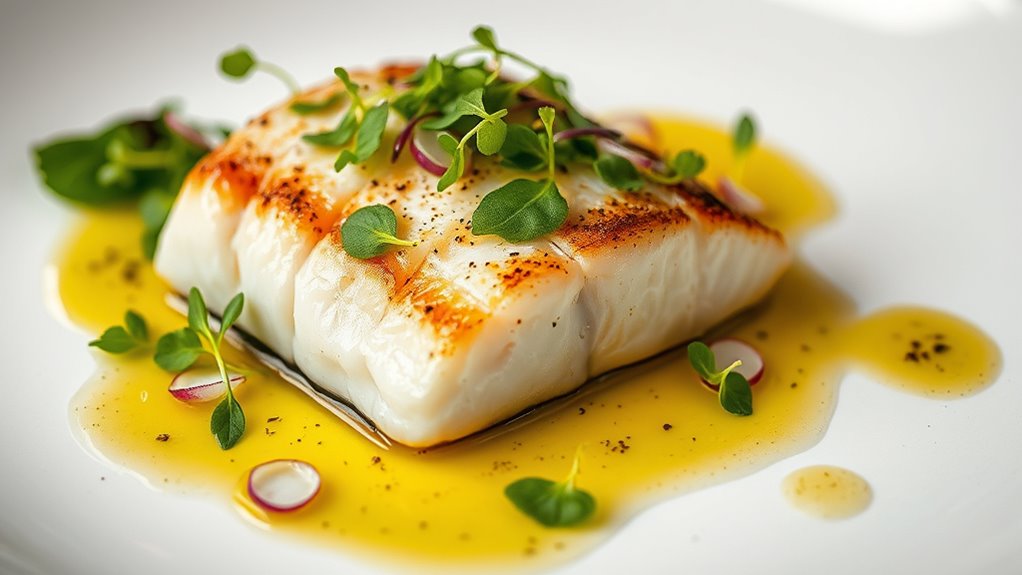
Gourmet garnishes elevate any dish, turning simple ingredients into a visual and flavorful masterpiece. When you focus on plate presentation, you’re not just making your meal look appealing—you’re setting the stage for a memorable dining experience. The way you arrange microgreens, drizzle a finishing oil, or add a splash of color can dramatically influence how your dishes are perceived, encouraging your guests to savor every bite. This visual appeal acts as an invitation, enticing the senses before the first taste, and enhances the overall enjoyment of your culinary creation.
Using microgreens as garnishes is an excellent way to add a touch of elegance and freshness. These tiny, vibrant greens pack a punch in both flavor and texture, providing a subtle crunch and a burst of flavor that complements a variety of dishes. Whether you sprinkle them atop a salad, soup, or a protein plate, microgreens help create a layered presentation that draws the eye and enhances the aroma. Their delicate appearance contrasts beautifully with hearty ingredients, elevating the dish’s visual impact while adding a nuanced flavor that can range from peppery to sweet, depending on the variety.
Microgreens add elegance, texture, and vibrant flavor to any dish, enhancing visual appeal and culinary complexity.
Oils, especially infused or flavored varieties, are another key element in gourmet garnishing. A light drizzle of a high-quality olive oil, truffle oil, or herb-infused oil can add richness and depth to your dish. When you incorporate oils thoughtfully, you’re not only boosting flavor enhancement but also refining the overall plate presentation. A well-placed swirl or a few drops can create a striking visual element, adding sheen and sophistication to the dish. These oils can act as a finishing touch, tying together flavors and amplifying the dish’s aroma, making each bite more compelling.
The combination of microgreens and oils allows you to craft dishes that are both beautiful and flavorful. As you experiment with different garnishing techniques, keep in mind that balance is key. You want your garnishes to complement the main ingredients without overpowering them. Thoughtful placement and selection can turn a simple plate into a culinary art piece. Remember, every detail counts—your garnishes should invite curiosity, add contrast, and highlight the dish’s intended flavors. When done correctly, they elevate your presentation and deliver a richer, more sophisticated flavor experience that keeps your guests coming back for more.
Additionally, understanding the importance of rustic decor in presentation helps you create a cohesive and inviting visual style that complements your garnishing choices.
Frequently Asked Questions
How Do Microgreens Differ in Flavor From Mature Herbs?
Microgreens have a more intense flavor compared to mature herbs, offering a concentrated burst of taste that can brighten your dishes. Their texture provides a delightful contrast—crisp and tender—adding freshness and visual appeal. You’ll notice that microgreens pack a punch in flavor intensity while offering a delicate, crunchy texture, making them perfect for garnishing or enhancing salads, tacos, and other dishes with a vibrant, fresh element.
What Are the Best Oils for Garnishing Different Types of Dishes?
You should choose oils based on your pairing techniques to enhance flavors effectively. For salads and light dishes, use extra virgin olive oil or walnut oil for a fruity touch. For seafood, try lemon-infused or dill oil to complement the flavors. Rich meats benefit from truffle or garlic oil. Always consider how the oil’s aroma and taste will elevate your dish, creating a balanced and appealing flavor enhancement.
How Can I Store Microgreens to Keep Them Fresh Longer?
To keep your microgreens fresh longer, store them properly by using refrigeration techniques that maintain consistent cold temperatures. Place them in a breathable container or loosely wrapped in damp paper towels inside a container to control humidity. Confirm humidity levels are ideal—neither too dry nor too moist—to prevent wilting or mold. Regularly check and replace the paper towels, and keep your microgreens away from ethylene-producing fruits for maximum freshness.
Are There Any Health Benefits Associated With Microgreens and Infused Oils?
Yes, microgreens and infused oils offer notable health benefits. Microgreens are packed with nutritional benefits, providing concentrated vitamins, minerals, and antioxidants. They often have higher antioxidant properties than mature greens, helping protect your cells from damage. Infused oils also deliver antioxidants and healthy fats, supporting your heart health and reducing inflammation. Incorporating these into your meals boosts not just flavor but also your overall wellness, making your dishes both tasty and nutritious.
How Do I Select the Right Microgreens for Specific Recipes?
When selecting microgreens, think about pairing techniques and flavor profiles. For example, if you’re making a light fish dish, choose microgreens like dill or basil to complement the delicate flavors. Consider their texture and taste—mild, peppery, or spicy—to enhance your dish. Trust your palate, experiment with different combinations, and aim for microgreens that balance or accentuate your main ingredients, creating a harmonious and vibrant presentation.
Conclusion
By adding microgreens and infused oils, you might just transform your dishes into culinary masterpieces. Some chefs believe these garnishes don’t just decorate but also enhance flavor and nutrition, creating a deeper dining experience. While the science isn’t definitive, experimenting with these ingredients could open new layers of taste and visual appeal. So next time, don’t just serve food—serve art. Who knows? These tiny touches might be the secret to elevating your cooking beyond expectations.