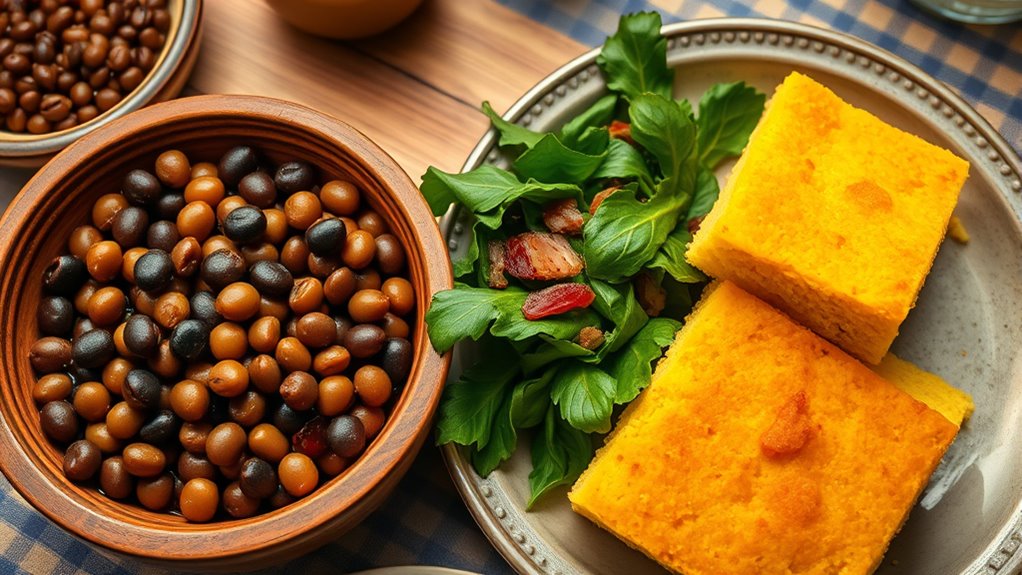

Celebrating the New Year with black-eyed peas, greens, and cornbread is rooted in tradition and symbolizes prosperity, growth, and renewal. Black-eyed peas, resembling coins, attract wealth, while vibrant greens represent financial gains. Cornbread, with its golden hue, signifies hope and new beginnings. Together, these foods honor cultural customs and set positive intentions for the year ahead. If you want to explore more about these meaningful dishes, there’s plenty to discover about their origins and significance.
Key Takeaways
- Black-eyed peas symbolize prosperity and wealth, resembling coins, and are traditionally cooked with flavorful ingredients for luck.
- Green leafy vegetables like collard greens and kale represent financial growth and abundance due to their vibrant color.
- Cornbread signifies hope, renewal, and new beginnings, embodying unity and collective wishes for success.
- Combining these foods forms a cultural ritual that sets positive intentions for prosperity and health in the New Year.
- These dishes connect to centuries-old traditions, fostering community and reinforcing hopes for a prosperous year ahead.
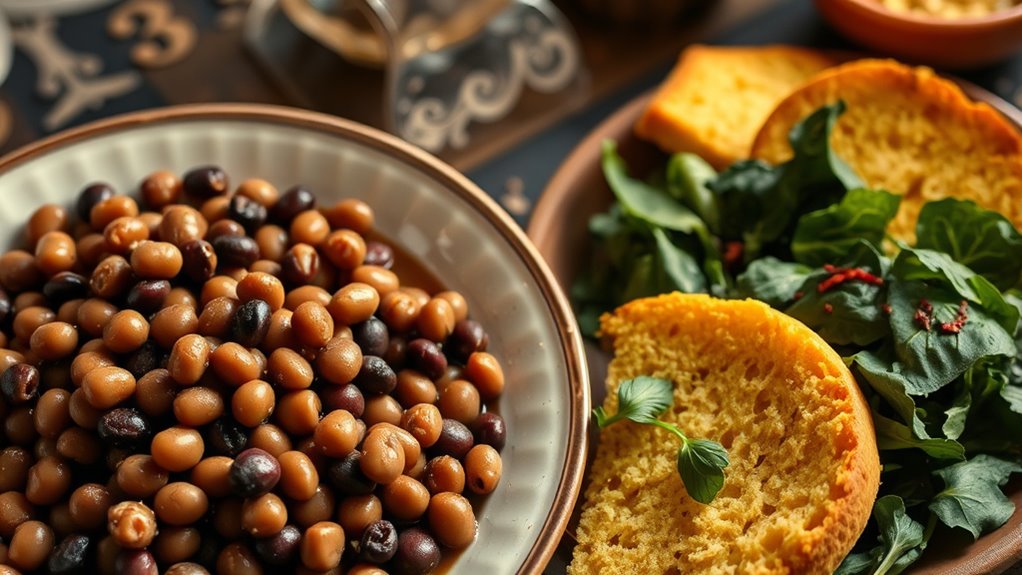
As you ring in the new year, many cultures believe that certain foods can bring good luck, prosperity, and happiness in the months ahead. Among these, black-eyed peas, greens, and cornbread stand out as traditional recipes that hold deep cultural significance. These dishes aren’t just about flavor; they symbolize hopes for abundance, health, and success in the coming year. Incorporating these foods into your celebration can connect you to centuries of tradition, offering both a sense of community and a hopeful start.
Black-eyed peas are especially popular in Southern U.S. traditions, where eating them on New Year’s Day is believed to attract prosperity. The story goes that these peas resemble coins, symbolizing wealth, and when cooked with flavorful spices and ham hocks or bacon, they create a hearty, satisfying dish. By preparing black-eyed peas, you participate in a ritual that dates back generations, embodying the hope for financial stability. This dish’s cultural significance extends beyond mere superstition; it’s a reminder of resilience and abundance rooted in history. Many families have their own twists on the recipe, but the core idea remains the same: consuming black-eyed peas is an act of intention, setting a tone of prosperity for the year ahead.
Green leafy vegetables, such as collard greens, kale, or Swiss chard, are also integral to New Year’s cuisine for their symbolism of economic growth. Their vibrant color signifies money and prosperity, making them a natural choice for the occasion. Preparing greens often involves slow cooking with smoked meats, which enhances their flavor and connects you to traditional methods passed down through generations. The cultural significance of greens lies in their representation of financial upward mobility; by eating them, you’re inviting wealth into your life. These recipes aren’t just about taste—they serve as a visual and culinary reminder that abundance is on its way. As you cook greens, think of it as a ritual that aligns your intentions with the hopes of a prosperous year. Additionally, understanding the cultural significance behind these foods can deepen your appreciation for their role in tradition and celebration.
Finally, cornbread completes the trio of lucky foods with its symbolism of purity and hope. Its golden hue and comforting texture make it a staple at many New Year’s tables. In many traditions, cornbread is baked fresh for the occasion, serving as a symbol of renewal and new beginnings. Its simple ingredients—cornmeal, water, and a leavening agent—highlight humility and the potential for growth. Sharing cornbread signifies unity and the collective wish for happiness and success. Its cultural significance stretches back to indigenous and Southern culinary traditions, where it’s more than just a side dish; it’s a meaningful part of celebrating new opportunities.
Together, these three foods—black-eyed peas, greens, and cornbread—form a powerful culinary ritual. They embody hope, prosperity, and community, making your New Year’s celebration more than just a meal. Instead, it becomes a meaningful act rooted in tradition, offering you a tasty way to set positive intentions for the months ahead.
Frequently Asked Questions
Are There Regional Variations in New Year Food Traditions?
Yes, there are regional variations in New Year food traditions influenced by local cuisines and cultural influences. You might find black-eyed peas and greens popular in Southern U.S. celebrations, symbolizing prosperity, while other regions may favor different dishes like seafood in coastal areas or dumplings in Asian cultures. These traditions reflect the unique history and beliefs of each community, making your New Year’s feast both meaningful and diverse across different regions.
How Do These Foods Symbolize Prosperity and Good Luck?
You’re drawn to black-eyed peas, greens, and cornbread because of their symbolic significance, representing prosperity and good luck. Black-eyed peas symbolize coins or wealth, while greens resemble dollar bills, and cornbread signifies gold. These foods hold deep cultural symbolism, reminding you to start the new year with abundance and positive energy. By including them, you honor traditions that emphasize hope, prosperity, and good fortune for the upcoming year.
Can These Foods Be Incorporated Into Modern New Year Celebrations?
You can definitely incorporate these foods into modern celebrations. For example, imagine hosting a New Year’s brunch where black-eyed peas and greens symbolize prosperity, blending tradition with contemporary style. Their cultural significance remains strong, yet you can interpret them creatively to suit your personal or family traditions. These foods connect you to history while embracing modern interpretations, making your New Year’s celebration meaningful and flavorful.
Are There Specific Recipes for Preparing These Traditional Dishes?
Yes, you can find specific recipes for preparing these traditional dishes that highlight lucky symbolism and regional flavors. For black-eyed peas, try seasoned slow-cooker recipes or stovetop versions. Collard greens often get a smoky, savory twist, while cornbread recipes range from sweet to savory. These regional recipes help you celebrate New Year’s with dishes that honor tradition and bring good luck, all tailored to your taste preferences.
What Are Alternative Foods for People With Dietary Restrictions?
You can still enjoy these traditions with some clever swaps. Try gluten-free options for black-eyed peas and greens, like lentils or collard greens seasoned just right. For a vegan twist on cornbread, use plant-based milk and egg substitutes such as flaxseed or applesauce. These gentle modifications let you partake in the celebration without compromising your dietary needs, making the festivities inclusive and delicious.
Conclusion
As you welcome the new year, these lucky foods invite prosperity and good fortune into your life. Incorporate black-eyed peas, greens, and cornbread into your celebrations to set a positive tone for what’s ahead. Remember, it’s not just about the food, but the hope and intentions you put into each bite. With a little luck on your side, you’ll be starting the year on the right foot, ready to turn the tide in your favor.