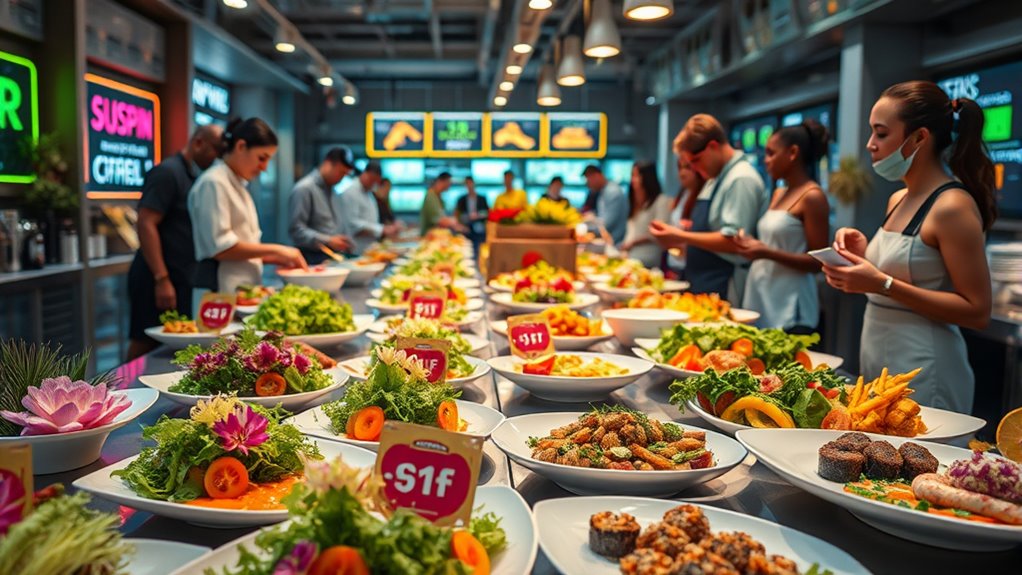

In 2026, you’ll see sustainable packaging become a standard, with biodegradable and edible options leading the way. Expect innovations in supply chain tech to minimize waste and enhance freshness. Plant-based foods will offer even better taste and variety, making healthier choices easier. Transparency from brands about their sustainability efforts will help you make informed decisions. These trends point to a more eco-conscious, mindful food scene—keep exploring to discover how they’ll reshape your dining experience.
Key Takeaways
- Eco-friendly packaging solutions like biodegradable and edible wraps will become industry standards.
- Advanced IoT and supply chain tech will reduce food waste and improve sustainability.
- Plant-based foods will expand in variety, taste, and nutritional profile, mimicking traditional animal products.
- Transparency around sustainability and ingredients will enable consumers to make eco-conscious choices.
- A cultural shift toward mindful consumption will integrate sustainability and health into everyday food habits.

As we look ahead to 2026, new food trends are shaping the way you think about dining, cooking, and sustainable living. One of the most significant shifts will be how you approach packaging and ingredients, with a strong focus on sustainable packaging and plant-based innovations. Expect to see brands and restaurants adopting eco-friendly packaging solutions that minimize waste and environmental impact. Biodegradable containers, edible wraps, and recyclable materials will become the norm, making it easier for you to enjoy your favorite foods without guilt. This movement isn’t just about reducing plastic waste; it’s about rethinking entire supply chains to prioritize sustainability from farm to table. Additionally, advancements in smart IoT technologies will enable more precise monitoring and management of food freshness and waste reduction, further supporting sustainable practices. Plant-based innovations will continue to revolutionize your diet, offering more variety, better taste, and enhanced nutritional profiles. You’ll notice an explosion of options that mimic traditional animal products in texture and flavor but are entirely plant-based. This isn’t just about vegan burgers anymore; it’s about exhaustive culinary experiences that cater to all dietary preferences and needs. As food tech advances, you’ll find plant-based proteins in snacks, dairy alternatives, and even seafood substitutes, making it easier to incorporate sustainable choices into your daily routine. These innovations aren’t only better for the planet but also tend to be healthier, with less saturated fat and cholesterol. Expect to see more restaurants and brands transparently sharing their sustainability efforts, including how they package their products and what ingredients they use. This transparency will help you make more informed choices, aligning your values with your consumption habits. You’ll also find that many companies are investing in research to develop packaging that biodegrades faster or even integrates into the environment without leaving harmful residues. Meanwhile, plant-based options will become more sophisticated, with chefs and food scientists creating products that satisfy even the most discerning palates. This will give you the freedom to choose foods that are both delicious and eco-conscious, reducing your carbon footprint. As these trends gain momentum, you’ll likely notice a cultural shift toward mindful consumption. Sustainable packaging and plant-based innovations won’t just be niche; they’ll be integrated into mainstream dining and shopping experiences. Whether you’re shopping at a grocery store, dining out, or preparing meals at home, these shifts will influence your choices and habits. The future of food in 2026 promises a more sustainable and health-conscious approach, empowering you to enjoy flavorful, innovative foods while taking care of the planet.
Frequently Asked Questions
How Will Climate Change Influence Future Food Trends?
Climate change will push you toward sustainable agriculture practices and climate-resilient crops. You’ll see a shift to foods grown with fewer resources, reducing environmental impact. As weather patterns become more unpredictable, farmers will adopt resilient crops that withstand droughts and floods. This means your food choices will increasingly favor eco-friendly options that support long-term food security and help combat climate change‘s effects on agriculture.
What Role Will Technology Play in Food Innovation by 2026?
By 2026, technology will revolutionize your food experience. You’ll see AI integration in kitchens, making meal prep smarter and faster. Sensory enhancement will allow you to taste flavors more vividly, with some foods customized to your preferences. Imagine dining on dishes perfectly tailored to your mood and taste buds—technology will make that possible, transforming how you enjoy and create food every day.
Are There Upcoming Regulations Affecting New Food Ingredients?
You’ll likely face new regulations affecting ingredient approvals in 2026, as governments tighten standards to guarantee safety. Regulatory hurdles may slow down the introduction of innovative ingredients, requiring thorough testing and documentation. Stay informed about evolving policies, as stricter approval processes could impact your product development timeline. Being proactive in compliance will help you navigate upcoming regulations smoothly and keep your offerings aligned with legal requirements.
How Will Consumer Health Concerns Shape Food Product Development?
You’ll find that consumer health concerns drive food product development toward personalized nutrition and clean label movement. As people become more aware of ingredients, you’ll need to prioritize transparency and simplicity in your offerings. This shift encourages you to develop products tailored to individual needs, using natural, recognizable ingredients, and avoiding artificial additives. By focusing on these trends, you can meet growing demand for healthier, trustworthy options that resonate with health-conscious consumers.
What Cultural Shifts Are Impacting Global Food Preferences?
Imagine a vibrant mosaic of flavors from around the world blending on your plate, reflecting cultural globalization. You’re embracing dietary diversity, seeking authentic cuisines and innovative ingredients that honor different traditions. This shift fuels your curiosity, breaking down borders and enriching your palate. As cultures intertwine, your food choices become a celebration of global unity, inspiring you to explore new tastes, textures, and stories behind each dish.
Conclusion
As you stay ahead of the curve, these top food trends for 2026 are your compass to innovation. Embrace plant-based options, sustainable practices, and personalized experiences, because the food scene is constantly evolving. Remember, in the world of flavor, you’ve got to be ready to think outside the box. By keeping these trends in mind, you’ll be well-equipped to serve up fresh ideas and stay ahead of the pack. The ball’s in your court—time to make your move.