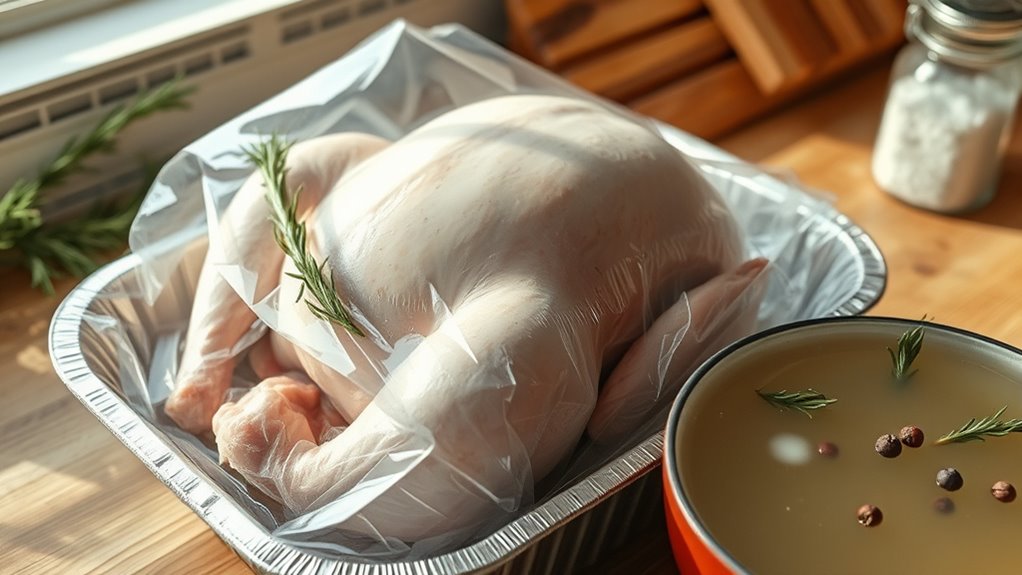

To safely defrost your turkey, plan for 24 hours per 4-5 pounds in the refrigerator at or below 40°F, keeping it in its original packaging on a tray. You can also use the cold water method, changing the water every 30 minutes for quicker thawing. After thawing, brine your turkey in a simple salt and spice solution for 12-24 hours to enhance flavor and moisture. Continue to explore for more tips on ensuring a perfect Thanksgiving feast.
Key Takeaways
- Thaw your turkey in the refrigerator for 24 hours per 4–5 lbs, maintaining a temperature at or below 40°F.
- Use the cold water method for faster thawing, changing water every 30 minutes, ensuring the turkey stays in airtight packaging.
- Brine your turkey in a salt, sugar, herbs, and spices solution for 12–24 hours to enhance moisture and flavor.
- Prepare stuffing separately or ensure it reaches 165°F if cooked inside the bird for safety.
- Plan to cook and rest the turkey properly, reaching 165°F internal temperature and resting for at least 20 minutes before carving.

Preparing your Thanksgiving turkey begins well before the big day, and starting early guarantees a stress-free feast. One of the most important steps is defrosting your turkey safely. You should plan to allow at least 24 hours of thawing time for every 4 to 5 pounds of turkey in the refrigerator. Keep the bird in its original packaging, placed on a tray or in a shallow pan to catch any drippings, and make certain your fridge stays at or below 40°F. This slow, consistent thawing helps prevent bacterial growth and makes your turkey easier to handle when it’s time to cook. If you’re pressed for time, you can use the cold water method—submerge the turkey in its airtight packaging in cold water, changing the water every 30 minutes. This speeds up thawing but requires more attention to keep everything safe. Using a reliable thermometer can also help ensure the turkey reaches the proper temperature during cooking, ensuring safety and quality.
Once your turkey is fully thawed, it’s time to think about brining, which enhances moisture and flavor. You can opt for a simple wet brine made with salt, sugar, herbs, and spices dissolved in water. Submerge the turkey in the brine, ensuring it’s fully covered, and keep it refrigerated for 12 to 24 hours. This process helps keep the meat juicy, especially if you plan to cook the turkey ahead of schedule or want extra flavor. After brining, rinse the bird thoroughly and pat it dry with paper towels. This is also a good time to prepare your turkey stuffing, which can be cooked separately or if you prefer stuffing inside the bird, be sure to do so safely and avoid overstuffing to ensure even cooking.
As you prepare to roast the turkey, don’t forget the finishing touches that make your meal special. Cranberry sauce is a classic accompaniment that pairs perfectly with turkey—prepare it ahead of time so it can chill and develop its flavors. To give your feast a well-rounded taste, consider adding seasonal herbs and spices to your stuffing, and make sure your turkey reaches an internal temperature of 165°F in the thickest part of the breast and thigh. Rest the turkey for at least 20 minutes before carving to allow juices to redistribute, resulting in a moist, flavorful slice. Incorporating proper temperature control during cooking is essential for food safety and optimal texture.
Top picks for "thanksgiv countdown defrost"
Open Amazon search results for this keyword.
As an affiliate, we earn on qualifying purchases.
Frequently Asked Questions
Can I Use a Frozen Turkey for Brining?
Yes, you can use a frozen turkey for brining, but you need to plan ahead. First, fully thaw the turkey using proper freezing techniques, which may take several days in the fridge. Once thawed, remove it from the freezer and submerge it in a brine with your favorite ingredients. Make sure the turkey is completely defrosted to guarantee the brine penetrates evenly and flavors the meat thoroughly.
How Long Should I Brine a Small Turkey?
You should brine a small turkey for about 8 to 12 hours, depending on its size. During this time, your marinating techniques help infuse flavor and moisture into the meat. Keep the turkey fully submerged and refrigerated to guarantee safe, even flavor infusions. Remember, a shorter brine emphasizes tenderness, while a longer one enhances flavor. Adjust your timing based on your desired taste and texture.
Is It Safe to Brine a Pre-Seasoned Turkey?
They say “better safe than sorry,” and that’s especially true with food safety. It’s generally not recommended to brine a pre-seasoned turkey because it could lead to flavor overkill or uneven seasoning. Plus, it might compromise the meat’s texture. If you decide to brine, make sure the turkey isn’t already salty or heavily flavored. This way, you guarantee both safety and flavor enhancement without risking any culinary mishaps.
What’s the Best Way to Defrost a Turkey Quickly?
To defrost your turkey quickly, use the cold water method. Place the turkey in a leak-proof bag and submerge it in cold water, changing the water every 30 minutes. It takes about 30 minutes per pound. Keep the oven at 325°F for cooking, and remember that proper defrosting guarantees even cooking times and safety. Never defrost at room temperature, as it risks bacteria growth.
Can I Brine a Turkey More Than Once?
You shouldn’t brine a turkey more than once because it can compromise brining safety and potentially lead to over-salting. Repeated brining doesn’t necessarily enhance flavor; instead, it might make the meat overly salty or mushy. To maximize flavor, stick to a single, well-balanced brine. This guarantees safe, effective flavor enhancement without risking safety issues or undesirable textures.
Conclusion
Think of your turkey as a blank canvas, waiting to be transformed into a masterpiece. By defrosting and brining with care, you’re setting the stage for a flavorful work of art that will impress everyone at your table. Just as a painter perfects each stroke, your attention to detail guarantees a delicious, juicy centerpiece. So, embrace these steps as your tools, and soon you’ll serve a feast that’s truly a masterpiece in every bite.