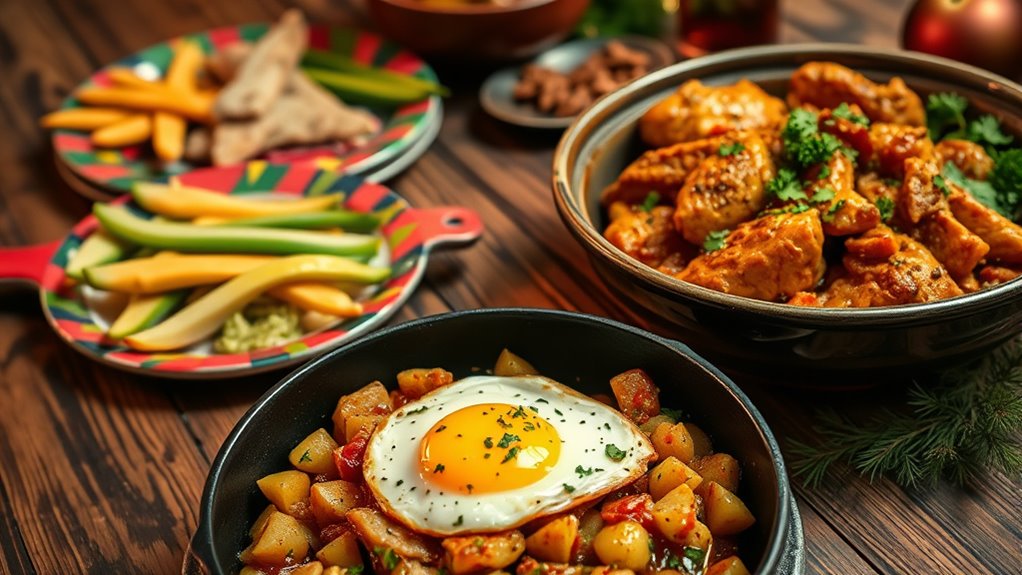

After Christmas, get creative with your leftovers by turning ham into a hearty hash or turkey into a flavorful curry. Chop and sauté vegetables with your meats for quick, satisfying breakfasts or dinners. These recipes help reduce waste while giving new life to familiar ingredients. With simple techniques, you can enjoy delicious, budget-friendly meals that make post-holiday cleanup more enjoyable. Keep exploring to discover more exciting ways to use your leftovers!
Key Takeaways
- Transform holiday ham into a quick, hearty ham hash by combining diced ham, potatoes, and vegetables, topped with a fried egg.
- Use turkey leftovers to prepare a flavorful curry with onions, garlic, ginger, curry powder, coconut milk, and vegetables.
- Organize and store leftovers properly to extend freshness and reduce food waste, making future creative meals easier.
- Incorporate leftover ribbons and decorative paper into eco-friendly gift wrapping to minimize waste and promote sustainability.
- Repurposing leftovers into new dishes like ham hash and turkey curry supports sustainable practices and simplifies post-holiday cleanup.
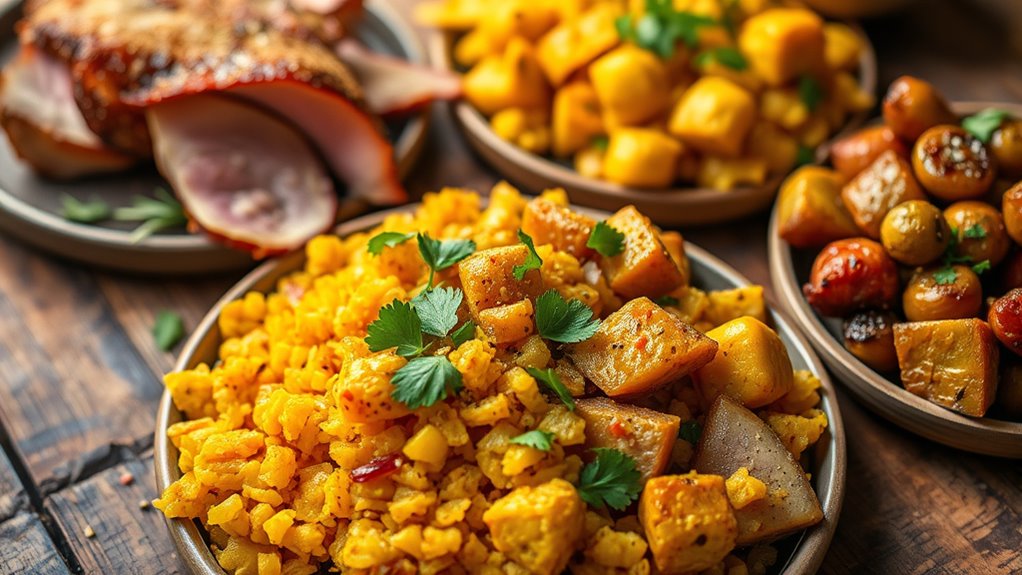
After the holiday festivities wind down, leftovers often become the main event in your kitchen. You find yourself staring at plates piled high with ham, turkey, and all the trimmings, wondering how to turn them into delicious new meals. This is where smart meal planning comes into play. Instead of letting leftovers sit forgotten in the fridge, you can transform them into creative dishes that save time and reduce waste. Plus, it’s a great chance to get ahead on gift wrapping ideas for next year, as you can use leftover ribbons or decorative paper to make your wrapping more festive and eco-friendly.
Transform holiday leftovers into creative meals and eco-friendly gift wrapping ideas for a sustainable new year.
One of the simplest and most satisfying ways to repurpose holiday ham is to make a hearty ham hash. Start by chopping the ham into small cubes, then dice some potatoes, onions, and bell peppers. Sauté the vegetables until tender, then add the ham and cook everything until it’s nicely browned. You can top it with a fried egg for a complete breakfast or brunch. This dish not only makes good use of leftover ham but also offers a quick, filling meal that’s perfect for busy mornings or lazy weekends.
Turkey leftovers are equally versatile. A classic turkey curry is an excellent way to spice up your post-holiday menu. Begin by sautéing chopped onions, garlic, and ginger in a pot. Add curry powder and cook for a minute to release their aroma. Then, toss in shredded turkey, coconut milk, and any leftover vegetables you have—carrots, peas, or potatoes work well. Simmer until everything melds together into a creamy, flavorful curry. Serve it over rice or with warm naan bread. This dish is not only comforting but also helps you use up large quantities of turkey without the monotony of reheating the same leftovers day after day.
While you’re at it, consider how your meal planning can extend into the new year. Use your leftover ingredients creatively, and keep a mental note of what works best. Perhaps you’ll find that repurposing ham into breakfast hashes or transforming turkey into a curry becomes part of your routine. And as you organize your holiday cleanup, don’t forget to incorporate gift wrapping. Reuse ribbons, gift bags, and decorative paper to reduce waste and add a personal touch to your presents. Additionally, proper food storage can help keep leftovers fresh longer, minimizing waste and ensuring you get the most out of your holiday bounty.
In the end, turning leftovers into inventive meals isn’t just about avoiding waste; it’s about making your holiday cleanup more efficient and fun. With a little planning, you’ll discover that leftovers can be transformed into new favorites, all while keeping your kitchen organized and your gift wrapping sustainable.

Artisan Fire 10 Inch Cast Iron Skillet-Breakfast Fry Pan-Divided 2 in 1 Half Grill-Eggs, Bacon, Steak-Heavy Duty Cast Iron Skillet
10 Inch Cast Iron Skillet-2 in 1 Half Grill: Unique divided surface features a smooth side for searing…
As an affiliate, we earn on qualifying purchases.
As an affiliate, we earn on qualifying purchases.
Frequently Asked Questions
How Long Can Leftover Ham and Turkey Be Stored Safely?
You can store leftover ham and turkey safely for 3 to 4 days in the refrigerator, following food safety guidelines. Meat spoilage happens quickly if you leave leftovers too long, so it’s best to refrigerate promptly. Keep your leftovers in airtight containers at 40°F or below, and reheat them thoroughly before eating. If you don’t plan to eat them within this timeframe, freeze to extend their shelf life.
Can I Freeze Leftovers for Future Use?
Absolutely, you can freeze leftovers to extend their shelf life and keep enjoying them later. Freezing is like hitting pause on food spoilage, helping maintain food safety and quality. Just make certain you store leftovers in airtight containers or freezer bags, label them with dates, and consume within 2-3 months. This way, you prevent waste and keep your meals safe and delicious for future cravings.
What Are Some Vegetarian Alternatives for These Recipes?
You can easily make vegetarian alternatives using meat substitutes or plant-based proteins. For ham hash, try diced tofu or tempeh seasoned with herbs and spices to mimic the savory flavor. In turkey curry, replace meat with chunks of seitan or lentils for a hearty, protein-rich dish. These options are versatile, satisfying, and perfect for enjoying your leftovers without meat, keeping your meals both creative and plant-based.
How Do I Reheat Leftovers Without Drying Them Out?
To reheat leftovers without drying them out, use gentle reheating techniques like stovetop, microwave, or oven at low temperatures. Cover dishes with a lid or microwave-safe wrap to trap moisture. Store leftovers properly in airtight containers and consume within a few days. Adding a splash of broth or water before reheating helps maintain moisture. These storage tips and reheating techniques guarantee your leftovers stay tender and flavorful.
Are There Gluten-Free Options for These Leftover Recipes?
Yes, you can make these leftover recipes gluten-free by choosing gluten-free ingredients like gluten-free soy sauce, rice, or vegetables. Be mindful of cross-contamination risks by thoroughly cleaning utensils and cookware, and verifying labels to avoid hidden gluten. Using fresh, safe ingredients guarantees your dishes stay gluten-free and delicious, giving you peace of mind while enjoying your leftovers without worry.

Spicewalla Masala Indian Spice 3 Pack | Garam Masala, Madras Curry Powder, Tandoori Masala | Non-GMO, No MSG, Gift Set
YOU'LL LOVE OUR INDIAN SPICES – The most widely known and revered masala spices from the kitchens of…
As an affiliate, we earn on qualifying purchases.
As an affiliate, we earn on qualifying purchases.
Conclusion
As you embrace the leftovers, let each dish symbolize the warmth and memories of Christmas. Like a treasured ornament, these recipes sparkle with love and tradition, transforming yesterday’s feast into today’s new beginnings. With every bite, you carry forward the spirit of togetherness, weaving past and present into a comforting tapestry. Keep this tradition alive—each meal a reminder that the joy of the season lingers long after the last plate is cleared.

CAROTE Nonstick Frying Pan Skillet,Non Stick Granite Fry Pan Egg Pan Omelet Pans, Stone Cookware Chef's Pan, PFOA Free,Induction Compatible(Classic Granite, 8-Inch)
Eco-friendly Classic Granite – Non-stick Granite Material, PFOS,PFOA free, our cookware ensures your daily cooking is always safer…
As an affiliate, we earn on qualifying purchases.
As an affiliate, we earn on qualifying purchases.

Rice & Curry: Sri Lankan Home Cooking (The Hippocrene International Cookbook Library)
Used Book in Good Condition
As an affiliate, we earn on qualifying purchases.
As an affiliate, we earn on qualifying purchases.