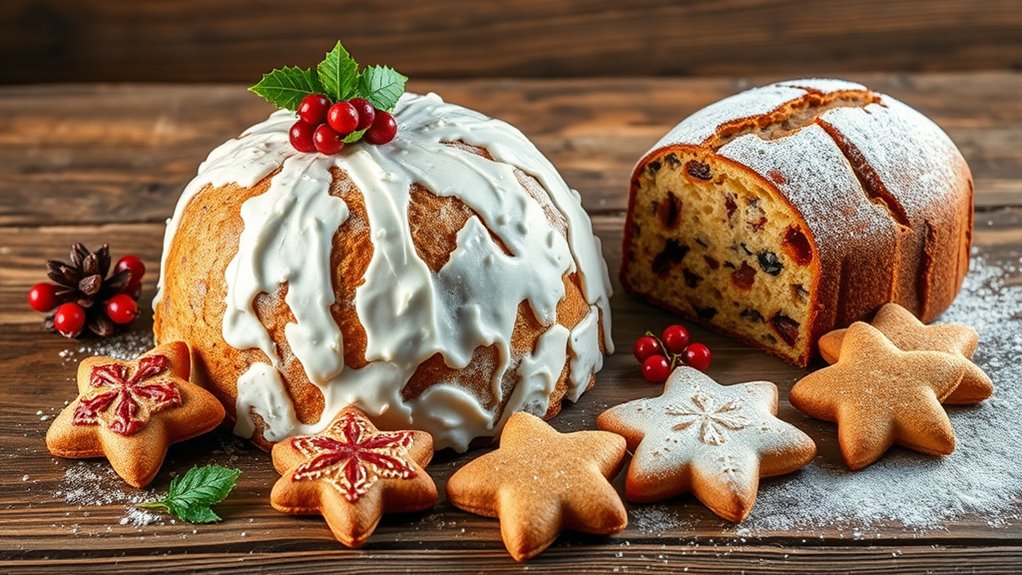

During the holidays, you can enjoy classic treats like Bûche de Noël, a Yule log cake that symbolizes winter woods, and Panettone, an Italian bread filled with candied fruits and raisins. Other favorites include fruitcake, stollen, and gingerbread. Each of these baked goods has rich traditions and requires specific techniques to achieve authentic flavors and textures. If you keep exploring, you’ll discover how these festive creations become the centerpiece of your celebrations.
Key Takeaways
- Bûche de Noël is a French yule log cake symbolizing winter woods, crafted with rolled sponge and textured icing.
- Panettone is a tall, dome-shaped Italian bread filled with candied fruits and raisins, requiring precise fermentation techniques.
- Both treats are traditional holiday favorites, reflecting rich cultural histories and festive baking techniques.
- Mastering techniques like sponge baking and dough fermentation enhances authenticity and texture of these classic desserts.
- These baked goods serve as centerpiece traditions, bringing families together to celebrate with cherished recipes.
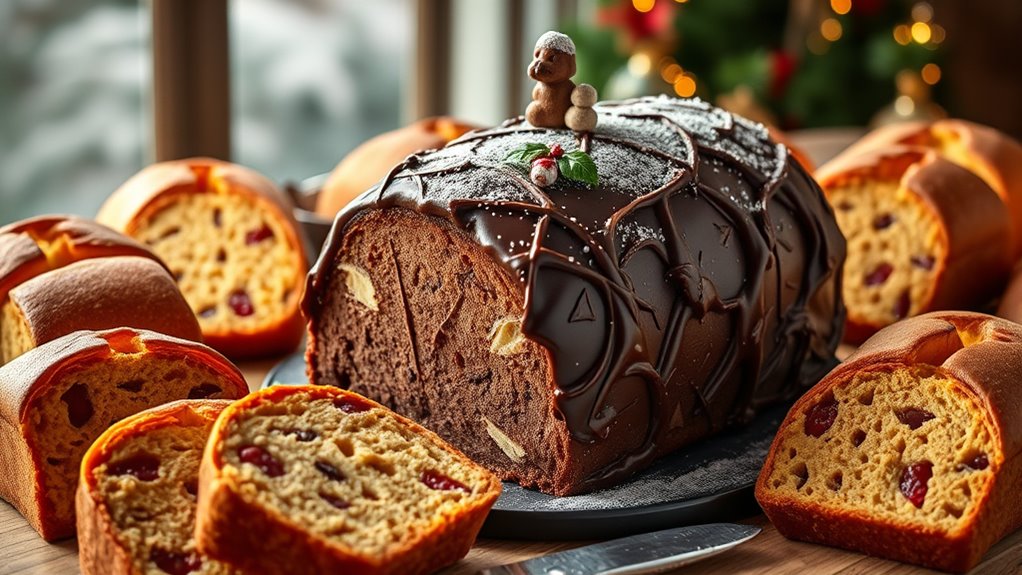
Have you ever wondered what makes Christmas cakes and breads so special? It’s not just about the ingredients; it’s about the rich holiday traditions that have been passed down through generations. These baked goods often serve as the centerpiece of holiday celebrations, bringing families together to share in the joy and warmth of the season. The key to creating these festive treats lies in mastering specific baking techniques that preserve their authenticity and magic. Whether you’re making a decadent Bûche de Noël or a fragrant Panettone, understanding these techniques will help you craft something truly memorable.
Holiday baking is about tradition, technique, and creating memorable festive treats to cherish and share.
When it comes to holiday traditions, each region has its own beloved recipes and customs. In France, Bûche de Noël, a yule log cake, is a staple, symbolizing the winter woods and the warmth of family gatherings. Making this cake involves rolling sponge cake with rich buttercream filling, then shaping and decorating it to resemble a log. The art lies in the delicate baking techniques, such as achieving the perfect sponge texture and creating realistic bark effects with textured icing or chocolate. These skills not only ensure the cake looks authentic but also that it tastes light yet indulgent.
On the other hand, Italian holiday traditions celebrate Panettone, a tall, dome-shaped bread filled with candied fruits and raisins. Its history dates back centuries, and each baker has their own secret techniques for perfecting its lofty rise and tender crumb. To master Panettone, you need precise kneading, fermentation, and proofing methods. The dough requires patience and gentle handling to develop gluten strength, which results in the airy texture. Incorporating the dried fruits at the right stage ensures they stay moist and flavorful without sinking. Additionally, proper fermentation plays a crucial role in developing the bread’s complex flavor and texture. These baking techniques elevate the bread from simple to spectacular, making it a treasured part of Christmas festivities.
Both of these classics showcase the importance of tradition and technique. They remind you that holiday baking isn’t just about the end product but also about the process and the memories created along the way. As you bake, you’re participating in a centuries-old practice that connects you to your roots and to loved ones. With each step—measuring ingredients carefully, kneading dough patiently, decorating thoughtfully—you’re honoring the customs that make these cakes and breads so meaningful. So, whether you’re creating a log-shaped cake or a lofty panettone, focus on honing your baking techniques and embracing the holiday traditions. That’s what transforms a simple bake into a cherished holiday masterpiece.
Top picks for "classic christma bread"
Open Amazon search results for this keyword.
As an affiliate, we earn on qualifying purchases.
Frequently Asked Questions
What Are the Origins of Bûche De Noël?
You might find it fascinating that the Bûche de Noël originates from a French tradition with deep historical roots. It dates back to the 19th century, symbolizing the Yule log burned during Christmas. Over time, this tradition evolved into the iconic cake, representing the log itself. Today, you enjoy it as a festive dessert, celebrating French cultural heritage and the seasonal spirit with rich, flavorful chocolate and cream.
How Do I Store Panettone Properly?
Think of storing Panettone like tucking a treasure safely away. Keep it in a cool, dry place, wrapped tightly in plastic wrap or an airtight container to lock in freshness. For longer shelf life, you can freeze it—just thaw at room temperature when you’re ready. Avoid direct sunlight and humidity, as these can spoil its delicate texture. Proper storage tips guarantee your Panettone remains delicious and fresh for weeks.
Are There Gluten-Free Versions of These Christmas Breads?
Yes, you can find gluten-free versions of Christmas breads like Bûche De Noël and Panettone. Look for recipes that use gluten-free flours such as rice, almond, or tapioca. Many bakers also offer dairy-free options, so you can customize these treats to suit your dietary needs. Just guarantee you follow the recipe carefully and use the right ingredients to get that authentic taste and texture.
Can I Make Bûche De Noël Vegan?
Yes, you can make a vegan Bûche de Noël by using vegan substitutions and ingredient swaps. Replace traditional eggs with flaxseed or chia seed gels, and use plant-based butter or margarine instead of dairy. For the filling and frosting, opt for coconut cream or vegan whipped toppings. These swaps guarantee your Bûche de Noël stays delicious and festive while being entirely plant-based.
What Are Alternative Fillings for Panettone?
You can try fruit fillings like candied oranges, raisins, or dried berries to add a sweet, chewy texture, or opt for chocolate options such as chocolate chips or a rich chocolate ganache for a decadent twist. These alternatives complement the airy, fluffy bread and enhance your panettone experience. Feel free to mix and match to suit your taste, creating a personalized festive treat that’s both delicious and unique.
Conclusion
As you explore these festive cakes and breads, you might wonder if their rich traditions truly bring luck and joy. Historical tales suggest that baking certain treats like bûche de Noël and panettone has long been believed to invite prosperity and happiness into your home. So, as you indulge this holiday season, remember that these classics not only taste amazing but also carry centuries of symbolic meaning, making your celebration even more special.