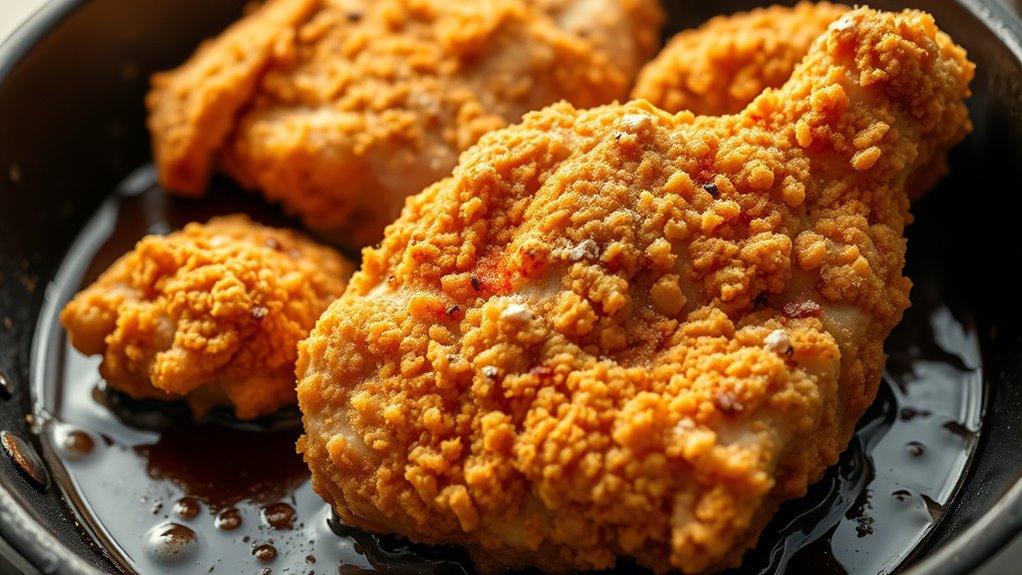

To master frying Southern fried chicken, focus on controlling the oil temperature between 350°F and 375°F using a thermometer, avoiding overcrowding for consistent heat. Pat your chicken dry and coat it thoroughly in a seasoned flour mixture, then fry slowly to develop a crispy crust. Adjust the heat as needed and replenish oil when dark or smoky. Keep these techniques in mind, and you’ll uncover more tips to perfect your fried chicken craft.
Key Takeaways
- Maintain oil temperature between 350°F and 375°F for crispy, evenly cooked chicken.
- Marinate chicken in buttermilk and season thoroughly for layered, authentic flavor.
- Dredge chicken in a well-seasoned flour mixture, shaking off excess before frying.
- Fry in batches, avoiding overcrowding to keep oil temperature steady and prevent sogginess.
- Pat chicken dry before frying to ensure even browning and reduce splatters.
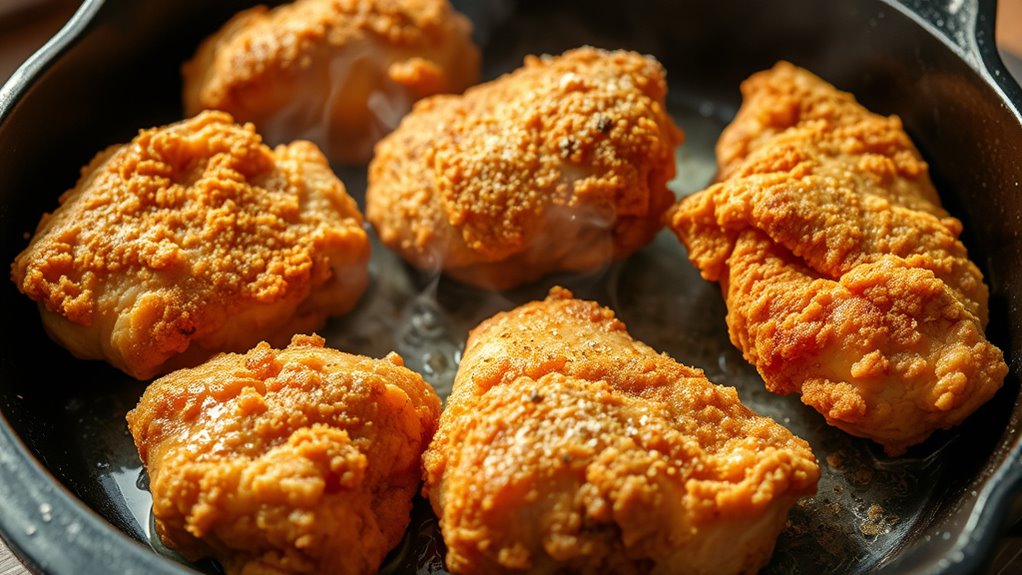
Frying Southern fried chicken to perfection isn’t just about the recipe—it’s about mastering a few secret techniques that make all the difference. One of the most crucial factors is maintaining the right oil temperature. If your oil is too hot, the chicken will burn on the outside before cooking through on the inside. Too cool, and the chicken becomes greasy, soaking up excess oil and losing that crispy texture you crave. You want your oil to stay consistently between 350°F and 375°F. Using a reliable thermometer helps you keep this precise temperature, ensuring that each piece cooks evenly and develops that golden, crispy crust. Remember, don’t overcrowd the pan; adding too much chicken at once drops the oil temperature, leading to soggy, uneven results. Pat your chicken dry before frying to prevent splatters and help the oil heat evenly around each piece. For best results, refer to French Press Operation techniques for understanding how temperature impacts extraction and flavor development. Seasoning techniques are just as vital as temperature control. The secret to flavorful fried chicken lies in how you apply your seasonings. Start by creating a well-seasoned flour mixture—combine salt, pepper, paprika, garlic powder, onion powder, and any of your favorite spices. Dredge the chicken in seasoned flour thoroughly, ensuring every surface is coated. For extra flavor, consider marinating the chicken in buttermilk before coating; the acid helps tenderize the meat and allows the seasoning to penetrate deeper. When you’re ready to fry, shake off any excess flour to avoid clumping, which can cause uneven cooking or burning. If you want an extra layer of flavor, sprinkle additional seasoning over the chicken after frying or toss the cooked pieces in a seasoned spice blend. This layered approach guarantees every bite is bursting with flavor. Throughout the process, stay attentive to your oil’s temperature and your seasoning techniques. Adjust the heat as needed to maintain a steady frying temperature, and don’t rush the process—slow, controlled frying yields the best results. Replenish the oil if it becomes too dark or smoky, signaling that it’s breaking down. By focusing on these essential techniques, you’ll elevate your fried chicken from good to legendary. Perfectly crispy, flavorful, and cooked through every time—these secret tips make all the difference in mastering the art of frying Southern fried chicken.
Frequently Asked Questions
What Type of Oil Yields the Crispiest Fried Chicken?
For the crispiest fried chicken, you should choose oil with a high smoke point like peanut or vegetable oil. These oils withstand high frying temperatures without burning, ensuring a crispy exterior. Maintain a frying temperature of around 350°F to 375°F for perfect results. Proper oil selection and consistent frying temperature are key to achieving that golden, crunchy coating everyone loves.
How Can I Prevent My Chicken From Sticking to the Pan?
Did you know that properly seasoned pans can reduce sticking by up to 50%? To prevent your chicken from sticking, ensure your pan is well-seasoned or use a non-stick coating. Always heat the pan before adding oil, then let the oil warm up. Avoid overcrowding, which causes steaming, and gently lift the chicken instead of forcing it. These tips help keep your chicken intact and crispy.
Is Brining Necessary for Perfect Southern Fried Chicken?
Brining isn’t necessary for perfect southern fried chicken, but it offers great benefits. It enhances flavor and keeps the chicken moist during frying, ensuring juicy bites. If you have time, brining can elevate your dish, making it more tender and flavorful. However, it’s not a must. Proper seasoning, good quality chicken, and the right frying technique will also give you delicious, crispy southern fried chicken without brining.
How Do I Keep Fried Chicken Warm Without Losing Crispiness?
Think of your fried chicken as a precious jewel; to keep it shining, place it on a wire rack over a baking sheet. This allows air to circulate, maintaining crispiness. Cover loosely with foil if needed, and serve with appealing plate presentation and flavorful dipping sauces. This way, your chicken stays crispy, warm, and inviting, ready for an enjoyable feast without losing its tempting crunch.
What Are Alternative Seasonings for a Unique Flavor?
You can try alternative seasonings by experimenting with different herb combinations like thyme, rosemary, and sage for a fresh, earthy flavor. Spice blends such as paprika, cumin, or coriander add warmth and depth. Mix and match these to create a unique taste profile that suits your preference. Don’t be afraid to get creative—these variations will give your fried chicken a distinctive, memorable flavor.
Conclusion
Now that you know the secrets to perfect Southern fried chicken, it’s time to try your hand at it. With patience, passion, and a bit of practice, you’ll produce crispy, golden goodness every time. Remember, mastering this art isn’t just about technique—it’s about love and legacy. So, step into the kitchen with confidence, and let your culinary creations carry on the cherished tradition of Southern fried chicken. Happy frying!