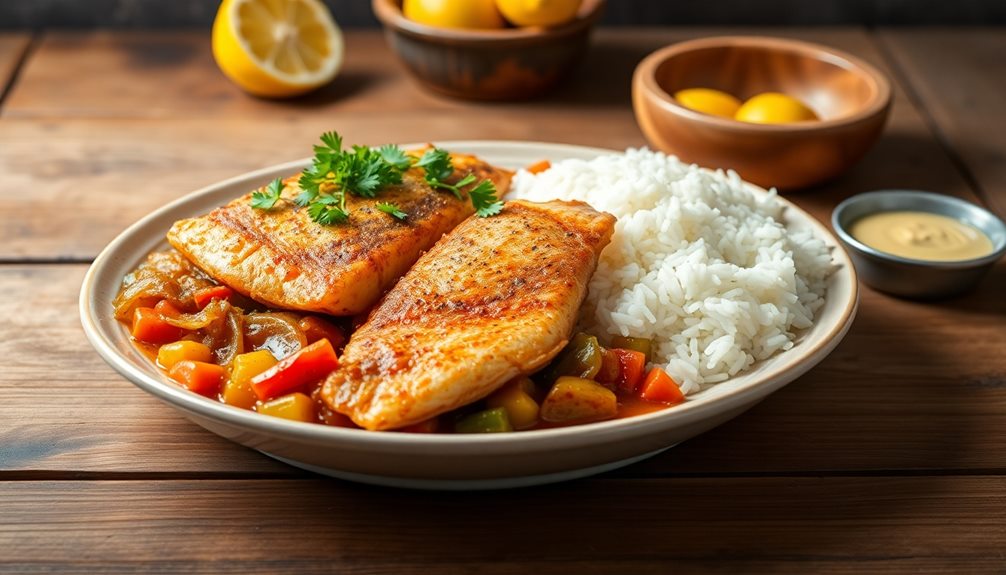
Senegalese Thieboudienne is a vibrant dish that combines seasoned rice, fresh vegetables, and tender fish, reflecting Senegal’s rich culinary traditions. You’ll experience layered flavors from tomato-based sauces, fragrant spices, and perfectly cooked fish that absorb these tastes. The dish’s colorful presentation and communal nature highlight Senegalese hospitality and cultural identity. If you keep exploring, you’ll discover how each step in preparing Thieboudienne embodies centuries of tradition and shared heritage.
Key Takeaways
- Thieboudienne is a traditional Senegalese dish featuring flavorful rice cooked with tomato sauce, spices, and infused with vibrant colors.
- It typically includes tender fish, often grilled or stewed, layered with vegetables like carrots, cabbage, and cassava.
- The dish symbolizes Senegalese hospitality, cultural identity, and communal sharing during celebrations and special gatherings.
- Cooking involves layering and simmering techniques to develop rich flavors and ensure the fish remains tender.
- Thieboudienne reflects Senegal’s culinary heritage, combining local ingredients and traditional methods to create a distinctive, flavorful experience.
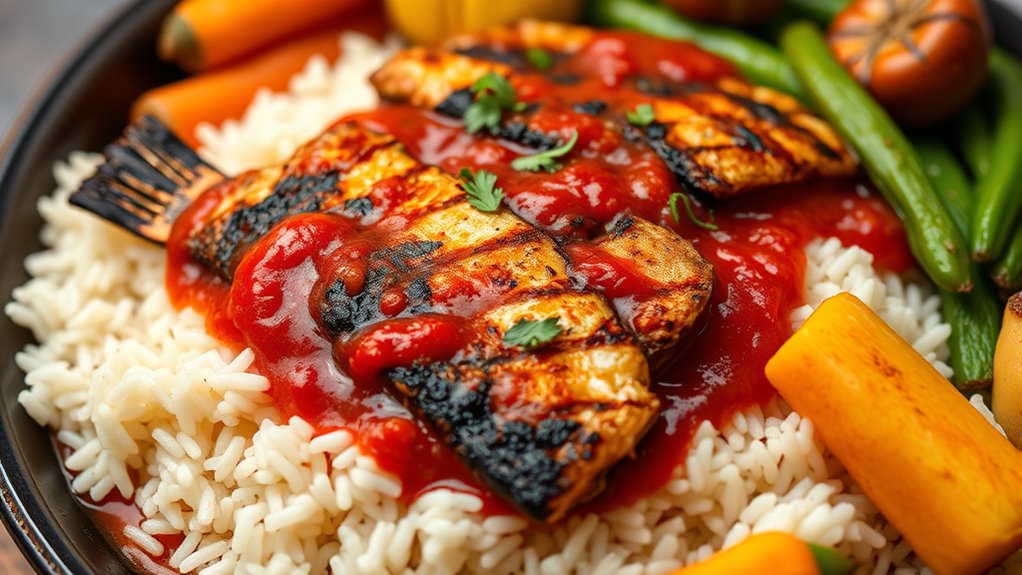
Senegalese Thieboudienne is a flavorful and iconic dish that showcases the vibrant culinary traditions of Senegal. This hearty dish isn’t just about satisfying hunger; it holds deep cultural significance, often served during special gatherings, celebrations, and communal meals. When you prepare Thieboudienne, you’re participating in a culinary tradition that brings families and communities together, reinforcing social bonds and cultural identity. Its roots are woven into Senegalese history, symbolizing hospitality and the importance of sharing food. The dish’s prominence in Senegalese culture means that making it with care and respect for tradition elevates it beyond simple nourishment—it’s a celebration of heritage.
To master Thieboudienne, understanding the traditional cooking techniques is vital. The process begins with preparing the fish, which is typically seasoned and cooked to tender perfection, often grilled or gently stewed to preserve its flavor and moisture. The rice, which forms the base of the dish, is cooked separately but infused with a medley of flavors from ingredients like tomato paste, onions, and a variety of local spices. The cooking techniques involve layering flavors carefully—sautéing vegetables such as carrots, cabbage, and cassava, then combining them with the rice and fish in a specific sequence to ensure each element is perfectly cooked and flavorful.
The key to authentic Thieboudienne lies in the meticulous preparation of the sauce and the rice. You start by creating a rich, tomato-based sauce with garlic, onions, and spices, which you then simmer to develop depth. The rice absorbs these flavors as it cooks, giving the dish its distinctive vibrant color and complex taste. The fish is added toward the end, allowing it to soak up the sauce’s savory essence without falling apart. The vegetables are layered in, adding texture and freshness, balancing the richness of the fish and rice. You’ll find that cooking techniques such as simmering and layering flavors are vital to achieving the dish’s signature taste and texture. Additionally, the use of traditional ingredients like local spices and vegetables is essential to capture the authentic flavor profile.
In essence, Thieboudienne is more than just a recipe; it’s a reflection of Senegalese identity. By respecting traditional culinary techniques and understanding its cultural importance, you can create a dish that is both authentic and meaningful. Every step, from preparing the fish to simmering the sauce, connects you to a rich history of communal dining and celebration. When you serve Thieboudienne, you’re sharing more than a meal—you’re sharing a piece of Senegalese soul, crafted through techniques passed down through generations.
Frequently Asked Questions
What Are the Origins of Thieboudienne?
You might find that the origins of thieboudienne trace back to Senegal’s history, blending local ingredients with culinary evolution over centuries. Its roots are deeply tied to West African traditions, where fish and rice became staples. As you explore its history, you’ll see how this dish evolved into a national symbol, combining rich flavors and cultural heritage, showcasing the dynamic culinary evolution that makes thieboudienne a beloved and iconic dish today.
How Does Thieboudienne Differ From Other Jollof Rice Dishes?
You’ll notice thieboudienne stands out with its unique ingredients and preparation techniques. Unlike other jollof rice dishes, it uses fresh fish, tangy tomato sauce, and a variety of vegetables, all cooked together to develop deep, layered flavors. The rice absorbs the rich broth, creating a cohesive dish. Its emphasis on seafood and vibrant seasonings makes it distinct, offering a savory experience that highlights Senegalese culinary traditions.
Can Thieboudienne Be Made Vegetarian or Vegan?
Yes, you can make a vegetarian adaptation or vegan variations of Thieboudienne. Replace the fish with plant-based proteins like tofu, tempeh, or seitan, and use vegetable broth instead of fish stock. Load the dish with extra vegetables like carrots, peas, and bell peppers for added flavor and texture. This way, you preserve the essence of the dish while catering to vegetarian or vegan diets.
What Are Traditional Side Dishes Served With Thieboudienne?
Imagine a symphony of flavors dancing on your plate—traditional accompaniments like tangy hot sauce, sweet-fried plantains, and zesty salads perfectly complement Thieboudienne. These side dishes serve as vibrant brushstrokes, enhancing the rich, savory rice and fish. Their flavor combinations create a harmonious balance, elevating your experience. Embrace these accompaniments to truly savor the cultural tapestry woven into every bite of this iconic Senegalese dish.
How Long Does It Take to Prepare Authentic Thieboudienne?
Preparing authentic thieboudienne takes about 2 to 3 hours, depending on your experience. You’ll spend time on ingredient preparation, like cleaning fish and chopping vegetables, while the cooking time involves simmering rice and fish to perfection. It’s a process that requires patience, but the rich flavors develop beautifully. With proper planning, you can enjoy a delicious, traditional dish that’s well worth the effort.
Conclusion
As you savor each bite of thieboudienne, you’ll find yourself transported to Senegal’s vibrant shores, where flavors dance like a lively drumbeat. This iconic dish isn’t just a meal; it’s a symphony of tradition and passion, wrapped in fragrant rice and tender fish. Let each mouthful be a journey through culture and history, a culinary tapestry woven with love. Embrace the richness—your taste buds are about to set out on an unforgettable voyage.