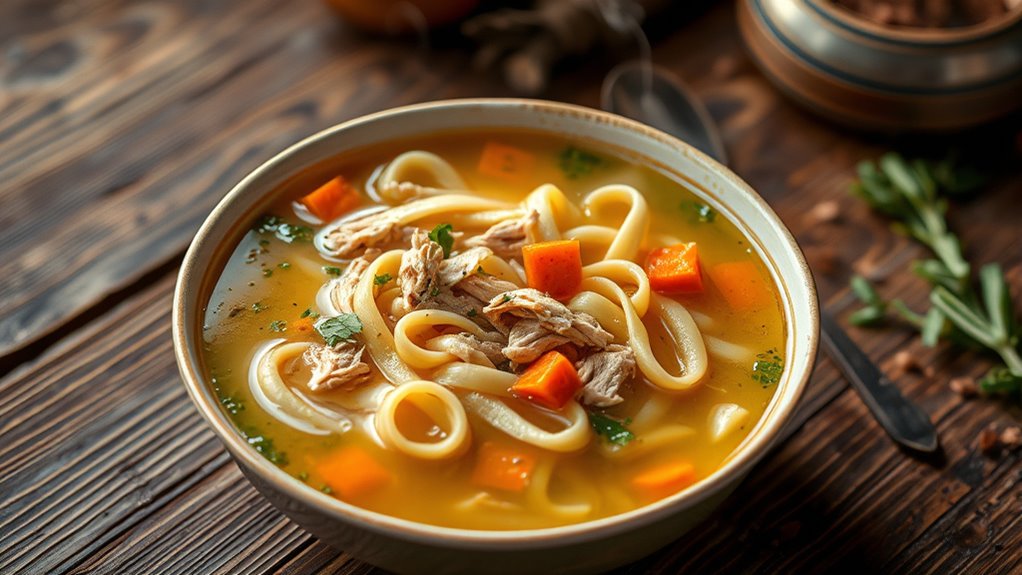

To make a comforting, from-scratch winter chicken noodle soup, start by simmering homemade broth from chicken bones and seasonal vegetables like carrots, celery, and onions. Add cooked or leftover chicken along with noodles, and cook until tender. Finish with fresh herbs or a squeeze of lemon for brightness. This simple one-pot dish is customizable and perfect for cold days. Keep going to discover how to enhance the flavors and make it your own.
Key Takeaways
- Prepare a rich, homemade broth by simmering chicken bones, vegetables, and herbs for deep flavor.
- Incorporate seasonal winter vegetables like carrots, parsnips, and greens for added nutrition and taste.
- Add cooked shredded chicken and your choice of noodles, simmering together for a hearty, one-pot meal.
- Garnish with fresh herbs and a squeeze of lemon to brighten flavors before serving hot.
- This method offers a wholesome, customizable dish perfect for warming up on cold winter days.

When the cold winter months settle in, nothing beats a warm, comforting bowl of one-pot chicken noodle soup. Making this classic dish from scratch allows you to control every ingredient, guaranteeing it’s both nourishing and flavorful. Start by preparing your own homemade broth; it’s the foundation that makes your soup truly special. Using homemade broths means you skip the preservatives and artificial flavors often found in store-bought options. Simmer chicken bones, aromatic vegetables, and herbs for hours to extract rich, deep flavors. This slow process yields a clear, savory broth that elevates the entire dish, making it more satisfying and wholesome.
Once your broth is ready, it’s time to incorporate seasonal vegetables. During winter, root vegetables like carrots, parsnips, and turnips add natural sweetness and texture. Leafy greens such as kale or spinach can be added toward the end for a burst of freshness and nutrients. You might also include celery and onions, which are staples in both homemade broths and hearty soups. These vegetables not only add flavor but also boost the nutritional value, helping you stay warm and energized during the cold months. Keep in mind that the key to a balanced, flavorful soup is using seasonal vegetables, which are at their peak and most flavorful during winter.
Next, add your cooked chicken, shredded or chopped, for protein. Using leftover roasted or poached chicken makes the process quicker, but you can also cook fresh chicken specifically for this purpose. As the chicken warms in the broth, it absorbs the savory flavors, turning each bite into comfort food. Once everything is simmering together, throw in your noodles—preferably egg noodles or pasta of your choice—and cook until tender. The one-pot method not only simplifies cleanup but also assures the flavors meld beautifully, creating a cohesive, hearty dish.
When serving, consider garnishing with fresh herbs like parsley or thyme to add brightness. A squeeze of lemon can also enhance the flavors, making each spoonful even more delightful. This classic chicken noodle soup, made from scratch with homemade broth and seasonal vegetables, provides warmth and nourishment on even the coldest days. It’s a simple, satisfying meal that you can customize endlessly, making it a true winter staple in your culinary repertoire.

Orrington Farms Chicken Flavored Broth Base & Seasoning, Ready-To-Use, Chicken Bouillon Powder Concentrate, Versatile Usage, Season-To-Taste, Easy-To-Store, 12 oz Jar (Pack of 1)
6 ounces per jar
As an affiliate, we earn on qualifying purchases.
As an affiliate, we earn on qualifying purchases.
Frequently Asked Questions
Can I Substitute Chicken Breasts for Thighs?
Yes, you can substitute chicken breasts for thighs, but keep in mind the flavor differences. Chicken breasts are leaner and milder, so your soup might lack the rich, savory taste thighs provide. Thighs stay tender and moist longer, while breasts can dry out if overcooked. To get the best flavor, consider adding extra seasoning or a splash of broth when using breasts to enhance the overall taste.
How Long Does the Soup Stay Fresh in the Fridge?
Like a clock ticking away, your leftovers have a limited shelf life. You should refrigerate your chicken noodle soup within two hours of cooking. It stays fresh for about 3 to 4 days in the fridge. After that, the refrigeration duration decreases, and the risk of spoilage increases. To enjoy the best flavor and safety, consume your leftovers within this window and reheat thoroughly before eating.
Can I Freeze Leftovers Without Affecting Quality?
Yes, you can freeze leftovers without affecting quality by following these freezing tips. Use airtight storage containers to prevent freezer burn and preserve flavor. Allow the soup to cool completely before transferring it to containers, leaving some headspace for expansion. Label and date the containers so you know how long they’ve been frozen. When ready to enjoy, thaw in the fridge overnight and reheat thoroughly for best results.
What Are Some Gluten-Free Noodle Options?
Think of gluten-free noodles as a colorful palette on your kitchen canvas. You can choose gluten-free pasta, which comes in rice or corn varieties, offering hearty bites. Rice noodles are delicate and translucent, perfect for light soups. Both options absorb flavors beautifully and keep your soup gluten-free, so you can enjoy a warm, comforting bowl without worries. Your soup will be just as delicious, vibrant, and satisfying.
Is It Suitable for a Low-Sodium Diet?
Yes, this soup can suit a low-sodium diet if you choose low sodium ingredients and reduce added salt. Use low-sodium chicken broth and limit or omit salt during cooking. To enhance flavor without sodium, include herbs, spices, and aromatics like garlic and onion. This way, you enjoy a flavorful, comforting soup while keeping sodium intake in check.

Nongshim Soon Cup Noodle Soup, Veggie, 2.6 Ounce (Pack of 6)
Bold Veggie Power: Forget bland broths! These vegan ramens are packed with a deep, bold vegetable broth that…
As an affiliate, we earn on qualifying purchases.
As an affiliate, we earn on qualifying purchases.
Conclusion
Making this classic chicken noodle soup from scratch is a cozy, nourishing way to warm up your winter days. Did you know that chicken noodle soup can help boost your immune system and reduce cold symptoms? Plus, using one pot keeps cleanup easy and flavors rich. So, next time you’re feeling under the weather or just craving comfort food, whip up this simple, hearty soup and enjoy a bowl of homemade warmth.

365 by Whole Foods Market, Organic Wide Egg Noodles, 16 Ounce
16 oz organic wide egg noodles
As an affiliate, we earn on qualifying purchases.
As an affiliate, we earn on qualifying purchases.

The Spice Way Herbes De Provence – | 4oz | fresh herbs and spice seasoning
WHAT IS HERBES DE PROVENCE – Multi-purpose spice blend made from a combination of Oregano, Thyme, Rosemary, Lavender…
As an affiliate, we earn on qualifying purchases.
As an affiliate, we earn on qualifying purchases.