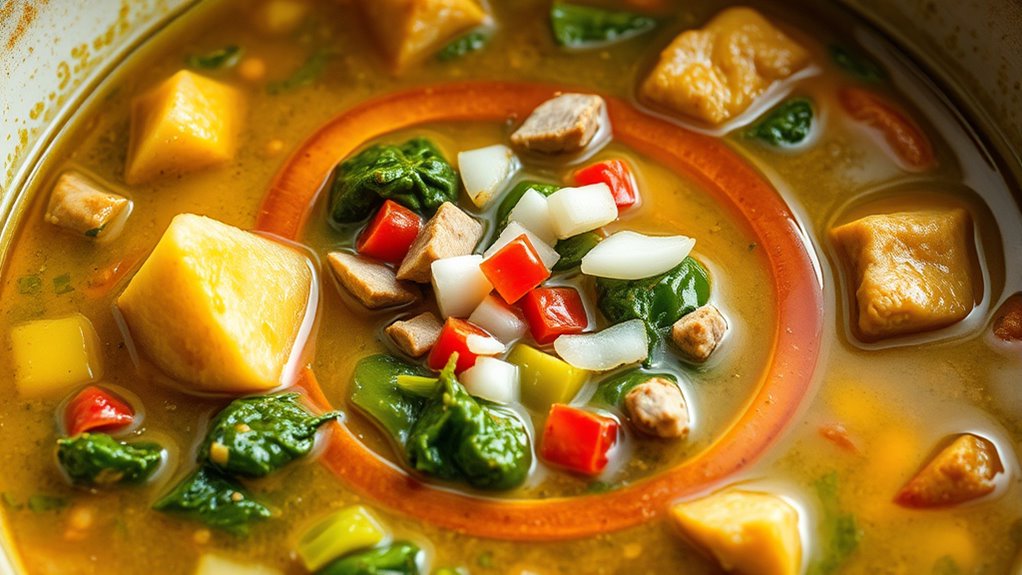

Nigerian egusi soup is a hearty West African stew made with ground melon seeds, leafy greens, meats, and flavorful spices. You start by frying the ground egusi in palm oil until rich and nutty, then add a blend of tomato, chili, and onions. Cook meats and fish to absorb savory flavors, stir in greens, and season well. With patience and proper techniques, you’ll create an authentic, comforting dish. Keep exploring to discover the full steps and tips for perfecting this beloved stew.

Get kitchen staples and gadgets delivered free with Prime
- Fast, free delivery on millions of items
- Prime Video, Amazon Music and more included
- Member-only deals all year
Key Takeaways
- Egusi soup is a hearty West African stew made with ground melon seeds, leafy greens, meats, and spices.
- Proper preparation involves frying egusi to develop flavor and creating a rich, velvety base for the stew.
- The cooking process includes simmering blended tomatoes, peppers, onions, meats, and greens for deep, layered flavors.
- Adjusting broth consistency and seasoning enhances the soup’s authentic taste and texture.
- Typically served over fufu, pounded yam, or rice, it is a beloved comfort dish reflecting Nigerian culinary traditions.

Have you ever tasted the rich, savory flavor of Nigerian Egusi Soup? If not, you’re missing out on a true West African comfort food that’s hearty, flavorful, and incredibly satisfying. This soup is all about the perfect blend of soup ingredients, which typically include ground melon seeds (egusi), leafy greens like spinach or bitterleaf, meat or fish, and a flavorful broth seasoned with spices and aromatics. To start, gather your soup ingredients: chopped onions, tomatoes, peppers, stockfish, dried fish, palm oil, and the egusi seeds. These ingredients come together to create a complex, layered flavor that’s both earthy and spicy.
Cooking techniques play a essential role in achieving the authentic taste of Nigerian Egusi Soup. First, you want to prepare your egusi seeds by grinding them into a fine or slightly coarse powder, depending on your preference. This step is critical because it influences the soup’s texture—some prefer a smooth, thick consistency, while others like a bit of chunkiness. Next, you’ll want to fry the ground egusi in hot palm oil, stirring constantly to prevent burning. This technique releases the seeds’ oils and enhances their nutty flavor, giving your soup a rich, velvety base. After frying the egusi, you add your blended tomato, pepper, and onion mixture, cooking it until it thickens and the raw taste diminishes. This technique ensures a deep, concentrated flavor foundation.
Fry ground egusi in hot palm oil to release oils and deepen flavor.
Once the tomato mixture is ready, you incorporate your choice of meats and fish, allowing them to cook thoroughly and soak up the flavors. The use of cooking techniques like boiling, simmering, and sautéing helps meld the ingredients together. You’ll add water or stock to create the broth, adjusting the heat to maintain a gentle simmer. During this process, you add your leafy greens and seasonings, allowing them to wilt and integrate fully into the soup. Stirring regularly ensures the ingredients combine smoothly, and the soup develops a cohesive, hearty texture. If you prefer a more robust flavor, you can also add additional spices like crayfish or seasoning cubes, which enhance depth and complexity. Additionally, understanding the Yarn weight and pattern is useful if you plan to craft a scarf inspired by the colors or motifs of Nigerian cuisine, connecting your culinary and crafting passions.
Throughout the cooking process, paying attention to your techniques—like controlling heat, stirring, and timing—is key to creating an authentic Nigerian Egusi Soup. With patience and care, your efforts will result in a rich, flavorful stew that’s perfect served over fufu, pounded yam, or rice. The combination of the right soup ingredients and skilled cooking techniques guarantees a delicious, satisfying dish that captures the essence of West African comfort food.
Products Worth Considering

Breville Bambino Espresso Machine, Brushed Stainless Steel

De'Longhi Stilosa Compact Manual Espresso Machine with Milk Frother

De'Longhi Dinamica Plus Fully Automatic Espresso Machine
As an affiliate, we earn on qualifying purchases.
Frequently Asked Questions
Can Egusi Soup Be Made Vegetarian or Vegan?
Yes, you can make egusi soup vegetarian or vegan by swapping out meat or fish with plant-based protein like tofu or tempeh. Use vegetable broth instead of meat stock to keep it vegan. To boost flavor, add ingredients like sautéed onions, garlic, and spices. You can also include vegetables like spinach or bitterleaf for added texture and nutritional value, ensuring your vegan egusi soup is both hearty and flavorful.
What Are Authentic Substitutes for Melon Seeds?
Did you know that pumpkin seeds and watermelon seeds are popular substitutes for melon seeds in many recipes? If you’re looking for authentic alternatives, try using roasted pumpkin seeds or watermelon seeds—they mimic the nutty flavor and texture of traditional melon seeds. Both are easily accessible, nutritious, and can be ground into a fine powder to replicate the consistency needed in your dish. This makes your cooking both authentic and plant-based.
How Long Does Egusi Soup Typically Last in the Fridge?
You can store egusi soup in the fridge for about 3 to 4 days. To keep it fresh, follow proper storage tips by using airtight containers. When reheating, make sure to bring it to a gentle boil to ensure it’s heated evenly and safely. Avoid leaving it out at room temperature for too long, and always check for any signs of spoilage before consuming leftovers.
Are There Regional Variations of Nigerian Egusi Soup?
You might think egusi soup is always the same, but in reality, regional ingredient variations create exciting differences. From Nigeria’s thick, hearty versions to Ghana’s lighter, spiced recipes, each reflects local flavors. Sometimes, chefs blend cultural fusion recipes, adding new twists. These variations reveal how traditions evolve and adapt, making every bowl a unique experience. So, next time you cook, consider exploring these regional secrets—you might just create your own signature style.
What Are the Best Side Dishes to Serve With Egusi Soup?
You should serve your egusi soup with bread pairs like fluffy fufu or warm pounded yam to soak up the rich, flavorful sauce. Citrus accompaniments, such as sliced oranges or lemon wedges, add a revitalizing contrast that balances the savory taste. These side dishes enhance the meal, making it more satisfying and delightful. Don’t forget to include some fresh vegetables or a side of fried plantains for extra flavor.
Conclusion
Just like a warm embrace from an old friend, Nigerian Egusi Soup offers comfort and familiarity with every spoonful. Its rich flavors and hearty ingredients remind you that sometimes, the simplest dishes hold the deepest memories. As you savor this West African classic, remember it’s more than just a stew—it’s a taste of home, a story told in every bite. So, gather your ingredients and let this timeless dish bring joy to your table.